When Does Water Softener Repair Stop Being Worth It?
June 21, 2026
Introduction
A water softener usually does not fail all at once. Most systems decline gradually. Water spots start returning to dishes, soap becomes harder to rinse away, or the water begins feeling different after showers. Then the repair calls begin.
At first, replacing a valve, cleaning the resin tank, or fixing a salt bridge may seem reasonable. But after multiple service appointments and recurring performance issues, many homeowners start asking a different question: is the system still worth repairing at all?
The answer depends on more than the cost of one repair.
Age, efficiency, replacement part availability, water quality conditions, and long-term operating costs all play a role in determining whether continuing repairs still makes financial sense. In some situations, repairing a system once or twice may extend its life significantly. In others, ongoing repairs simply delay the inevitable while costing more over time.
Some Repairs Are Normal Maintenance, Not Warning Signs
Not every water softener issue means the system is near the end of its lifespan. Certain problems are relatively common and can often be fixed without major concern.
Minor Issues That Are Usually Worth Repairing
Many service calls involve maintenance-related problems rather than full system failure.
These can include:
- Salt bridging inside the brine tank
- Clogged injector valves
- Dirty resin beds
- Minor leaks
- Timer or programming adjustments
- Float assembly issues
When the system is otherwise functioning properly, these repairs are often manageable and cost-effective.
Performance Often Returns Quickly After Basic Service
A properly maintained system may continue operating efficiently for years after minor repairs. In many cases, the problem comes from buildup, neglected maintenance, or worn components rather than complete equipment failure.
The situation changes when repairs become frequent or multiple major components begin failing close together.
Age Starts Becoming a Major Factor
The older the water softener becomes, the harder it usually is to justify repeated repairs.
Most Systems Have a General Lifespan Range
Water softener lifespan varies depending on:
| Factor | Impact on Longevity |
|---|---|
| Water hardness level | Higher mineral loads increase wear |
| Maintenance frequency | Regular service extends lifespan |
| Resin quality | Better resin lasts longer |
| Water usage volume | Heavy use increases strain |
| System quality | Higher-end systems often last longer |
Some systems continue performing well beyond a decade, while others begin declining much sooner under harsh water conditions.
Older Systems Often Lose Efficiency
Even if an older unit still technically works, it may no longer operate efficiently.
Older systems can:
- Use more salt during regeneration
- Waste more water
- Regenerate too frequently
- Struggle to maintain consistent soft water
At a certain point, operating costs themselves become part of the repair decision.
Repeated Repairs Usually Signal a Bigger Problem
One isolated repair rarely justifies replacing an entire system. The concern usually grows when repairs become repetitive.
Patterns Matter More Than Single Breakdowns
A homeowner replacing the same component repeatedly may already be dealing with broader system deterioration.
Warning signs often include:
- Frequent service appointments
- Inconsistent water softness
- Recurring leaks
- Constant salt problems
- Repeated valve failures
- Ongoing resin issues
As multiple components begin aging together, repair costs can start stacking up quickly.
Repair Costs Can Add Up Faster Than Expected
A single repair may feel manageable. However, multiple smaller repairs spread over several years sometimes exceed the cost of upgrading to a newer, more efficient system.
For example, homeowners may face:
- Valve replacement
- Resin replacement
- Motor repair
- Control board replacement
- Plumbing adjustments
When several major components fail close together, investing further into an aging system often becomes harder to justify.
Resin Bed Failure Changes the Equation
The resin bed is one of the most important parts of a water softener. It is also one of the more expensive components to replace.
What Happens When Resin Wears Out
Over time, resin beads lose their ability to effectively exchange hardness minerals.
This can cause:
- Hard water returning quickly
- Reduced softening performance
- Frequent regeneration cycles
- Iron fouling
- Lower efficiency
In homes with extremely hard water or high iron content, resin may degrade faster.
Replacing Resin Is Sometimes Worthwhile
For newer or otherwise reliable systems, resin replacement can extend the unit's lifespan significantly.
However, if the system already has:
- Aging electronics
- Valve problems
- Corrosion issues
- Poor efficiency
then replacing resin alone may not solve the larger problem.
Parts Availability Becomes More Difficult Over Time
Older water softener models sometimes create repair challenges simply because replacement parts become harder to find.
Discontinued Components Increase Costs
Manufacturers eventually phase out older systems and discontinue certain parts.
That can lead to:
- Delayed repairs
- Higher labor costs
- Limited replacement options
- Compatibility issues
In some situations, technicians may need to install temporary solutions or retrofit newer parts into older equipment.
Repair Reliability May Decrease
Even after repairs are completed, older systems may continue experiencing unrelated issues because surrounding components are also aging.
This often creates a cycle where homeowners continue repairing one problem after another without restoring full reliability.
Comparing Repair Costs vs. Replacement Value
The decision usually becomes easier when homeowners compare long-term value instead of focusing only on the immediate repair bill.
Situations Where Repair Often Still Makes Sense
Repairing may remain practical when:
- The system is relatively new
- The issue is isolated
- Efficiency remains good
- Replacement parts are available
- Maintenance history is strong
In these cases, repairs may restore years of reliable operation.
Situations Where Replacement Often Becomes Smarter
Replacement may become more cost-effective when the system:
- Requires constant repairs
- Has major component failures
- Uses excessive salt or water
- Struggles to maintain soft water
- Has outdated controls or inefficient operation
The overall operating cost matters just as much as the repair invoice itself.
Newer Systems Often Improve Efficiency
One reason homeowners eventually choose replacement is that newer systems are often significantly more efficient than older models.
Modern Systems Typically Reduce Waste
Many updated systems include:
- Demand-based regeneration
- Improved resin technology
- Lower water consumption
- Better salt efficiency
- Smart monitoring features
These upgrades can reduce ongoing operating costs compared to older systems that regenerate on fixed schedules regardless of actual usage.
Efficiency Improvements Add Long-Term Value
A newer system may not only reduce repairs but also improve:
| Area | Potential Improvement |
|---|---|
| Salt usage | Lower monthly consumption |
| Water waste | Reduced regeneration water |
| Softening consistency | More stable performance |
| Maintenance needs | Fewer service calls |
| Monitoring | Easier system tracking |
For some households, the long-term savings help offset replacement costs over time.
Questions Homeowners Commonly Ask About Repairs
How long should a water softener last?
Lifespan varies based on maintenance, water quality, and usage levels, but many systems operate for years before major replacement decisions arise.
Is resin replacement expensive?
It can be one of the more significant repairs depending on system size and condition.
Should I repair a leaking water softener?
Minor leaks may be repairable. However, corrosion-related leaks in aging systems often indicate broader deterioration.
Do newer water softeners use less salt?
Many modern systems are designed to regenerate more efficiently and reduce unnecessary salt usage.
Can hard water damage the softener itself?
Yes. Extremely hard water, iron content, and poor maintenance can all increase internal wear over time.
Knowing When Repairs Become Temporary Fixes
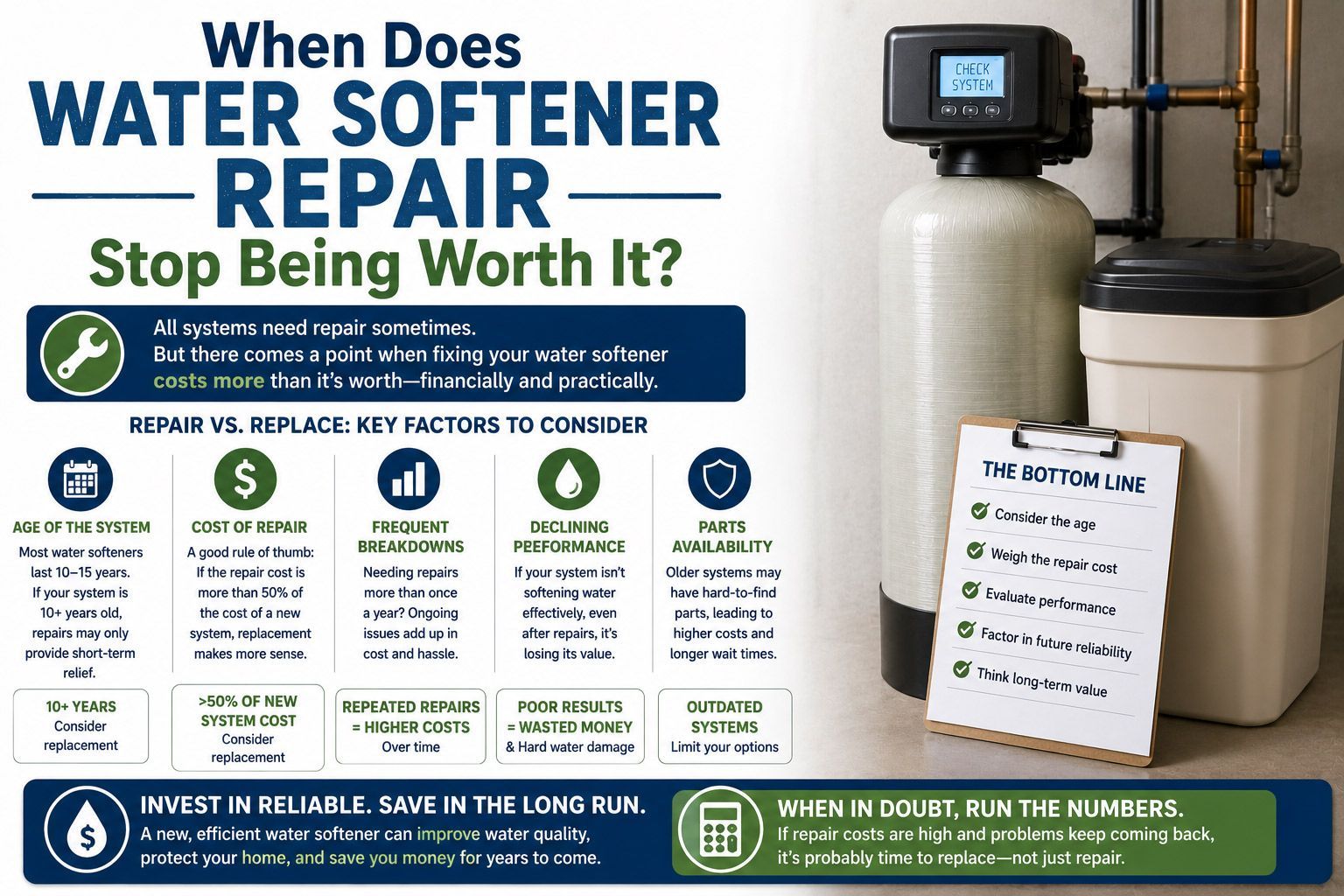
Repairing a water softener is often worthwhile when the problem is isolated and the system still operates efficiently overall. But once repairs become frequent, performance declines continue, or major components begin failing together, the costs can start outweighing the value of keeping the system running.
For many homeowners, the decision ultimately comes down to reliability, efficiency, and long-term operating costs rather than the repair bill alone. Understanding how the system is performing as a whole usually provides a clearer picture of whether continued repairs still make sense. Companies like PureSoft Water Treatment Inc. often help homeowners evaluate those situations more carefully so they can decide whether repair or replacement is the more practical long-term option.