What Are the Signs Your Home Needs Water Testing?
July 5, 2026
Introduction
Water problems are not always obvious right away. Some homeowners notice strange smells or staining immediately, while others live with gradual changes for months before realizing something may be wrong with the water itself.
A home’s water can look perfectly clear and still contain issues affecting taste, plumbing, appliances, or overall water quality.
That is why water testing matters.
Testing helps identify what is actually present in the water supply instead of relying on guesswork. In many cases, homeowners only discover underlying problems after noticing appliance damage, recurring plumbing issues, mineral buildup, or sudden changes in how the water looks or feels.
The challenge is knowing when those warning signs are serious enough to justify testing.
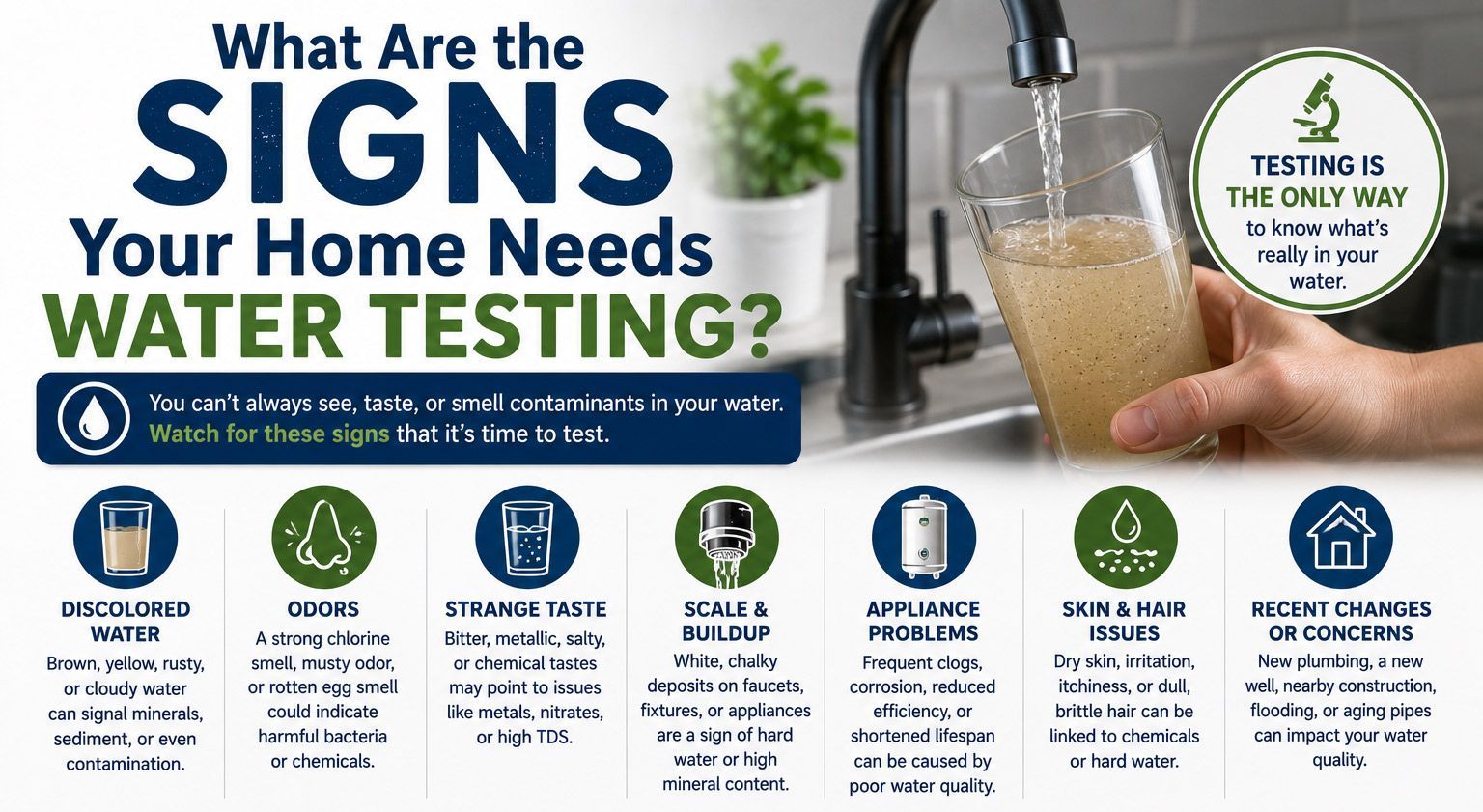
Changes in Taste, Smell, or Appearance Often Signal Problems
One of the clearest signs a home may need water testing is any noticeable change in the water itself.
These changes do not always point to the same issue. Different contaminants and mineral conditions create different symptoms.
Unusual Smells
Certain odors can indicate specific water quality concerns.
For example:
| Odor | Possible Cause |
|---|---|
| Rotten egg smell | Sulfur or hydrogen sulfide |
| Chlorine smell | Municipal disinfectants |
| Metallic odor | Iron or metal content |
| Musty smell | Organic material or bacteria |
Some smells become stronger when hot water is running because heat intensifies certain gases or minerals.
Changes in Taste
Water that suddenly tastes different should not automatically be ignored.
Homeowners sometimes describe the taste as:
- Bitter
- Metallic
- Salty
- Chemical-like
- Earthy
Taste changes may come from minerals, aging plumbing, treatment system issues, or contaminants entering the water supply.
Discoloration or Cloudiness
Water should not consistently appear cloudy, brown, yellow, or reddish.
Discoloration may suggest:
- Sediment
- Rust
- Iron
- Pipe corrosion
- Disturbed water lines
Even temporary discoloration can justify testing if it continues happening regularly.
Plumbing and Fixture Problems Can Point to Water Quality Issues
Sometimes the water itself seems normal, but household systems start showing signs of mineral or contaminant problems.
Mineral Buildup Around Fixtures
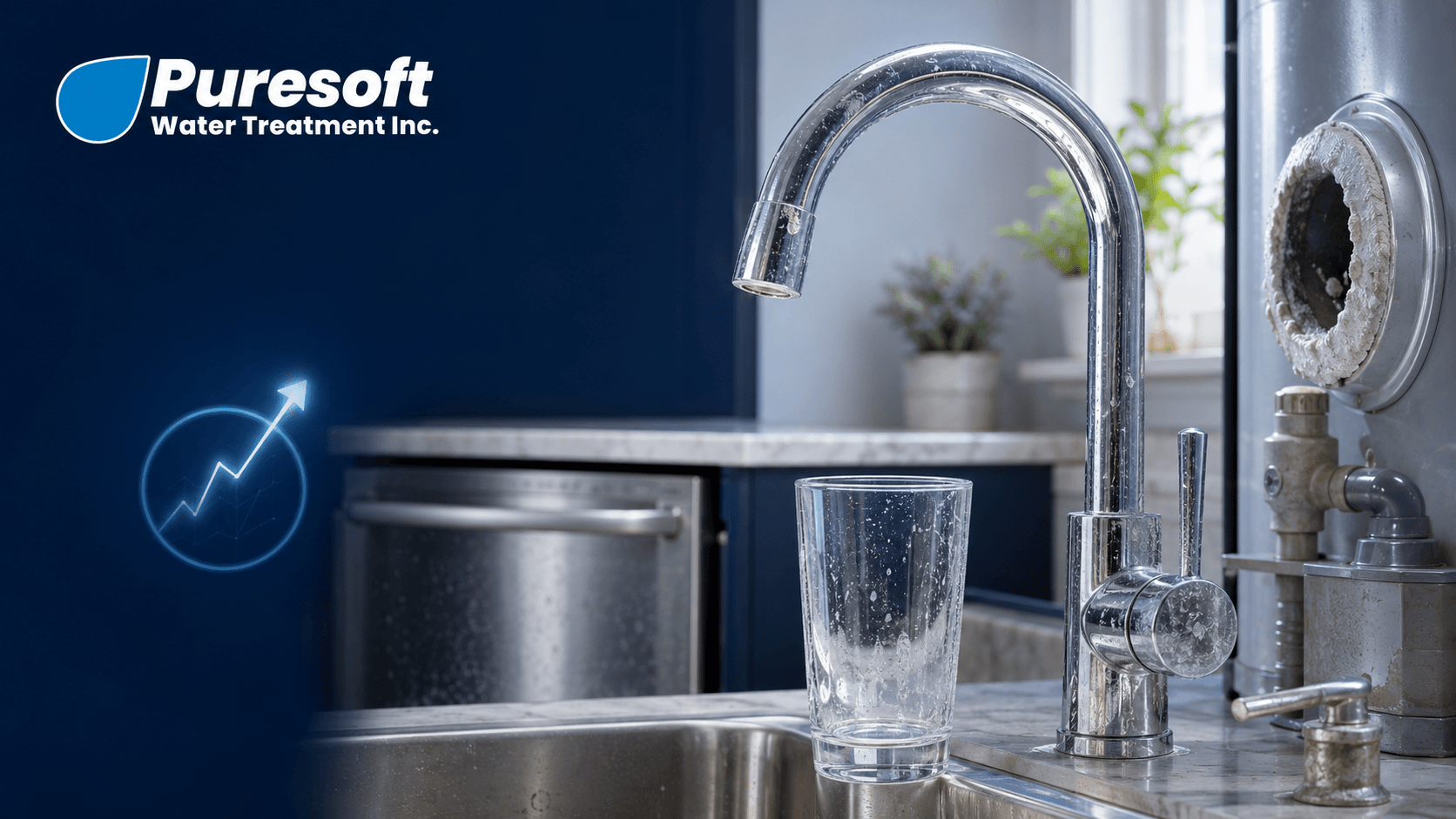
White chalky residue around faucets, showerheads, or drains is often linked to hard water minerals.
Over time, buildup can affect:
- Water flow
- Fixture lifespan
- Appliance performance
- Cleaning efficiency
Testing helps determine how severe the hardness levels actually are.
Staining Around Sinks or Toilets
Certain stains often point toward specific mineral content.
Common examples include:
| Stain Color | Possible Cause |
|---|---|
| Orange or reddish | Iron |
| Blue-green | Copper corrosion |
| Black | Manganese |
| White crusting | Calcium buildup |
Persistent staining usually indicates ongoing water quality conditions rather than isolated plumbing problems.
Recurring Plumbing Repairs
If valves, pipes, or fixtures repeatedly develop buildup or corrosion, the water itself may be contributing to the issue.
Testing can help identify whether mineral content, acidity, or sediment levels are placing extra stress on the plumbing system.
Appliance Performance Changes May Indicate Water Problems
Water quality directly affects many household appliances.
Some warning signs appear gradually, making them easy to overlook at first.
Water Heaters Lose Efficiency
Hard water minerals commonly accumulate inside water heaters.
Possible symptoms include:
- Reduced hot water supply
- Rumbling sounds
- Longer heating times
- Rising energy bills
Testing helps determine whether mineral-heavy water may be contributing to efficiency loss.
Laundry and Dishwashing Problems
Water quality issues can also affect cleaning performance throughout the home.
Homeowners may notice:
- Stiff laundry
- Dingy clothing
- Water spots on dishes
- Soap residue
- Poor detergent performance
These issues are commonly associated with hard water or excess mineral content.
Skin and Hair Changes Sometimes Point to Water Quality Issues
Water conditions can affect personal comfort just as much as plumbing systems.
Dry Skin or Hair Problems
Hard water may leave behind mineral residue after bathing.
Some people notice:
- Dry skin
- Itchiness
- Dull hair
- Soap that feels difficult to rinse away
While these symptoms can have many causes, water quality is often overlooked as a contributing factor.
Increased Soap Usage
If soap suddenly stops lathering effectively, mineral-heavy water may be interfering with cleaning performance.
Households sometimes begin using more:
- Shampoo
- Laundry detergent
- Dish soap
- Body wash
without realizing water conditions may be affecting product effectiveness.
Certain Situations Make Water Testing Especially Important
Some circumstances increase the importance of routine testing even if there are no obvious warning signs yet.
Homes With Private Wells
Well water is not monitored the same way municipal water systems are.
Because of that, regular testing becomes especially important for detecting issues involving:
- Bacteria
- Iron
- Nitrates
- Sediment
- Sulfur
- pH imbalance
Water conditions in wells can also change over time depending on environmental conditions and surrounding land use.
Moving Into an Older Home
Older properties may contain aging plumbing systems that affect water quality.
Potential concerns include:
- Pipe corrosion
- Sediment buildup
- Metal contamination
- Outdated plumbing materials
Testing provides a clearer understanding of what is entering the home's water supply.
After Plumbing Repairs or Renovations
Major plumbing work can disturb sediment, scale, or debris inside older pipes.
If water appearance or performance changes after renovations, testing may help confirm whether additional treatment or flushing is necessary.
Comparing Common Warning Signs
Some signs are mostly cosmetic, while others may indicate larger water quality concerns.
| Warning Sign | What It May Suggest |
|---|---|
| White residue | Hard water minerals |
| Metallic taste | Iron or pipe corrosion |
| Rotten egg smell | Sulfur compounds |
| Cloudy water | Sediment or trapped air |
| Appliance scaling | High mineral content |
| Orange stains | Iron contamination |
The only reliable way to confirm the cause is through actual water testing.
What Water Testing Usually Looks For
Water testing can evaluate several different aspects of household water quality depending on the concerns involved.
Common Testing Categories
Many tests check for:
- Hardness levels
- Iron content
- Chlorine
- pH balance
- Sediment
- Bacteria
- Nitrates
The type of test often depends on whether the home uses municipal water or a private well.
Results Help Guide Treatment Decisions
Testing is important because different problems require different solutions.
For example:
| Water Issue | Possible Treatment |
|---|---|
| Hard water | Water softener |
| Sediment | Sediment filtration |
| Chlorine taste | Carbon filtration |
| Iron staining | Iron removal system |
| Bacteria concerns | UV purification |
Without testing, homeowners may end up installing treatment systems that do not fully address the actual issue.
Questions Homeowners Commonly Ask About Water Testing
How often should well water be tested?
Many homeowners test well water regularly because conditions can change over time depending on the surrounding environment and water source.
Can water look clean but still have problems?
Yes. Some contaminants and mineral imbalances are not visible to the naked eye.
Does hard water always require treatment?
Not always, but severe hardness can affect appliances, plumbing, and cleaning efficiency.
Why does my water suddenly smell different?
Odor changes can come from sulfur, chlorine, bacteria, or plumbing-related issues depending on the source.
Is water testing only for homes with wells?
No. Municipal water homes may also experience plumbing-related issues, mineral concerns, or water quality changes.
Water Problems Often Start Small Before Becoming Noticeable
Many household water issues develop gradually rather than appearing all at once. A strange taste, recurring stains, reduced appliance efficiency, or mineral buildup may seem minor initially, but those signs can point toward larger water quality concerns affecting the home over time.
Testing provides a clearer understanding of what is actually present in the water supply so homeowners can make informed decisions about treatment, filtration, or maintenance. Companies like PureSoft Water Treatment Inc. often work with homeowners who want a better understanding of how their water quality may be affecting plumbing systems, appliances, and daily household use.