Can Hard Water Increase Appliance Repair Costs?
July 26, 2026
Introduction
Many homeowners in Indiana deal with hard water every day without realizing how much it affects the appliances inside the home. Mineral-heavy water may leave spots on dishes or create soap buildup around sinks, but the long-term impact often extends much further than appearance alone.
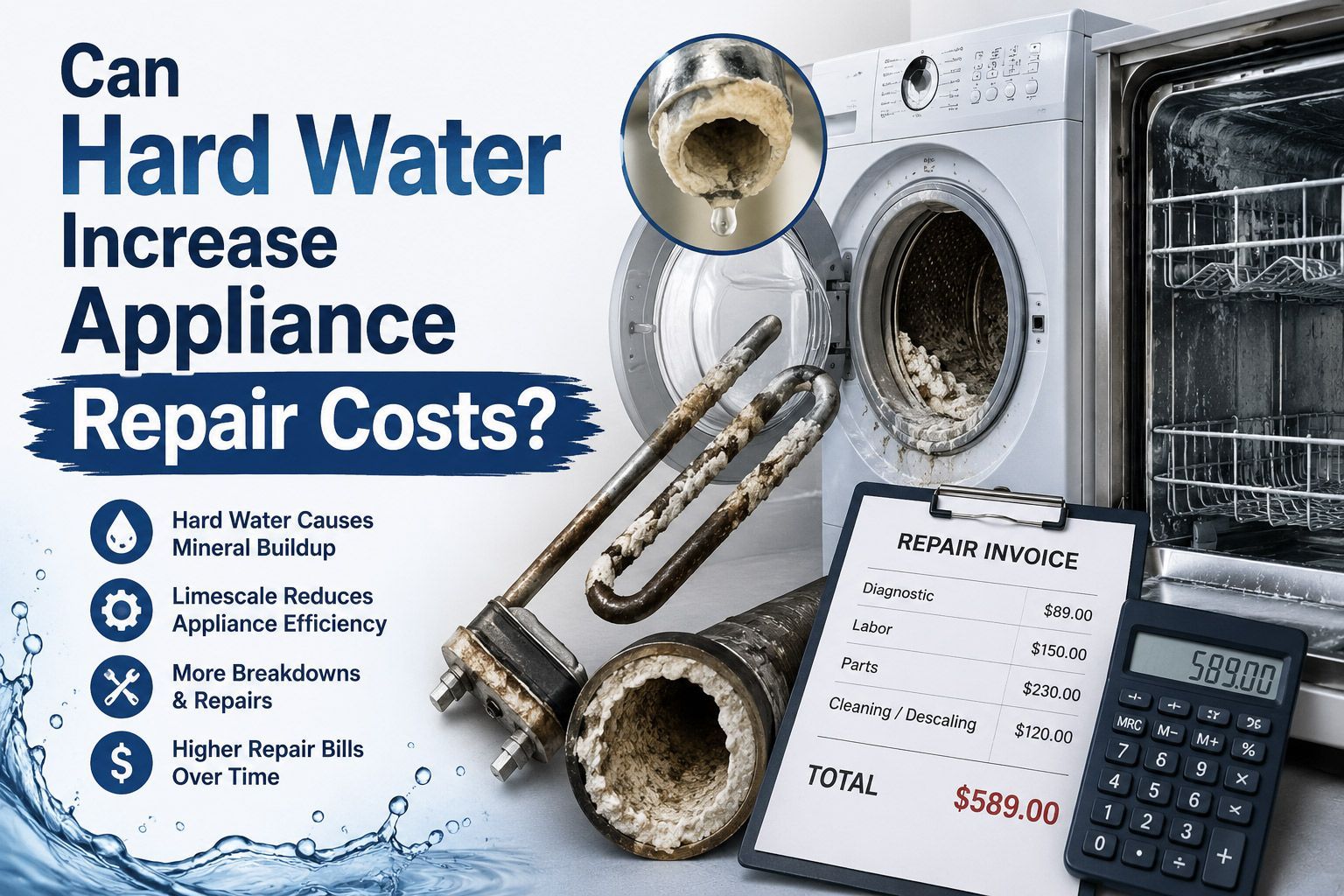
Hard water contains elevated levels of minerals such as calcium and magnesium. As water repeatedly flows through appliances, those minerals gradually collect inside internal components. Over time, buildup can restrict water flow, reduce efficiency, and place additional strain on equipment that depends on consistent water circulation.
For homeowners in Franklin and throughout Indiana, hard water can quietly increase appliance repair costs by accelerating wear inside water heaters, dishwashers, washing machines, and other plumbing-connected systems.
Hard Water Buildup Happens Gradually
One reason hard water damage is often overlooked is because the effects develop slowly. Appliances usually continue operating while mineral deposits build inside them little by little over time.
As scale accumulates, the appliance must work harder to perform the same job it handled more efficiently before.
Mineral Deposits Restrict Internal Components
Calcium and magnesium deposits commonly collect inside:
- Heating elements
- Water supply lines
- Valves
- Spray arms
- Pumps
- Internal plumbing passages
These restrictions may not cause immediate failure, but they often reduce overall performance long before the homeowner notices a major problem.
Efficiency Drops Before Breakdowns Happen
Many Indiana homeowners first notice signs such as longer appliance cycles, weaker water flow, or reduced cleaning performance. Those symptoms often appear before larger repair issues develop.
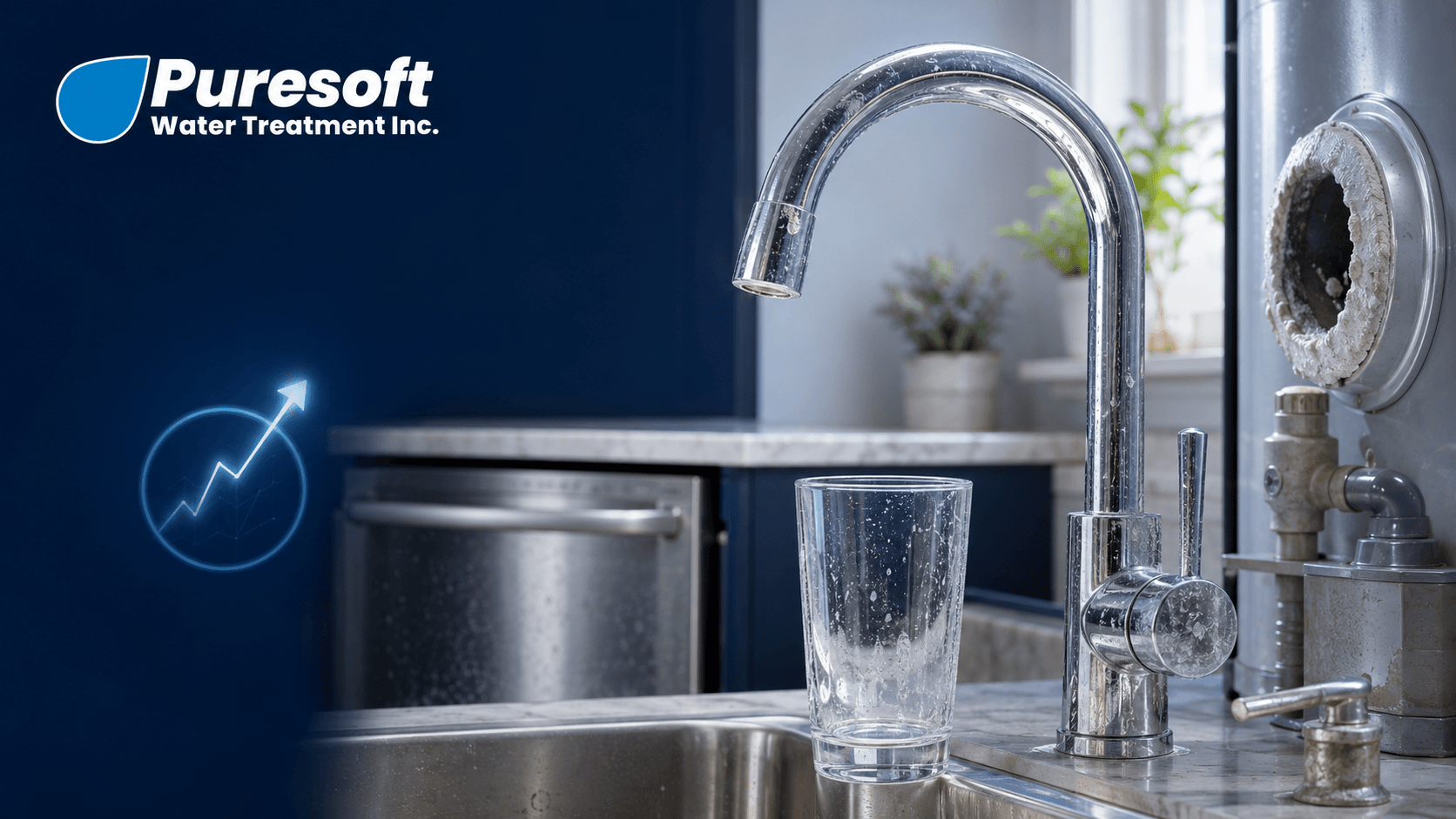
A dishwasher affected by mineral buildup, for example, may start leaving cloudy residue on dishes because restricted spray arms cannot distribute water properly anymore.
Water Heaters Often Experience Heavy Hard Water Damage
Water heaters are among the appliances most heavily affected by hard water because they constantly heat mineral-containing water.
Heat accelerates mineral separation, allowing scale to form more aggressively inside the tank and around heating components.
Sediment Buildup Reduces Heating Efficiency
As minerals settle inside the tank, a sediment layer forms at the bottom of the water heater.
That buildup forces the system to use more energy to heat water effectively. Over time, homeowners may notice:
| Common Symptom | What It May Indicate |
|---|---|
| Rising energy bills | Reduced heating efficiency |
| Rumbling noises | Sediment buildup inside tank |
| Inconsistent hot water | Restricted heating performance |
| Longer recovery times | Heating elements under strain |
The longer sediment remains inside the system, the harder the heater typically works during daily operation.
Heating Components Can Wear Out Faster
Hard water minerals may also coat heating elements directly, especially in electric water heaters.
Once heavily coated, the element struggles to transfer heat efficiently. This additional strain may eventually lead to overheating or premature failure.
Washing Machines Can Experience Increased Wear
Washing machines rely heavily on steady water movement, detergent interaction, and proper internal drainage. Hard water interferes with all three.
Mineral Deposits Affect Internal Water Flow
Scale buildup may gradually narrow water pathways inside the machine, reducing circulation efficiency during wash cycles.
Over time, this may affect:
- Fill valves
- Water pumps
- Drain systems
- Internal hoses
The machine often compensates by working harder or running longer cycles.
Soap Residue Creates Additional Stress
Hard water reduces how effectively soap dissolves during washing cycles.
As detergent combines with minerals, residue may begin accumulating inside the machine itself. This buildup can contribute to unpleasant odors, reduced cleaning performance, and additional wear on internal components.
Dishwashers Commonly Show Hard Water Problems Early
Dishwashers often reveal hard water issues faster than many other appliances because mineral residue becomes visible directly on dishes and interior surfaces.
Scale Buildup Interferes With Cleaning Performance
As minerals collect inside spray arms and nozzles, water pressure may weaken gradually.
Homeowners may begin noticing:
- Cloudy glassware
- White residue on dishes
- Poor rinsing performance
- Longer cleaning cycles
These symptoms often indicate restricted water movement inside the appliance.
Internal Components Can Become Less Reliable
Hard water deposits may also interfere with smaller dishwasher components responsible for regulating water flow and drainage.
Over time, this can increase the likelihood of:
- Valve problems
- Drainage issues
- Pump strain
- Sensor malfunctions
Repairs involving these systems may become more frequent as buildup worsens.
Hard Water Can Affect Smaller Appliances Too
Major appliances are not the only systems affected by mineral-heavy water. Smaller household equipment may also experience increased wear over time.
Coffee Makers and Ice Machines Often Develop Scale Quickly
Appliances using heated water commonly accumulate visible mineral deposits faster because heat speeds up scale formation.
This often affects:
- Coffee makers
- Ice machines
- Humidifiers
- Steam appliances
- Kettles
As deposits increase, water flow and heating efficiency usually decrease.
Appliance Lifespan May Shorten Over Time
The issue is not always one major breakdown. In many homes throughout Indiana, hard water simply causes appliances to wear out earlier than expected because components operate under constant mineral-related stress.
Water Softening Can Help Reduce Mineral Buildup
Many homeowners install water softener systems specifically to reduce mineral accumulation throughout the plumbing system.
Softened water helps lower the amount of calcium and magnesium reaching appliances daily.
Reduced Scale Helps Appliances Operate More Efficiently
With lower mineral levels, appliances often experience:
- Cleaner internal components
- Improved water flow
- Better heating efficiency
- Reduced soap residue
- Less sediment accumulation
This may help reduce long-term wear on water-dependent systems.
Maintenance Needs May Become More Manageable
While appliances still require normal maintenance over time, reducing mineral exposure may help limit severe scale buildup inside critical components.
For many Indiana households, this becomes especially important in homes with consistently hard groundwater.
Some Repair Costs Build Slowly Over Time
Hard water does not always create immediate appliance failure. Instead, repair costs often increase gradually through repeated maintenance issues, reduced efficiency, and shorter equipment lifespan.
Common Long-Term Hard Water Expenses
Homeowners may eventually face costs related to:
- Heating element replacement
- Valve repairs
- Reduced appliance lifespan
- Higher utility bills
- More frequent maintenance visits
Because these costs accumulate slowly, many homeowners do not immediately connect them to hard water conditions.
Frequently Asked Questions About Hard Water and Appliances
Can hard water damage appliances permanently?
Yes. Long-term mineral buildup may reduce efficiency and increase wear on internal components over time.
Which appliances are affected most by hard water?
Water heaters, dishwashers, washing machines, and any appliance using heated water are commonly affected.
Does hard water increase energy usage?
It can. Scale buildup forces appliances to work harder, which may increase energy consumption.
Can water softeners help reduce appliance problems?
Water softeners help reduce calcium and magnesium buildup that contributes to scaling inside appliances.
Why is hard water common in Indiana?
Many areas of Indiana naturally contain groundwater with elevated mineral content, especially calcium and magnesium.
Conclusion
Hard water can gradually increase appliance repair costs by allowing mineral deposits to build inside water heaters, dishwashers, washing machines, and other water-dependent systems. While the damage often develops slowly, scale buildup can reduce efficiency, strain internal components, and shorten appliance lifespan over time.
For homeowners in Franklin and throughout Indiana, understanding how hard water affects household equipment can help prevent larger repair problems later. PureSoft Water Treatment Inc. provides water treatment and softening solutions for homeowners looking to reduce hard water issues and improve long-term water quality throughout the region.