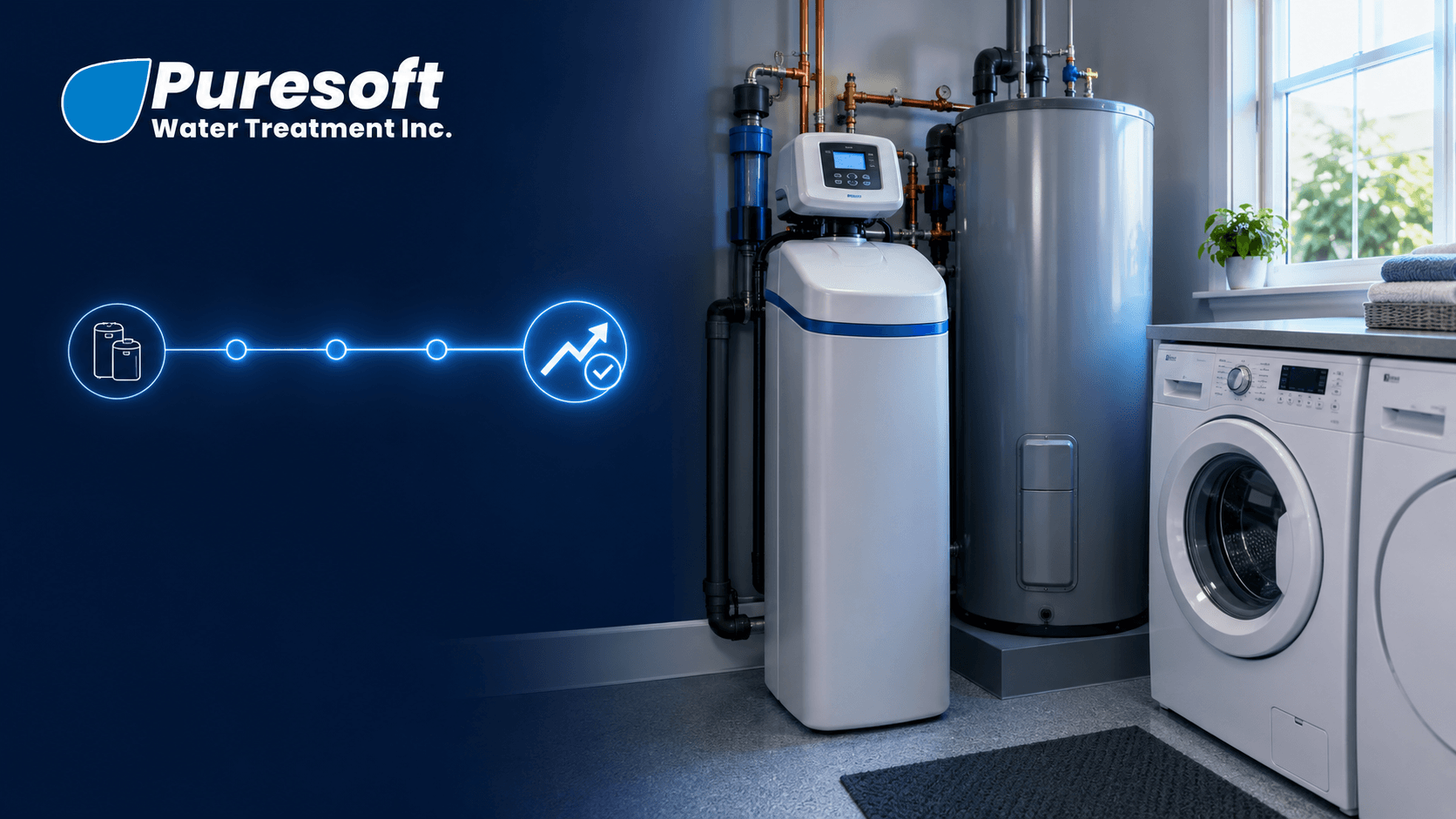
You finally decided to do something about your hard water. Maybe the white crust on your faucets won the battle, or a plumber pointed to scale inside your water heater and suggested a softener. Either way, the decision is made. The next question is a practical one: what actually happens once the installer arrives?
For homeowners in Franklin, Indiana, a water softener installation is usually a straightforward project, but it involves more planning and precision than most people expect. Knowing what each stage looks like helps you prepare your home, ask better questions, and recognize the difference between a careful installation and a rushed one.
Why Does Professional Water Softener Installation Matter?
Quick Answer
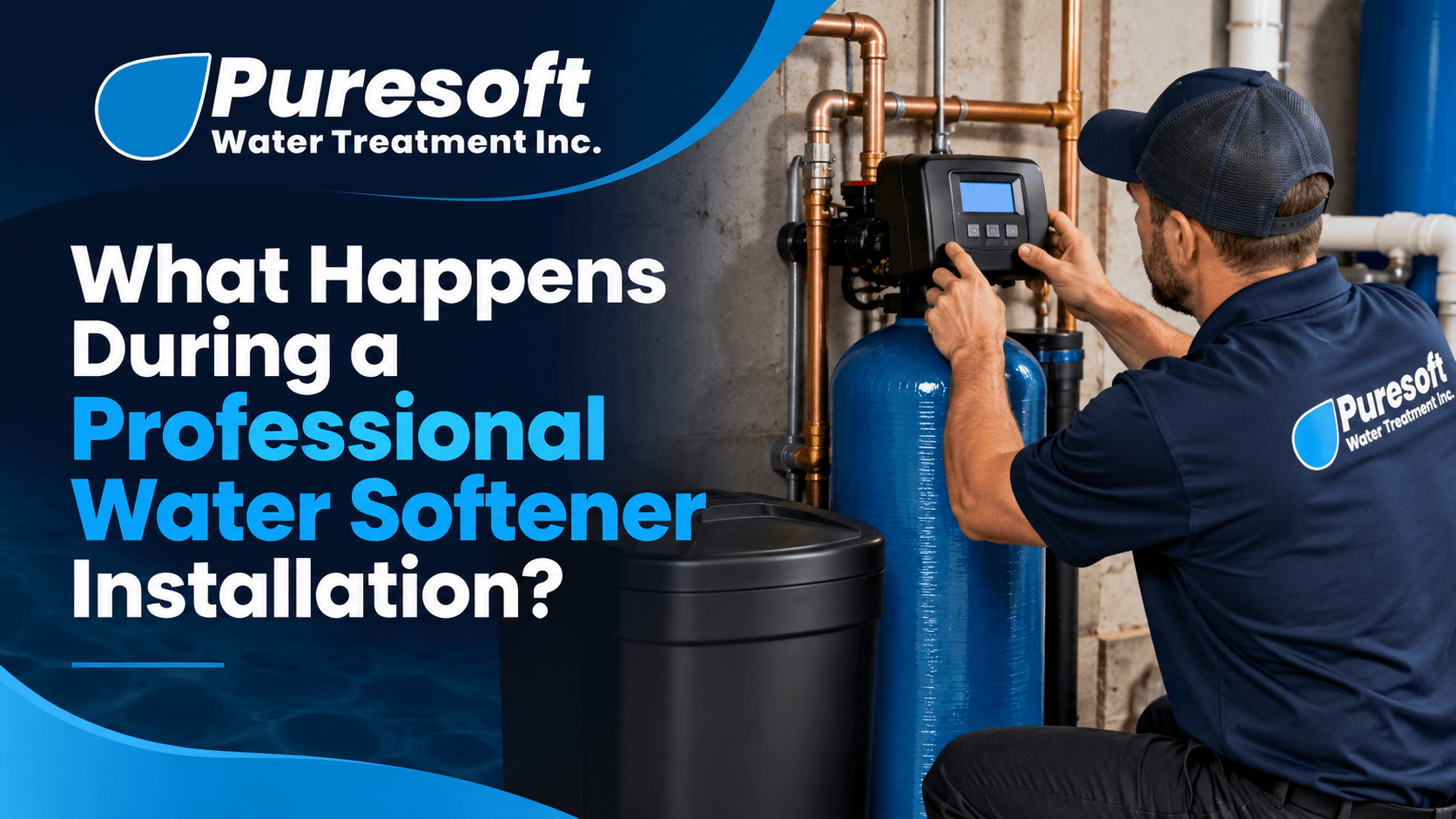
During a professional water softener installation, a technician tests your water, sizes the system, cuts into the main water line, adds a bypass valve, connects the drain line and brine tank, programs the control valve, and runs a first regeneration while checking every connection for leaks. In most homes, the work is finished in a single visit.
A water softener is not an appliance you plug in and forget. It connects directly to your home's main water line, which means every gallon you use for showers, laundry, dishes, and cleaning passes through it. That makes the installation one of the most important factors in how well the system performs over its lifetime.
A softener that is sized incorrectly can run out of softening capacity between regenerations and send hard water back into your pipes. A drain line installed without a proper air gap can create a backflow risk. A control valve programmed with the wrong hardness setting can waste salt and water every week. None of these problems are obvious on day one, but they show up over time in your salt usage, your utility bills, and the condition of your fixtures.
Water in Franklin, Indiana is typically very hard, so softeners in local homes work every single day. A professional installer handles the plumbing connections, follows local plumbing requirements, and programs the system based on your actual water rather than a generic factory default. The result is a softener that protects your plumbing from the start instead of one that needs to be corrected later.
How Is a Water Softener Sized Before Installation?
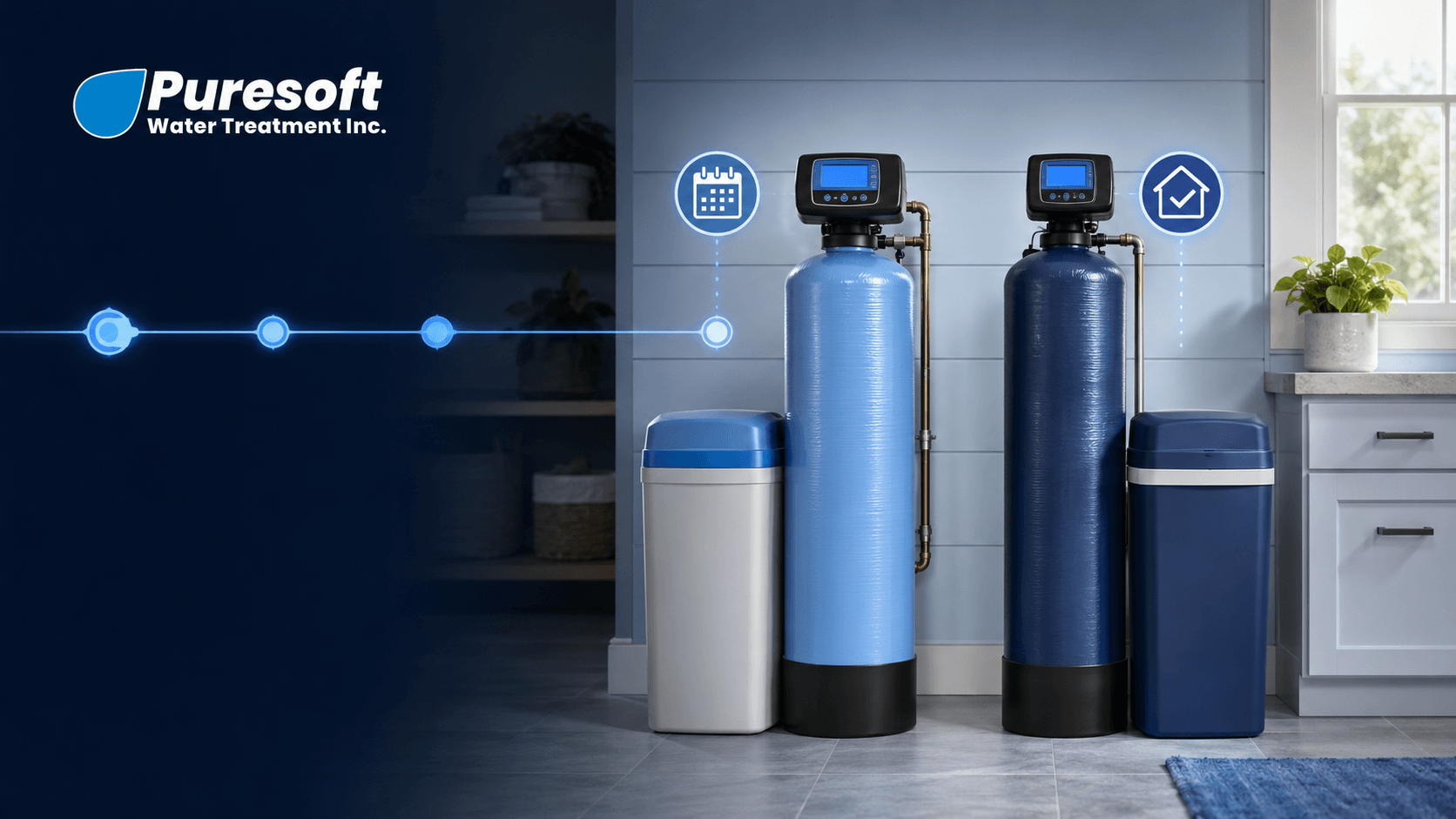
A good installation starts before anyone picks up a wrench. The installer needs to understand your water and your household so the system matches your needs rather than a one-size-fits-all estimate. Our guide to water softener types, features, and size considerations explains how capacity is chosen. During the consultation or pre-installation visit, a professional typically looks at the following:
- Water hardness: Measured in grains per gallon, this number determines how hard the softener has to work and how it should be programmed.
- Iron and other minerals: Iron can foul softener resin, so its presence may change the equipment recommendation or call for added filtration. Learn more about iron and manganese in Central Indiana water.
- Household water use: The number of people in the home and their daily habits help determine the capacity the softener needs.
- Plumbing layout: The installer checks where the main line enters, what pipe material is used, and how the water heater is connected.
- Water source: Homes on municipal water and homes on private wells often need different setups, especially in the rural areas surrounding Franklin, Indiana.
What Are the Steps of a Water Softener Installation?
Once the system has been selected and sized, the installation itself follows a predictable sequence. If you are budgeting for the project, see how much water softener installation costs in Franklin. Here is what a typical professional water softener installation looks like in a Franklin, Indiana home from start to finish:
- Walkthrough and setup: The installer confirms the location, protects the floor around the work area, and reviews the plan with you.
- Water shutoff and draining: The main water supply is turned off, and faucets are opened to relieve pressure and drain water from the lines.
- Cutting into the main line: The installer cuts into the main water line at the chosen point, usually after the main shutoff valve and before the water heater.
- Installing the bypass valve: A bypass valve is added so the softener can be isolated for service without shutting off water to the entire house.
- Connecting inlet and outlet lines: Incoming hard water is routed into the softener, and treated water is routed back into the home's plumbing.
- Running the drain line: A drain line is connected from the control valve to a floor drain, utility sink, or standpipe, with an air gap to prevent backflow.
- Connecting the brine tank: The brine tank is positioned, connected to the control valve, and fitted with an overflow line.
- Programming the control valve: The installer enters your hardness level, household size, and regeneration settings so the system softens efficiently.
- Adding salt and starting up: Salt and water are added to the brine tank, the water supply is slowly restored, and air is purged from the system.
- Initial regeneration and leak check: The softener runs its first regeneration cycle while the installer checks every connection for leaks and tests the treated water.
Where Should a Water Softener Go in a Franklin, Indiana Home?
Location affects how well a softener works and how easy it is to maintain for years to come. A system tucked into an awkward corner might function, but it will be harder to service and refill. Installers weigh several factors before deciding where the system will go:
- Proximity to the main line: The softener should sit close to where water enters the home so treated water reaches as many fixtures as possible.
- Placement before the water heater: Softening water before it is heated helps protect the water heater from scale, which is one of the main reasons people invest in a softener.
- Access to a drain: The system needs a nearby drain to carry away wastewater during regeneration.
- Access to a power outlet: Most modern control valves need a standard electrical outlet to run their timers and sensors.
- Protection from freezing: Garages and unfinished spaces can drop below freezing during Indiana winters, which can crack tanks and damage valves.
- Room for maintenance: You will need to add salt regularly, so the brine tank should be easy to reach without moving boxes or equipment.
What Should You Expect After a Water Softener Is Installed?
The first few days with softened water can feel different. Many people notice that soap lathers more easily and that water feels slippery on their skin in the shower. That sensation is normal. It comes from the absence of hardness minerals, which used to leave a film on your skin. Within a week or two, most households get used to it and start to prefer it.
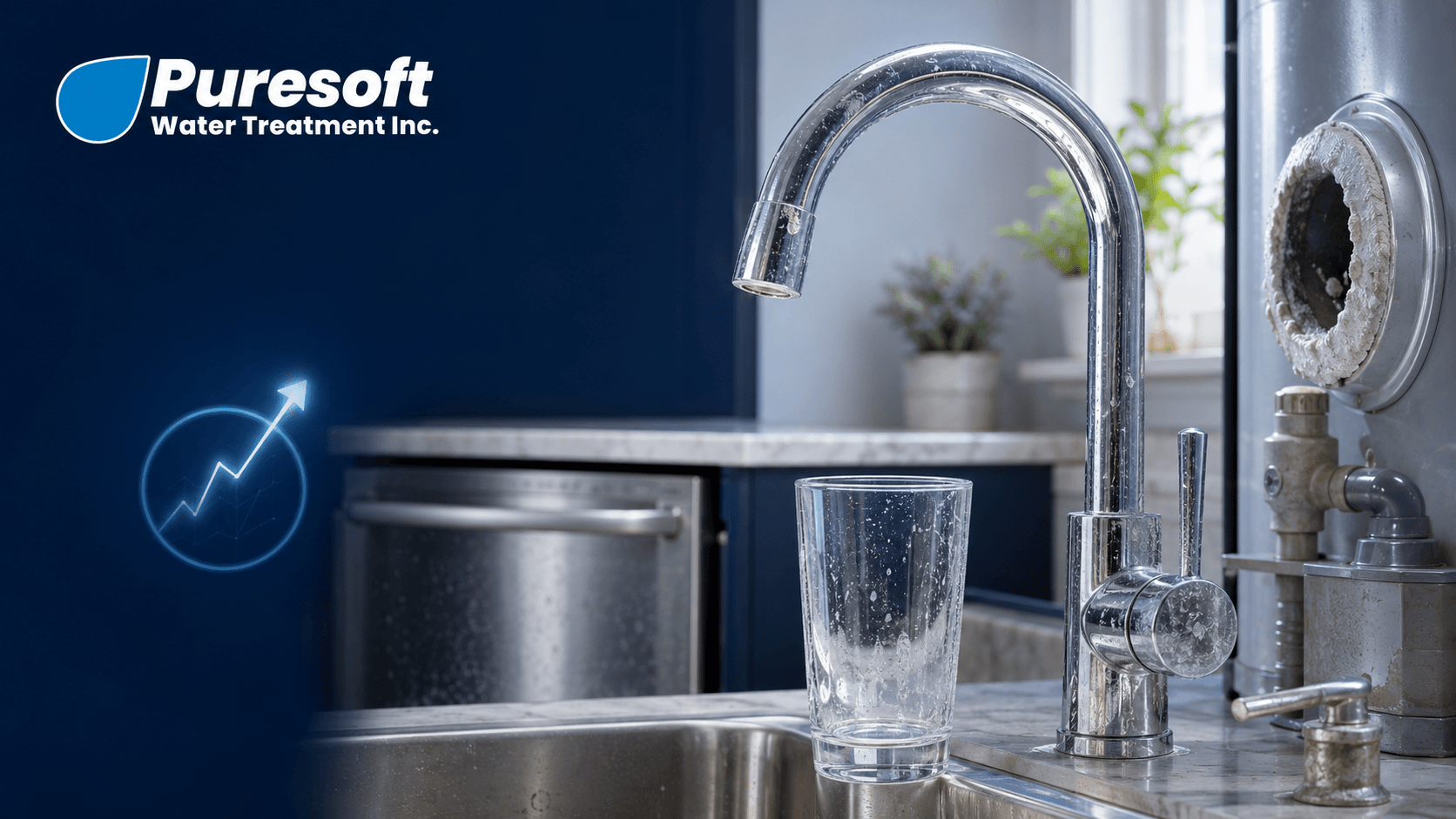
You may also notice that some fixtures still show hard water spots at first. Softening prevents new scale from forming, but existing buildup on faucets, shower glass, and showerheads needs to be cleaned off once. Your water heater and pipes benefit gradually too, since softened water no longer adds new mineral deposits.
Before leaving, a professional installer should walk you through the basics: how to check the salt level, how to use the bypass valve, and what the control valve display means. Keep the paperwork and model information somewhere easy to find. If anything seems off in the first few weeks, such as salty-tasting water or unexpected noises during regeneration, contact your installer so the settings can be checked. Homeowners in Franklin, Indiana should also know that outdoor spigots are often left on untreated water, which is intentional and saves salt on water used for lawns and gardens.
Frequently Asked Questions About Water Softener Installation
How long does a water softener installation take?
Most standard installations take two to four hours. A project can take longer if the plumbing needs to be rerouted, if there is no convenient drain nearby, or if additional equipment such as a filter is being installed at the same time.
Do I need to be home during the installation?
Someone should be home at the start to confirm the location and at the end to receive the walkthrough. In between, the installer mainly needs clear access to the work area and the main water shutoff.
Can I install a water softener myself?
You can, but professional installation is the safer choice. A DIY installation involves cutting into the main water line, meeting drain and backflow requirements, and programming the valve correctly. Mistakes can lead to leaks, water damage, or a system that wastes salt, and some manufacturers' warranties require professional installation.
Does a water softener installation need a permit?
Permit requirements depend on your city or county. Some jurisdictions treat a softener installation as plumbing work that requires a permit, while others do not. A local installer should know the rules in your area and handle any required paperwork.
Will a water softener lower my water pressure?
A properly sized softener causes only a slight pressure drop that most people never notice. A significant loss of pressure usually points to an undersized system, a clogged resin bed, or a valve problem that should be inspected.
Conclusion
A professional water softener installation follows a clear path: testing your water, sizing the system, choosing the right location, making secure plumbing connections, and programming the control valve for your home. Each step matters, because a softener only protects your plumbing and appliances when it is set up correctly from the start.
Puresoft Water Treatment installs water softeners for homes throughout Central Indiana, using high-quality Hague systems and settings based on your actual water test results. If you are considering a softener and want to know what the process would look like in your home, reach out to our team to talk through your options.
Contact Puresoft Water Treatment