Why Do Some Homes Need Both Filtration and Softening?
September 6, 2026
Introduction
A homeowner installs a water filter expecting cleaner water throughout the house, but white scale keeps building up around faucets and appliances. Another household adds a water softener to solve hard water problems, only to notice the sulfur smell and metallic taste never actually go away.
This confusion happens because water filtration systems and water softeners are designed to solve different problems.
In many Indiana homes, especially those using groundwater or private wells, water may contain several separate issues at the same time. One system may improve taste and odor while another targets calcium and magnesium minerals responsible for hard water buildup. Depending on the water conditions, homeowners sometimes need both systems working together to fully address the problems affecting the home.
Understanding the difference between filtration and softening helps explain why one system alone may not always solve every water quality concern.
Water Softeners and Filters Perform Different Jobs
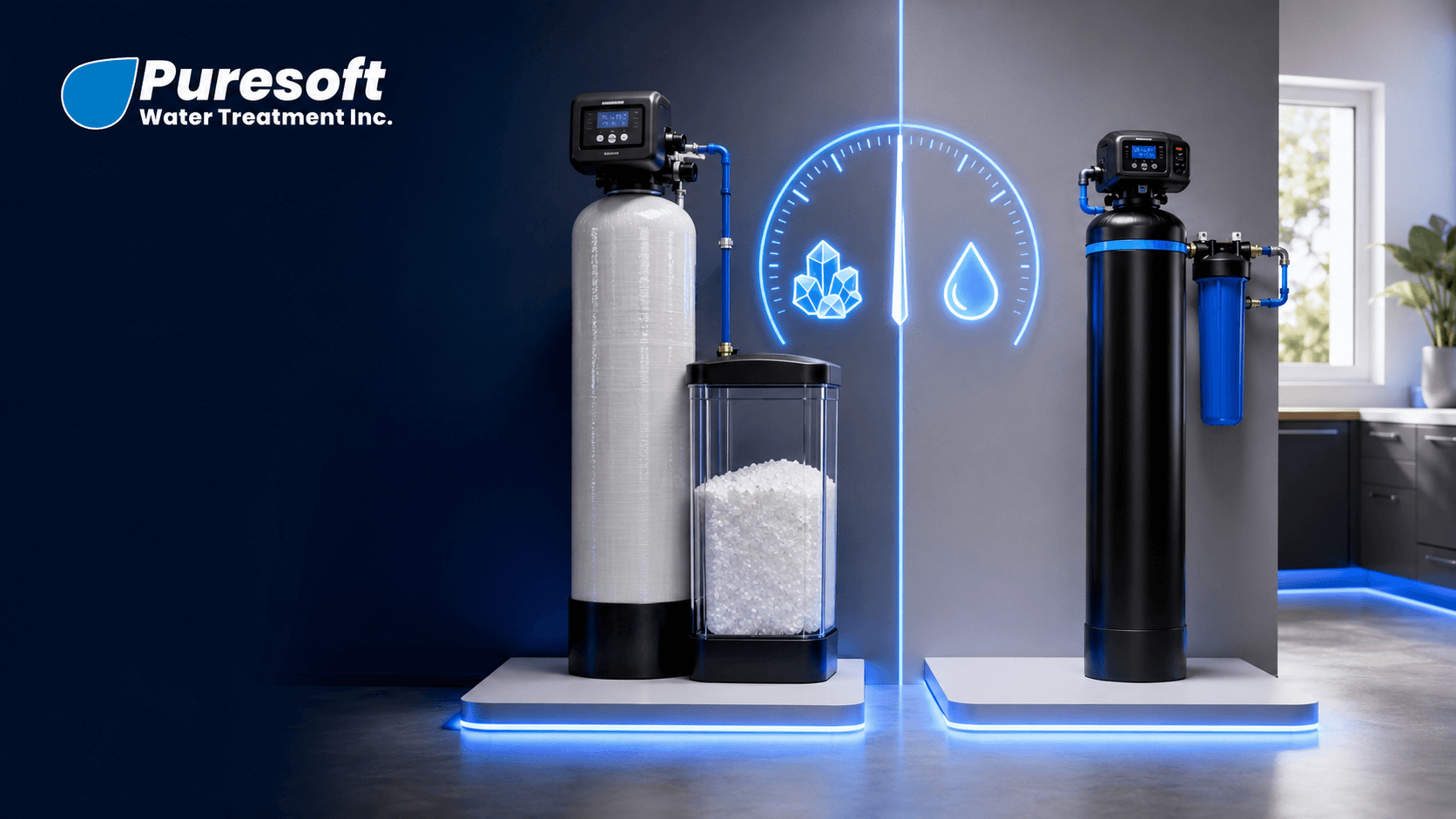
Many homeowners assume water softeners are simply another type of filter. Technically, both systems treat water, but they target very different things.
Water Softeners Focus on Hard Water Minerals
Water softeners are designed primarily to remove calcium and magnesium minerals that create hard water.
Those minerals are responsible for problems such as:
- Scale buildup on fixtures
- White residue on dishes
- Dry skin after showers
- Soap scum accumulation
- Mineral buildup inside appliances
The softener reduces mineral concentration before the water moves through the plumbing system.
Filtration Systems Target Other Water Problems
Filtration systems focus on contaminants, particles, odors, and impurities that softeners are not designed to remove.
Depending on the system, filtration may help address:
| Water Issue | Typical Filtration Solution |
|---|---|
| Sediment | Sediment filtration |
| Chlorine taste | Carbon filtration |
| Sulfur odor | Oxidation or specialty filtration |
| Iron | Iron filtration systems |
| Bacteria concerns | UV purification |
A water softener alone usually does not solve these issues completely.
Indiana Homes Often Have Multiple Water Problems Together
One reason some households need both systems is because Indiana water conditions frequently involve more than one issue at the same time.
This is especially common in homes using private wells.
Hard Water and Iron Often Appear Together
Many Indiana homeowners experience both:
- Hard water minerals
- Iron staining
A softener may reduce hardness but still leave iron-related staining or metallic taste problems behind.
Likewise, a filtration system handling iron may not fully prevent hard water scale buildup inside plumbing and appliances.
Odors and Sediment May Also Be Present
Some homes additionally deal with:
- Sulfur odor
- Sediment accumulation
- Cloudy water
- Chlorine taste
- Organic contaminants
As water quality issues combine together, treatment often becomes more specialized.
Hard Water Damages Plumbing While Filtration Improves Water Quality
Another reason homeowners use both systems is because each one protects different parts of the home.
Softening Primarily Protects Plumbing and Appliances
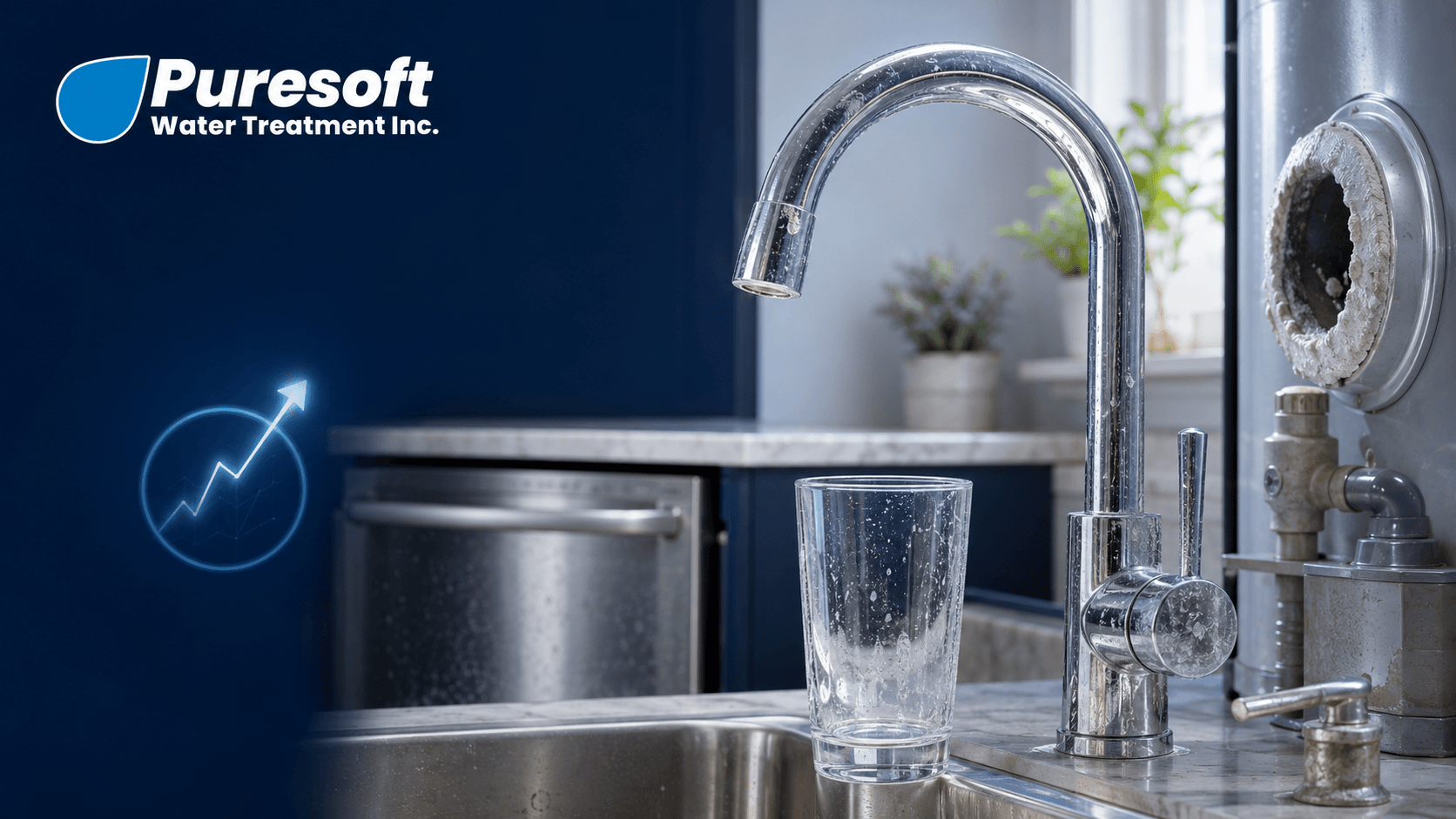
Hard water minerals gradually collect inside:
- Pipes
- Water heaters
- Dishwashers
- Washing machines
- Showerheads
Over time, scale buildup can reduce water flow, lower appliance efficiency, and increase maintenance needs.
Water softening helps reduce mineral accumulation throughout the plumbing system.
Filtration Focuses More on Water Condition and Safety
Filtration systems are usually installed to improve the quality of the water itself.
Depending on the filtration type, homeowners may notice improvements involving:
- Taste
- Odor
- Sediment reduction
- Water clarity
- Contaminant removal
The systems work differently even though they are often installed together.
Some Symptoms Continue Until Both Problems Are Addressed
Homeowners sometimes become frustrated when one treatment system improves part of the problem but leaves other symptoms unchanged.
A Water Filter May Not Stop Scale Buildup
For example, a carbon filter may improve chlorine taste while the home still experiences:
- White spotting on dishes
- Soap scum
- Mineral deposits around fixtures
That happens because the filter may not remove hardness minerals.
A Water Softener May Not Improve Taste or Odor
On the other hand, soft water may still contain:
- Sulfur smell
- Metallic taste
- Sediment
- Chlorine odor
This is why some Indiana homes ultimately need multiple treatment stages instead of relying on a single solution.
Combination Systems Are Common in Well Water Homes
Homes using well water frequently require more comprehensive treatment because groundwater conditions vary widely across Indiana.
Well Water May Require Layered Treatment
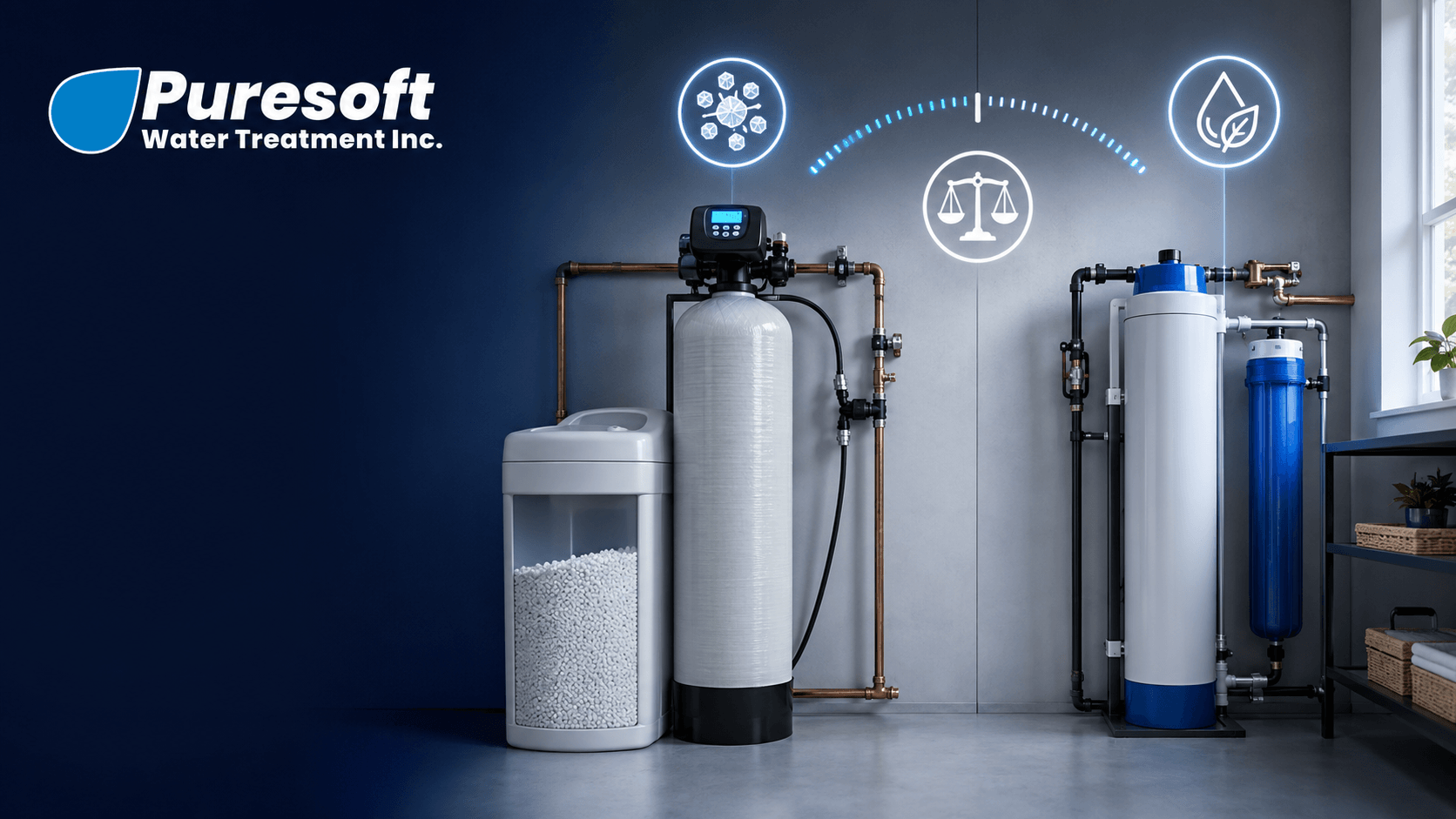
A complete treatment setup may include several systems working together.
For example:
| Treatment Stage | Purpose |
|---|---|
| Sediment filtration | Removes particles and debris |
| Iron filtration | Reduces staining |
| Water softener | Removes hardness minerals |
| Carbon filtration | Improves taste and odor |
| UV purification | Helps address bacteria concerns |
Not every home needs all of these stages, but multiple systems are common when several water problems exist together.
Water Testing Helps Determine the Right Setup
Without testing, homeowners may install equipment that addresses only part of the issue.
Testing helps identify:
- Hardness levels
- Iron concentration
- Sediment presence
- Odor sources
- Contaminants
This allows treatment systems to be designed around the home’s actual water conditions instead of guesswork.
Water Usage and Household Size Matter Too
The size of the home and daily water demand also influence whether both filtration and softening become necessary.
Larger Homes Place More Stress on Water Systems
Higher household demand may involve:
- Multiple bathrooms
- Larger families
- Heavy laundry use
- Frequent dishwasher cycles
As water usage increases, treatment systems need enough capacity to maintain performance consistently.
Smaller Point-of-Use Filters May Not Be Enough
Some homeowners start with small faucet or refrigerator filters, but those systems only treat limited areas of the home.
Untreated water may still flow through:
- Water heaters
- Showers
- Washing machines
- Plumbing fixtures
Whole-house treatment becomes more important when water problems affect the entire plumbing system.
Properly Matched Systems Often Improve Long-Term Efficiency
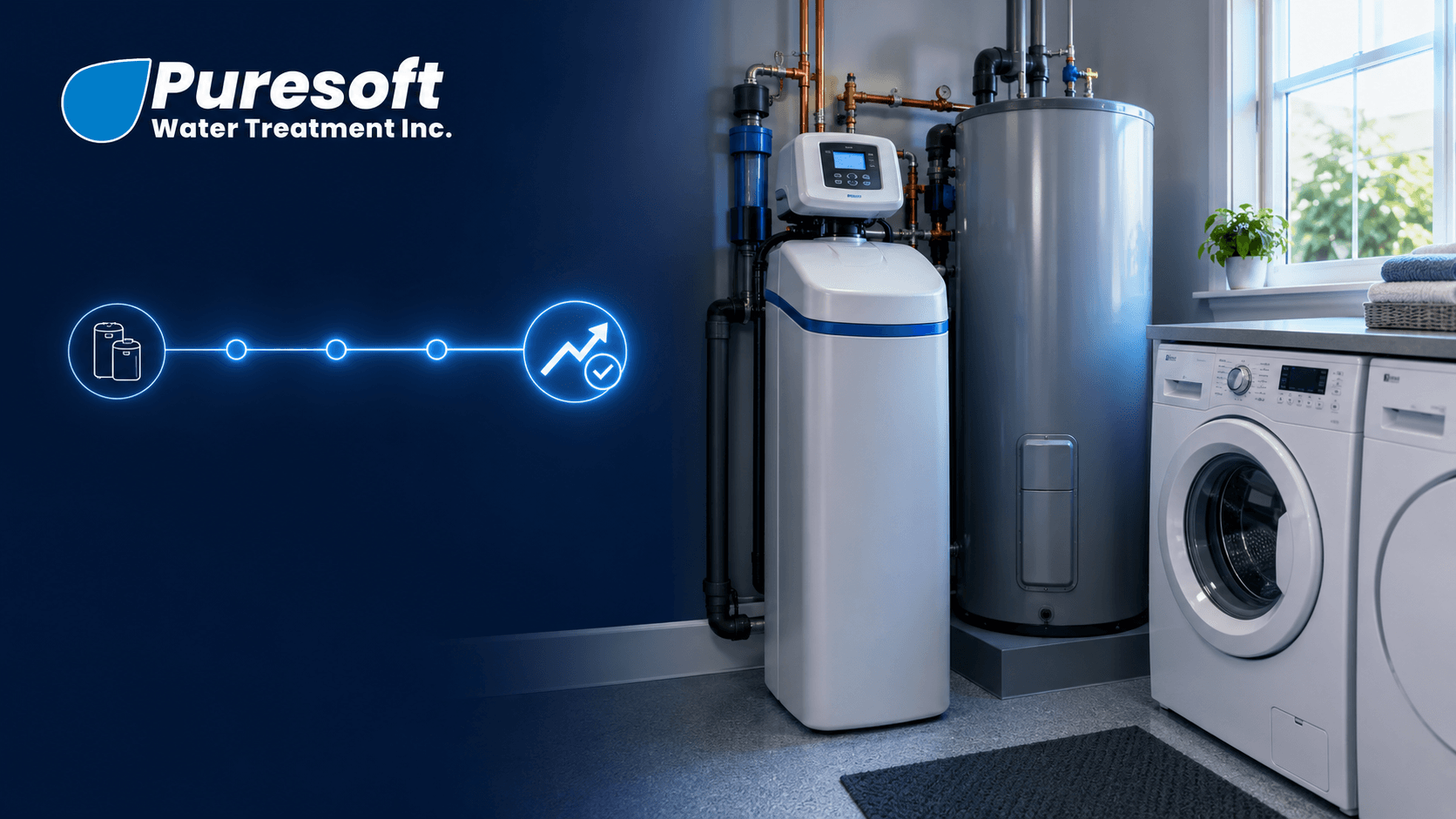
Homes using the correct combination of filtration and softening often experience broader protection throughout the plumbing system.
Appliances May Operate More Efficiently
Reducing mineral buildup and contaminants may help support:
- Better water heater efficiency
- Reduced appliance strain
- Cleaner plumbing fixtures
- Improved soap performance
Maintenance Problems May Decrease
Addressing both hard water and filtration concerns together may help reduce:
- Scale accumulation
- Staining
- Odors
- Sediment buildup
- Frequent appliance cleaning
The goal is usually not just cleaner water, but more consistent water quality throughout the home.
Frequently Asked Questions About Filtration and Water Softening
Is a water softener the same as a water filter?
No. Water softeners remove hardness minerals, while filtration systems target contaminants, sediment, odors, and impurities.
Can a water filter remove hard water?
Most standard filtration systems do not remove calcium and magnesium minerals responsible for hard water.
Why do Indiana homes often need both systems?
Many homes experience multiple water issues simultaneously, including hard water, iron, sediment, and odor concerns.
Does well water require more treatment than city water?
In many cases, yes. Well water conditions often vary more and may require several treatment stages.
How do homeowners know which system they need?
Water testing helps identify the specific water conditions affecting the home before choosing treatment equipment.
Conclusion
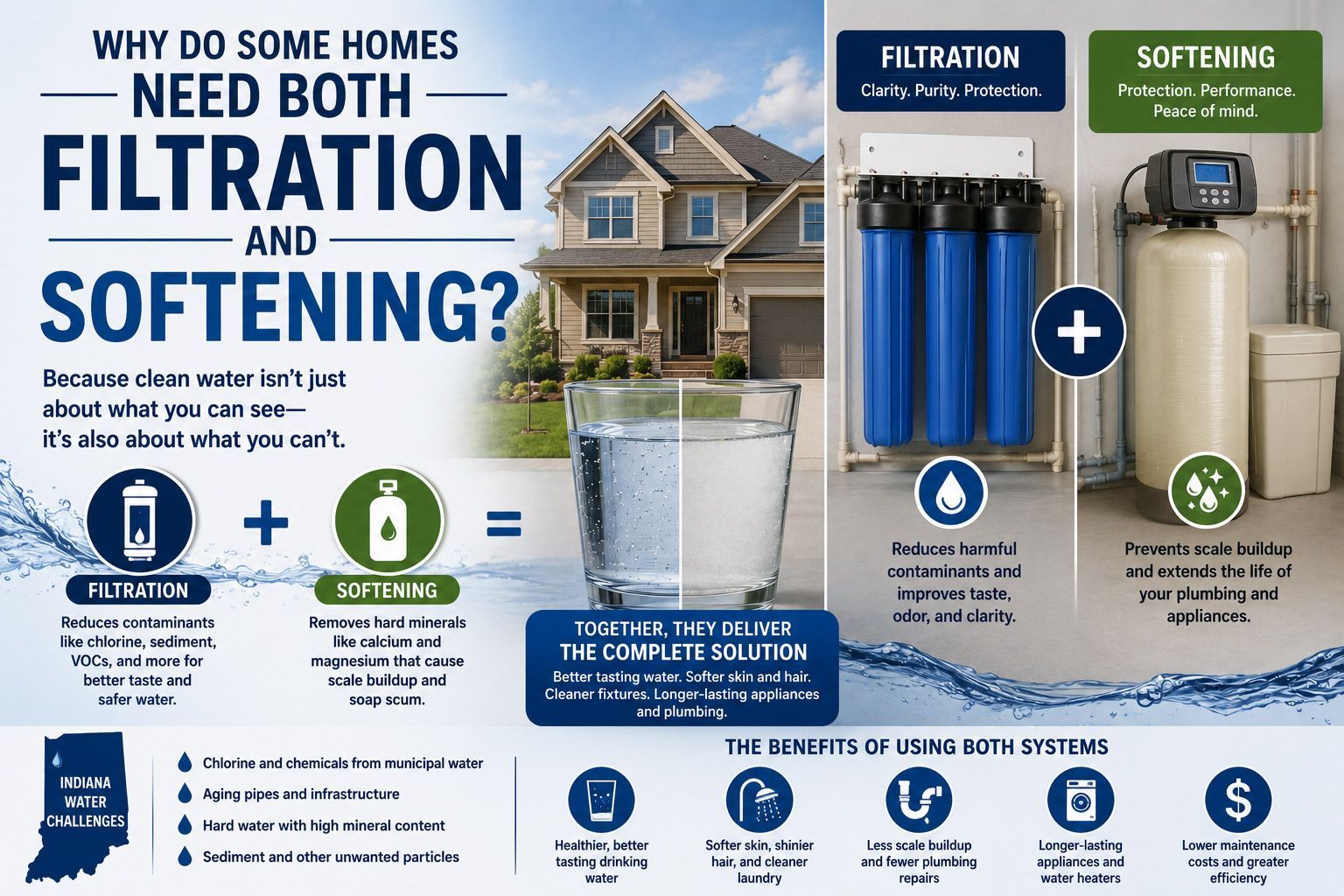
Some Indiana homes need both filtration and softening because water quality problems often involve more than one issue at the same time. While water softeners help reduce hard water minerals that damage plumbing and appliances, filtration systems target contaminants, odors, sediment, and additional water quality concerns that softeners are not designed to handle.
For homeowners in Franklin and throughout Indiana, understanding how these systems work together can help create more effective long-term water treatment solutions throughout the home. PureSoft Water Treatment Inc. provides water softening and filtration solutions designed around the specific water conditions affecting homes across the region.