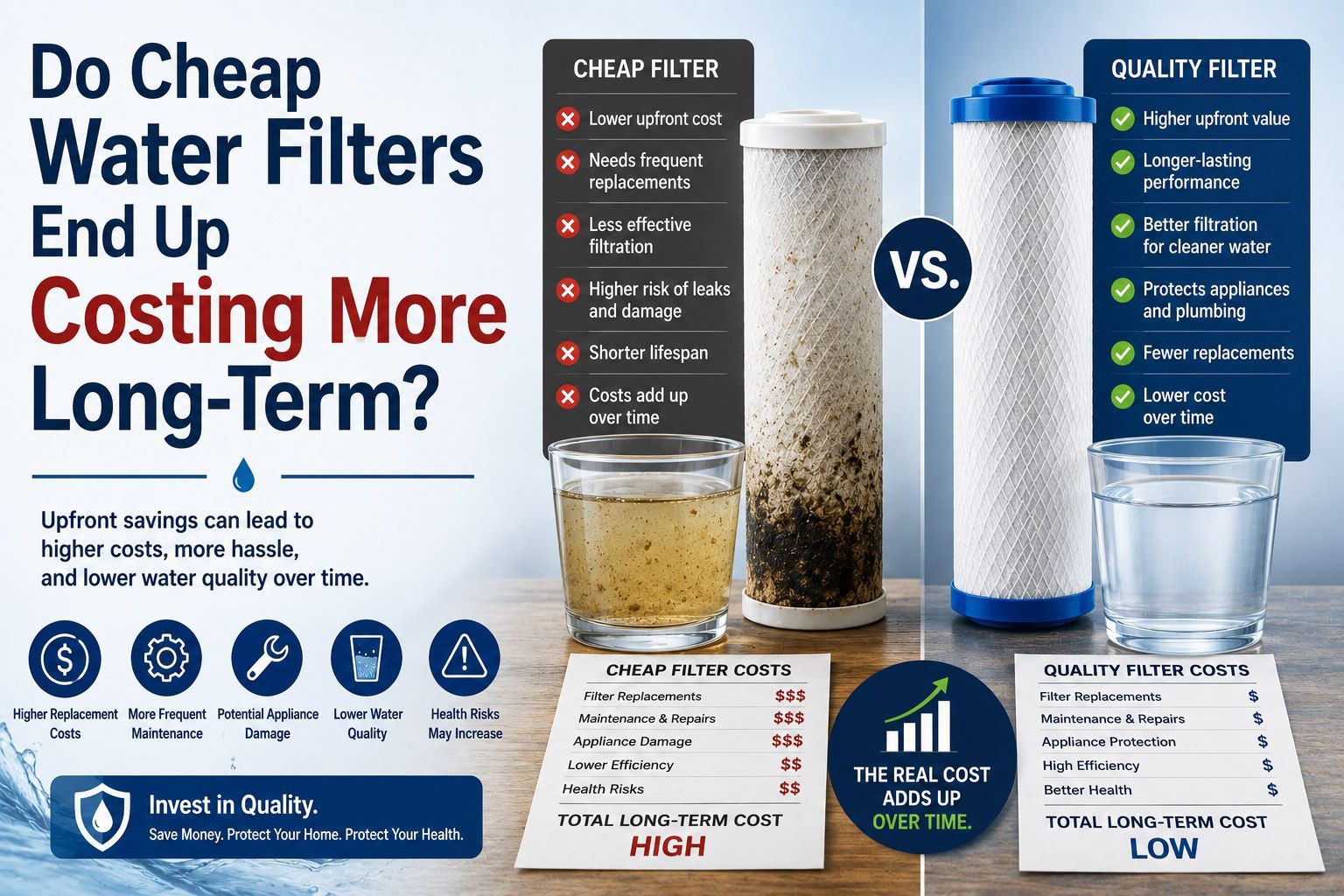
Do Cheap Water Filters End Up Costing More Long-Term?
August 16, 2026
Introduction
A low-cost water filter usually looks appealing at first. The packaging promises cleaner water, simple installation, and immediate savings compared to larger treatment systems. For many homeowners, especially those trying to solve taste, odor, or hard water concerns quickly, cheaper filtration options seem like an easy decision.
The problem is that water filtration is not only about the purchase price. A filter that costs less upfront may require constant cartridge replacements, struggle with Indiana water conditions, or fail to address the actual problem affecting the home. In some cases, homeowners end up spending more replacing filters, repairing appliances, or upgrading systems later after the original setup proves ineffective.
Whether a cheaper filter becomes expensive long-term usually depends on what the system is designed to handle, how much water the household uses, and whether the filter matches the home’s actual water quality conditions.
Cheap Filters Often Solve Smaller Problems Only
Not every water issue requires an advanced filtration system. Some homes only need minor improvements for taste or odor, while others face much more demanding conditions.
The challenge is that inexpensive filters are often designed for limited treatment capacity.
Basic Filters Usually Focus on Surface-Level Improvements
Lower-cost systems commonly target issues such as:
- Mild chlorine taste
- Minor odor concerns
- Small sediment particles
For homes connected to municipal water with relatively stable water quality, those systems may work adequately for lighter filtration needs.
Indiana Water Conditions Can Be More Demanding
Some homes throughout Indiana deal with water containing:
| Water Condition | Why Basic Filters May Struggle |
|---|---|
| Hard water minerals | Scale buildup continues |
| Iron | Staining may remain untreated |
| Sulfur | Odors may persist |
| Heavy sediment | Filters clog faster |
| Well water contaminants | Additional treatment may be needed |
If the filter is not designed for those conditions, homeowners may continue experiencing water problems despite replacing filters regularly.
Frequent Filter Replacement Adds Up Over Time
One of the biggest hidden costs with cheaper filtration systems is replacement frequency.
Lower-cost filters often have smaller capacity and shorter lifespan, especially in homes with higher water usage or poor water quality.
Heavy Water Usage Wears Filters Out Faster
Larger households place greater demand on filtration systems because more water moves through the filter daily.
This becomes more noticeable in homes using:
- Multiple bathrooms
- Large families
- Dishwashers frequently
- Washing machines heavily
- Outdoor water systems
Smaller filters may become overwhelmed quickly under higher demand.
Sediment and Minerals Can Shorten Filter Life
Homes using Indiana well water often experience sediment or mineral-heavy conditions that clog inexpensive filters much faster than expected.
Over time, homeowners may repeatedly spend money on:
- Replacement cartridges
- Additional maintenance
- Reduced filter performance
- Emergency replacements
What initially seemed affordable may become much more expensive after years of continuous replacement costs.
Cheap Filters May Not Protect Appliances Properly
Many homeowners install water filtration systems hoping to protect plumbing fixtures and appliances long-term.
However, not every filter provides enough treatment to reduce mineral-related wear inside the home.
Hard Water Problems Often Continue
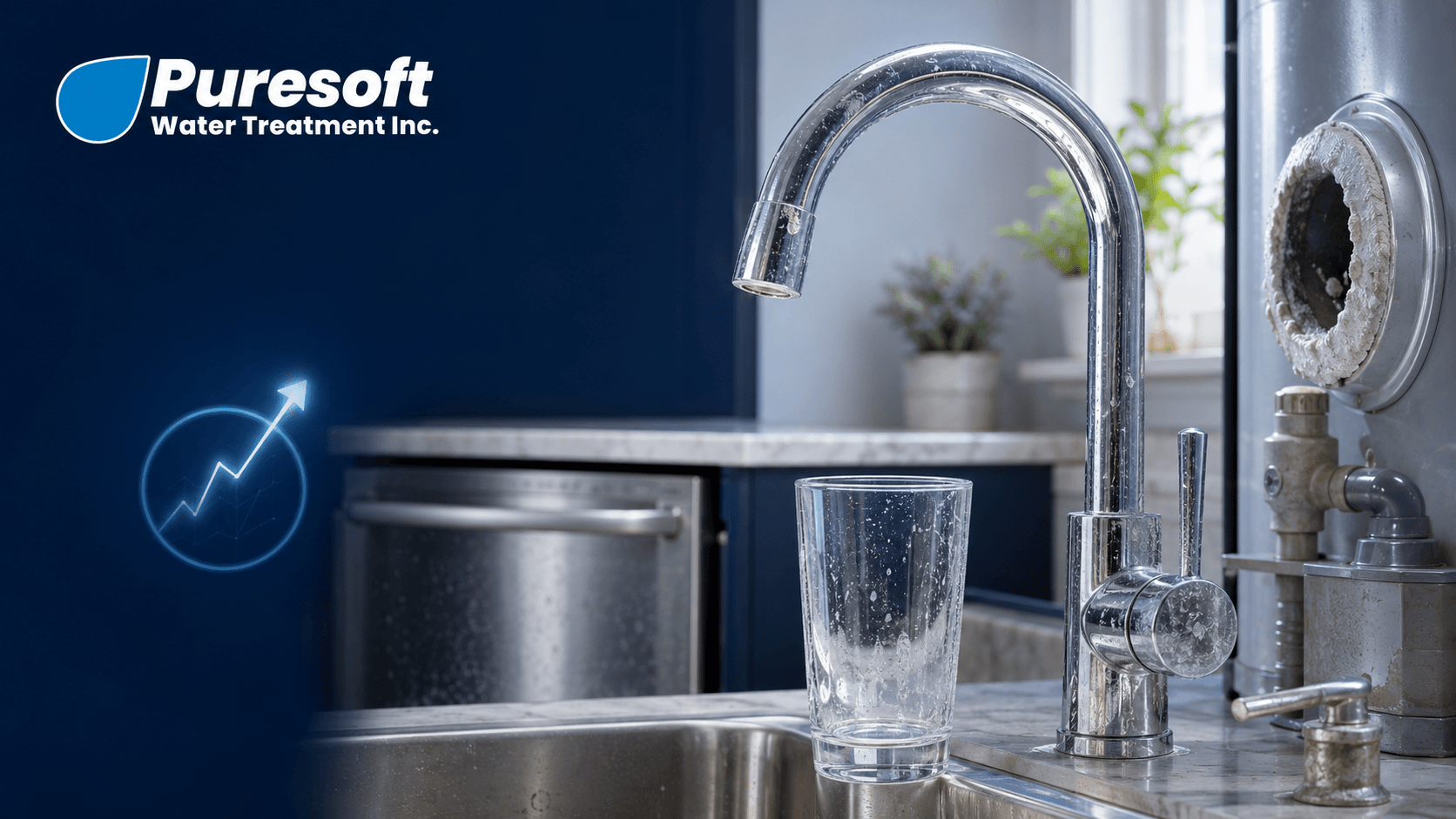
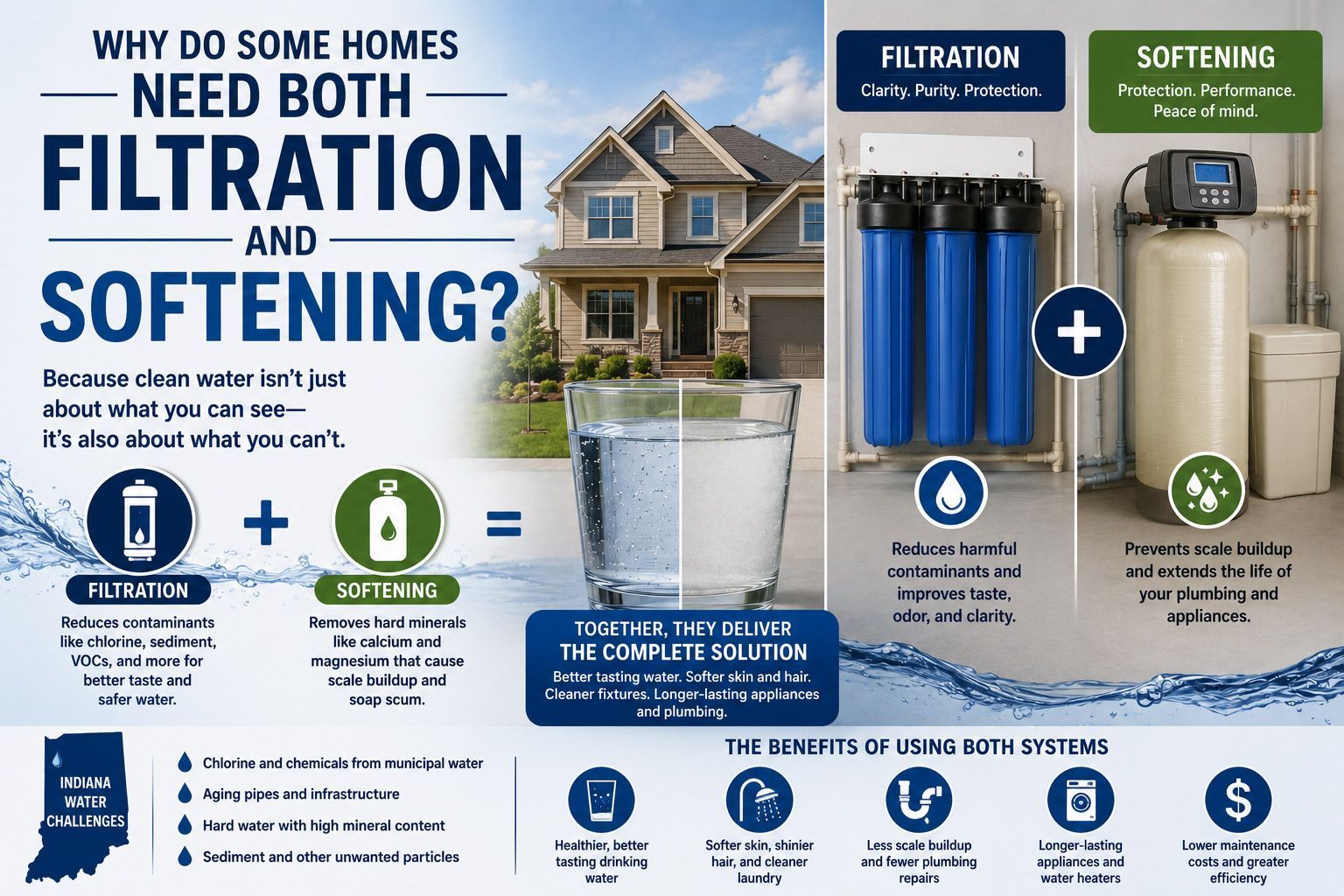
Some cheaper systems improve taste but do little to address calcium and magnesium minerals responsible for hard water buildup.
That means appliances may still experience:
- Scale accumulation
- Reduced efficiency
- Restricted water flow
- Heating element strain
Water heaters, dishwashers, and washing machines often continue wearing down even if filtered water tastes better.
Incomplete Treatment Can Create False Confidence
One of the more expensive long-term problems happens when homeowners assume the filter is solving issues it was never designed to handle.
For example:
- A carbon filter may reduce odor but not hardness minerals
- A sediment filter may trap debris but not iron
- A pitcher filter may improve drinking water but not protect plumbing
Without understanding the actual water condition, homeowners may delay proper treatment while damage continues developing elsewhere.
Smaller Systems Often Struggle With Whole-House Demand
Cheap filtration products are commonly designed for single faucets or limited-use situations rather than treating water throughout the home.
Point-of-Use Filters Have Limited Reach
Smaller filtration setups may only affect:
- Kitchen sinks
- Refrigerator lines
- Drinking water taps
Meanwhile, untreated water still flows through:
- Showers
- Washing machines
- Dishwashers
- Water heaters
- Plumbing lines
This means the rest of the house may continue experiencing the same water quality issues.
Whole-House Systems Cost More Because They Handle More
Larger systems are designed to treat all incoming water before it reaches the plumbing system.
That usually requires:
| System Feature | Purpose |
|---|---|
| Larger filtration tanks | Higher treatment capacity |
| Stronger flow control | Maintains household pressure |
| Specialized media | Targets specific contaminants |
| Multi-stage treatment | Handles multiple water issues |
The higher upfront investment often reflects broader protection across the home.
Poor Filtration Can Increase Maintenance Costs
Water quality problems do not always create immediate damage. More often, they gradually increase maintenance needs over time.
Scale and Sediment Continue Building Quietly
When filtration is inadequate, buildup may continue inside:
- Pipes
- Fixtures
- Appliances
- Valves
- Heating systems
Homeowners may eventually face higher costs involving:
- Appliance repairs
- Plumbing service
- Reduced equipment lifespan
- Higher energy usage
Those long-term expenses are sometimes overlooked when focusing only on the initial filter price.
Inefficient Systems Can Waste More Water
Some low-quality filtration systems also operate less efficiently overall.
Depending on the design, homeowners may experience:
- Frequent clogging
- Reduced water pressure
- Higher replacement frequency
- Inconsistent filtration performance
A system requiring constant maintenance often becomes frustrating as well as expensive.
The Right Filter Depends on the Water Itself
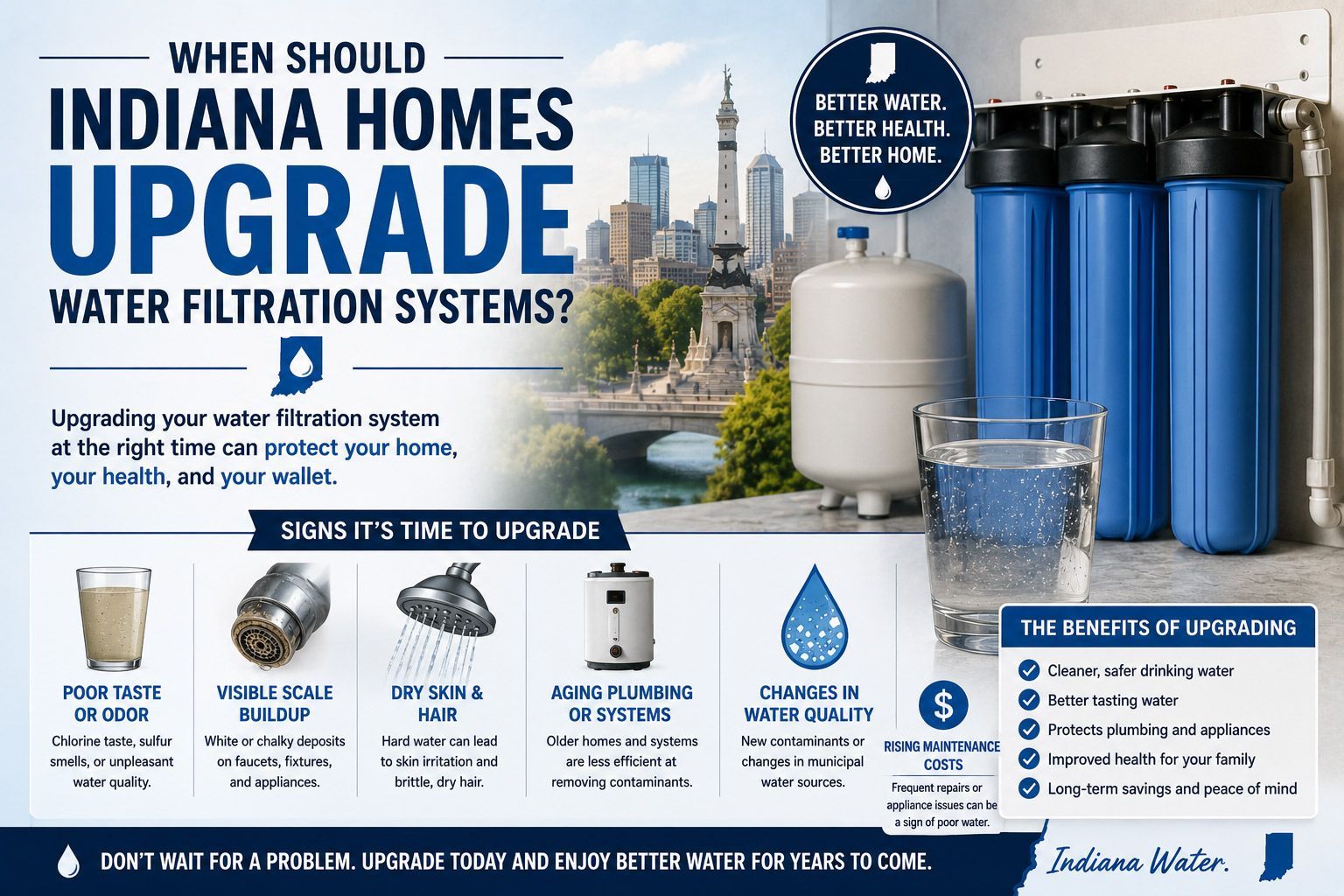
One of the biggest mistakes homeowners make is choosing filtration based only on price instead of actual water conditions.
Two homes in Indiana may require completely different treatment approaches even if they are located relatively close together.
Water Testing Helps Avoid Wrong Purchases
Testing helps identify:
- Mineral levels
- Iron concentration
- Sediment issues
- Odor sources
- Contaminants present
Without testing, homeowners may purchase systems that fail to solve the actual problem affecting the home.
A More Expensive System May Cost Less Over Time
Higher-quality systems often provide benefits such as:
- Longer filter lifespan
- Better treatment consistency
- Lower maintenance frequency
- Improved appliance protection
- Higher treatment capacity
The upfront investment may be larger, but the long-term operating cost can sometimes become lower overall.
Frequently Asked Questions About Cheap Water Filters
Do cheap water filters work at all?
Some work well for minor taste or odor improvements, but they may not handle more complex water quality issues effectively.
Why do inexpensive filters need replacement more often?
Smaller filters typically have lower capacity and may clog faster under heavy water usage or poor water conditions.
Can cheap filters remove hard water minerals?
Most basic filters do not remove calcium and magnesium responsible for hard water buildup.
Do whole-house systems last longer?
Higher-capacity systems are often designed for heavier long-term household use and larger treatment demands.
Why is water testing important before choosing a filter?
Testing helps determine what contaminants or water issues actually need treatment before selecting equipment.
Conclusion
Cheap water filters sometimes become more expensive long-term when they fail to address the actual water conditions affecting the home. Frequent cartridge replacements, continued hard water damage, appliance wear, and incomplete treatment can all increase overall costs over time.
For homeowners in Franklin and throughout Indiana, choosing the right filtration system often depends more on water quality conditions than simply choosing the lowest upfront price. PureSoft Water Treatment Inc. provides water filtration and treatment solutions designed around the specific water challenges affecting homes across the region.