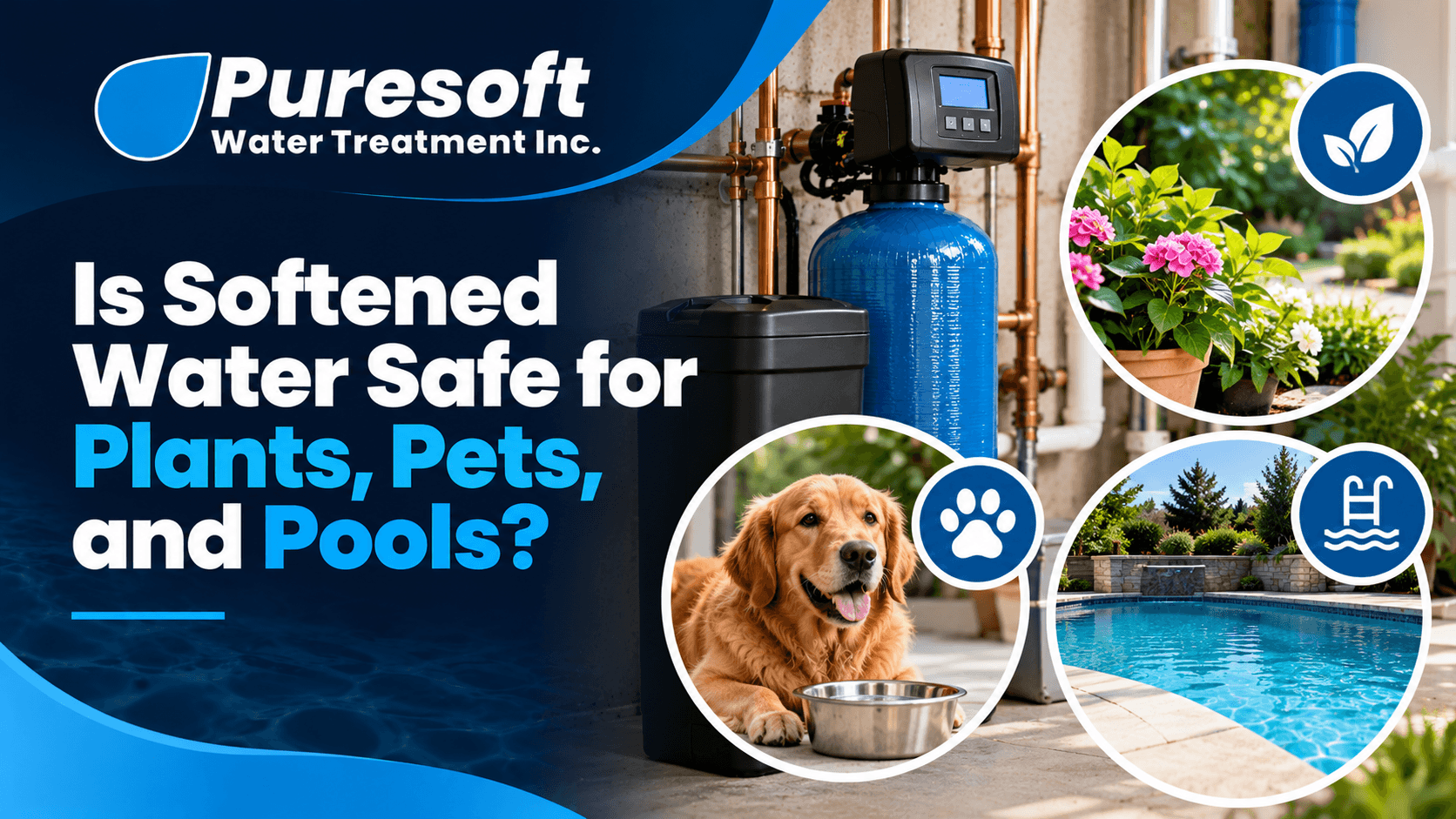
Once you get used to softened water, it is easy to forget that it is flowing from nearly every tap in your home. Then a question pops up while you are holding a watering can or refilling the dog's bowl. Is this water okay for them? What about filling the pool next summer?
For homeowners in Plainfield, Indiana, these are smart questions to ask. Softened water is excellent for plumbing, appliances, and cleaning, but it is not identical to untreated water. The short answer is that it is generally fine for most pets, best avoided for regular plant watering, and usable in pools and hot tubs with a few adjustments. The details are worth understanding so you can set up your home to get the right water to the right place.
What Does Softening Change in Your Water?
Quick Answer
Softened water is generally safe for healthy dogs and cats, and it can be used in pools and hot tubs if calcium hardness is adjusted. It is not recommended for regular plant watering because the sodium it contains builds up in soil over time. Whether it suits aquarium fish depends on the species.
Most residential water softeners use a process called ion exchange, which you can read about in how water softeners work. As water passes through the resin bed, calcium and magnesium are captured and replaced with sodium, or with potassium if the system uses potassium chloride. That exchange is what keeps scale out of your pipes and appliances.
The amount of sodium added depends on how hard your water was to begin with. As a general guideline, softening adds roughly 8 milligrams of sodium per liter for every grain per gallon of hardness removed. Because water in Plainfield, Indiana is often quite hard, softened water in local homes can contain a noticeable amount of added sodium. That sodium is the main reason softened water is better suited to some uses than others.
Softening also removes the calcium and magnesium that some uses actually rely on. Plants, fish, and pool surfaces all respond to mineral content in different ways. Here is a quick overview of how softened water works for each use:
| Use | Generally Suitable? | Key Consideration |
|---|---|---|
| Indoor and outdoor plants | Not recommended for regular use | Sodium can build up in soil over time |
| Dogs and cats | Usually fine | Ask a vet about pets on low-sodium diets |
| Aquarium fish | Depends on the species | Many fish need specific mineral levels |
| Swimming pools | Usable with adjustments | Calcium hardness may need to be raised |
| Hot tubs and spas | Usable with adjustments | Monitor calcium hardness and water balance |
Is Softened Water Safe for Plants?
Plants are the use where softened water causes the most trouble. Sodium does not evaporate or break down, so every watering leaves a little more behind in the soil. Over time, that sodium can damage soil structure, make it harder for roots to absorb water, and interfere with the uptake of nutrients like calcium and potassium.
In Plainfield, Indiana homes, potted plants and houseplants are the most vulnerable because they never get rinsed by rain. Garden beds and lawns are somewhat more forgiving, but steady use of softened water can still affect sensitive plants. Plants exposed to too much sodium often show these signs:
- Brown or scorched leaf tips: Leaf edges dry out and turn brown even when the soil is moist.
- Stunted growth: New growth slows or stops despite regular watering and feeding.
- Yellowing leaves: Leaves lose color as nutrient uptake is disrupted.
- White crust on the soil: Salt residue can build up on the soil surface or around the rim of pots.
- Wilting in moist soil: Plants droop because roots struggle to draw in water.
Is Softened Water Safe for Pets?
For most pets, softened water is a reasonable choice for everyday drinking. The considerations differ depending on the type of animal, so it helps to look at them separately.
Can Dogs and Cats Drink Softened Water?
Healthy dogs and cats can generally drink softened water without problems. The sodium it contains is modest compared with the sodium already present in most commercial pet foods. The exception is pets with heart disease, kidney disease, or other conditions that require a sodium-restricted diet. If your pet is on a special diet, ask your veterinarian whether softened water is appropriate or whether another water source would be better.
Is Softened Water Safe for Aquarium Fish?
Aquariums are more complicated. Many freshwater fish and plants depend on specific levels of calcium, magnesium, and overall hardness, and softened water changes all of those at once. Some species tolerate it, while others become stressed. Aquarium hobbyists in Plainfield, Indiana often use untreated tap water treated with a water conditioner, or reverse osmosis water remineralized to the level their species need.
Can You Fill a Pool or Hot Tub With Softened Water?
Softened water is not unsafe for swimmers, but it can throw off your pool or spa chemistry. Pool professionals typically recommend keeping calcium hardness within a target range, often around 200 to 400 parts per million for pools and somewhat lower for many hot tubs, depending on the surface and manufacturer. Water with too little calcium can become aggressive, pulling calcium from plaster, grout, and other surfaces and contributing to etching and corrosion of metal parts. If you fill a pool or hot tub with softened water, follow these steps to keep it balanced:
- Test calcium hardness after filling: Use a test kit or take a sample to a pool supply store to get an accurate reading.
- Add a calcium hardness increaser if needed: Follow the product directions and add it gradually rather than all at once.
- Balance pH and total alkalinity: Adjust these after calcium so all three work together.
- Retest regularly: Check levels throughout the season, especially after topping off with more softened water.
- Check your equipment manual: Some hot tub and pool heater manufacturers specify water chemistry requirements for warranty coverage.
How Should You Set Up Softened Water in a Plainfield, Indiana Home?
The easiest way to handle all of these situations is to plan where softened water goes. A professional installer can design the system so that the right water reaches the right taps. Common setups for homes in Plainfield, Indiana include:
- Hard water to outdoor spigots: Leaving outdoor faucets on untreated water keeps sodium out of lawns and gardens and saves salt.
- A dedicated untreated tap: A cold-water line that bypasses the softener, often in a laundry room or utility area, gives you an easy place to fill watering cans.
- A reverse osmosis system: An under-sink system removes most of the sodium and other dissolved solids, making it a good source of water for houseplants and sensitive pets. Our reverse osmosis guide explains how these systems work.
- Potassium chloride instead of salt: Using potassium chloride replaces sodium with potassium, which is gentler on plants, though untreated water is still the best choice for watering.
- Collected rainwater: A rain barrel provides naturally soft, sodium-free water for gardens and potted plants.
Frequently Asked Questions About Softened Water Safety
Is softened water safe for people to drink?
Yes, for most healthy adults. The sodium added by softening is modest compared with what most people get from food. People on sodium-restricted diets should talk to their doctor, and many households choose a separate drinking water system at the kitchen sink for drinking and cooking.
Can I use softened water in a humidifier?
It is better not to. Softened water still contains dissolved minerals in the form of sodium, and ultrasonic humidifiers can release those minerals into the air as a fine white dust. Most humidifier manufacturers recommend distilled or demineralized water.
Is softened water good for coffee makers and kettles?
Yes, in most cases. Softened water helps prevent scale inside coffee makers and kettles, which means less descaling. Some coffee enthusiasts find that very soft water changes flavor extraction, and some espresso machine makers specify their own water guidelines, so check your manual.
Does softened water harm septic systems?
Research has generally found that regeneration wastewater from a properly functioning softener does not harm a well-maintained septic system. Efficient settings reduce the volume of water sent to the tank, and homeowners on septic should follow any local guidance.
Is softened water good for washing a car?
Yes. Softened water leaves fewer mineral spots as it dries, which makes it easier to get a clean finish. Drying the car with a microfiber towel still gives the best results.
Conclusion
Softened water is a great fit for most of your home, and it is generally fine for healthy pets. It is best kept away from houseplants and gardens because of the sodium it adds, it calls for extra care with aquariums, and it can be used in pools and hot tubs as long as calcium hardness is monitored and adjusted.
Puresoft Water Treatment helps Central Indiana homeowners design water treatment setups that send softened water where it helps and keep untreated water available where it is needed. If you want to talk through the best setup for your home, our team is happy to help.
Contact Puresoft Water Treatment