You just filled the brine tank, and somehow it already looks low again. If you are hauling bags of salt home more often than you expected, you are not imagining things. Some softeners really do use more salt than they should, and the reasons range from simple setting errors to hidden leaks you might never notice.
For homeowners in Avon, Indiana, where hard water keeps softeners busy year-round, salt use is one of the best indicators of how well a system is working. A sudden jump or steady overuse is worth investigating, because it usually means wasted money, wasted water, and sometimes a mechanical problem that will get worse if it is ignored.
How Does a Water Softener Use Salt?
Quick Answer
A water softener usually uses too much salt because its hardness setting is too high, it regenerates on a fixed timer, household water use has increased, a leak is sending water through the system, the brine tank is overfilling, or the control valve is stuck. Most of these causes can be fixed with a settings check or a simple repair.
A water softener does not put salt directly into your water. Instead, it uses salt to clean itself, a process covered in more depth in how water softeners work. Inside the mineral tank, a bed of resin beads captures calcium and magnesium as water flows through. Eventually those beads fill up with hardness minerals and can no longer soften effectively.
When that happens, the softener regenerates. Water in the brine tank dissolves salt to create a strong brine solution, which the control valve draws through the resin. The brine knocks the hardness minerals loose, rinses them down the drain, and recharges the beads so they can soften water again. The salt you see disappearing from the brine tank is the salt being used for these cleaning cycles.
Two things determine how much salt a softener uses: how much salt it uses per regeneration, and how often it regenerates. Both are controlled by the system's settings and influenced by your water hardness and water use. Many households go through roughly one 40-pound bag of salt a month, but actual use varies widely. A large family with very hard water in Avon, Indiana will naturally use more salt than a couple with moderately hard water, so the real question is whether your usage makes sense for your home.
What Causes a Water Softener to Use Too Much Salt?
When salt use climbs without an obvious explanation, the cause usually falls into one of a handful of categories. Homes in Avon, Indiana tend to run into the same issues as homes anywhere else, and each one leaves a few clues.
The Hardness Setting Is Too High
Every softener is programmed with a hardness level. If that number is higher than your actual water hardness, the system assumes it is working harder than it is and regenerates more often than needed. This is common when a system was set using an estimate rather than a real water test, or when a previous owner programmed it for a different water source.
The System Regenerates on a Timer
Older and lower-cost softeners often regenerate on a fixed schedule, such as every three days, regardless of how much water you actually used. If your household is away or uses less water than expected, the system still regenerates and still uses salt.
Your Household Is Using More Water
A new family member, guests staying for a few weeks, or a new habit such as longer showers all increase water use. More water through the softener means more frequent regeneration and more salt. In this case, higher salt use is normal.
A Leak Is Sending Water Through the Softener
A running toilet or dripping faucet can send hundreds of gallons of softened water down the drain each month. A metered softener counts every one of those gallons and regenerates accordingly, so a small leak elsewhere in the house can show up as high salt use.
The Brine Tank Is Overfilling
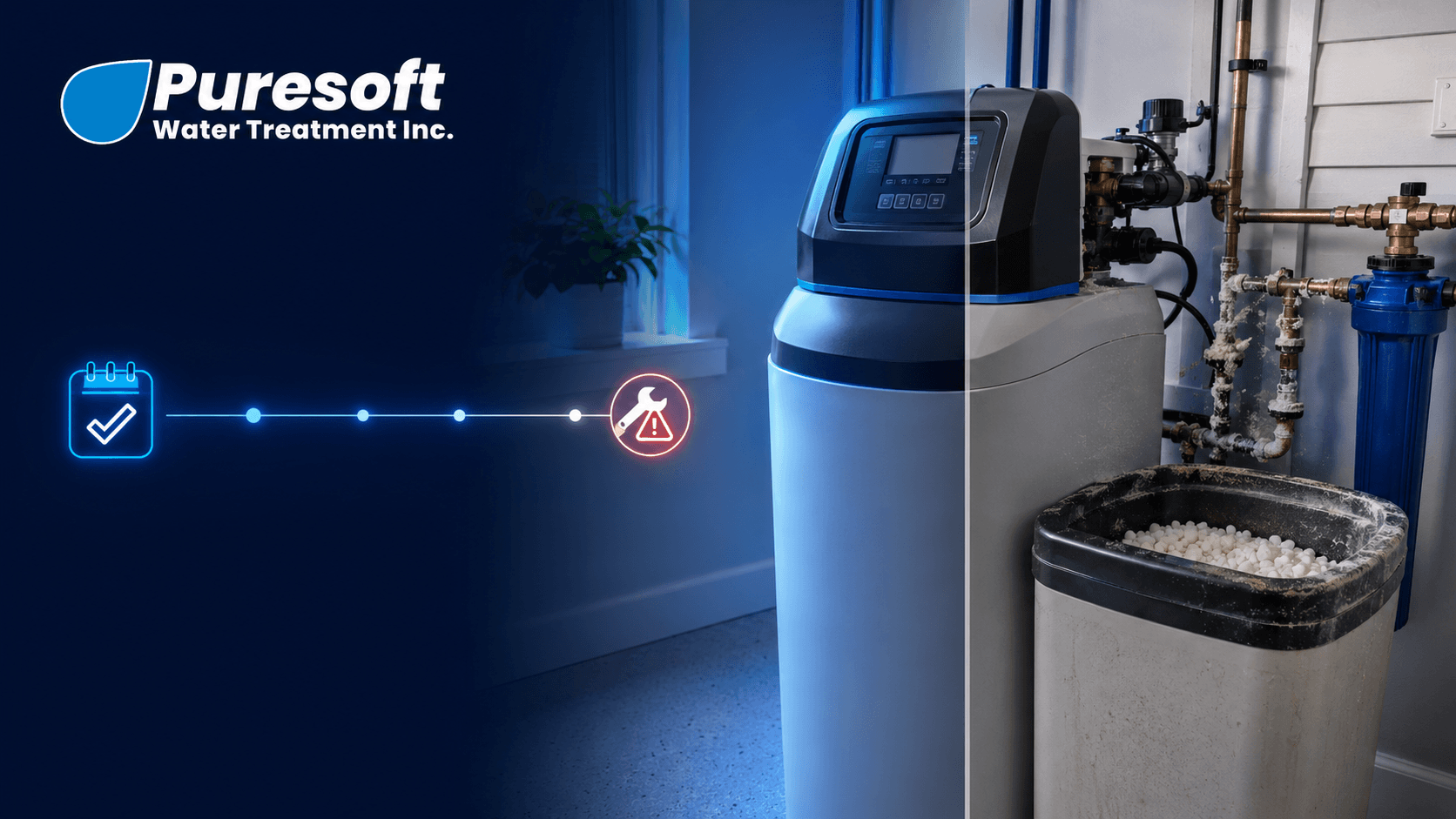
If the brine tank refills with too much water, the system can dissolve more salt than intended during each regeneration. A sticking float, a faulty brine valve, or an incorrect refill setting can all cause this. You may notice the water level in the brine tank is much higher than usual.
The Control Valve Is Stuck
A worn or damaged control valve can get stuck partway through a regeneration cycle, continuously drawing brine or sending water to the drain. This often comes with the sound of running water from the softener when no one is using water.
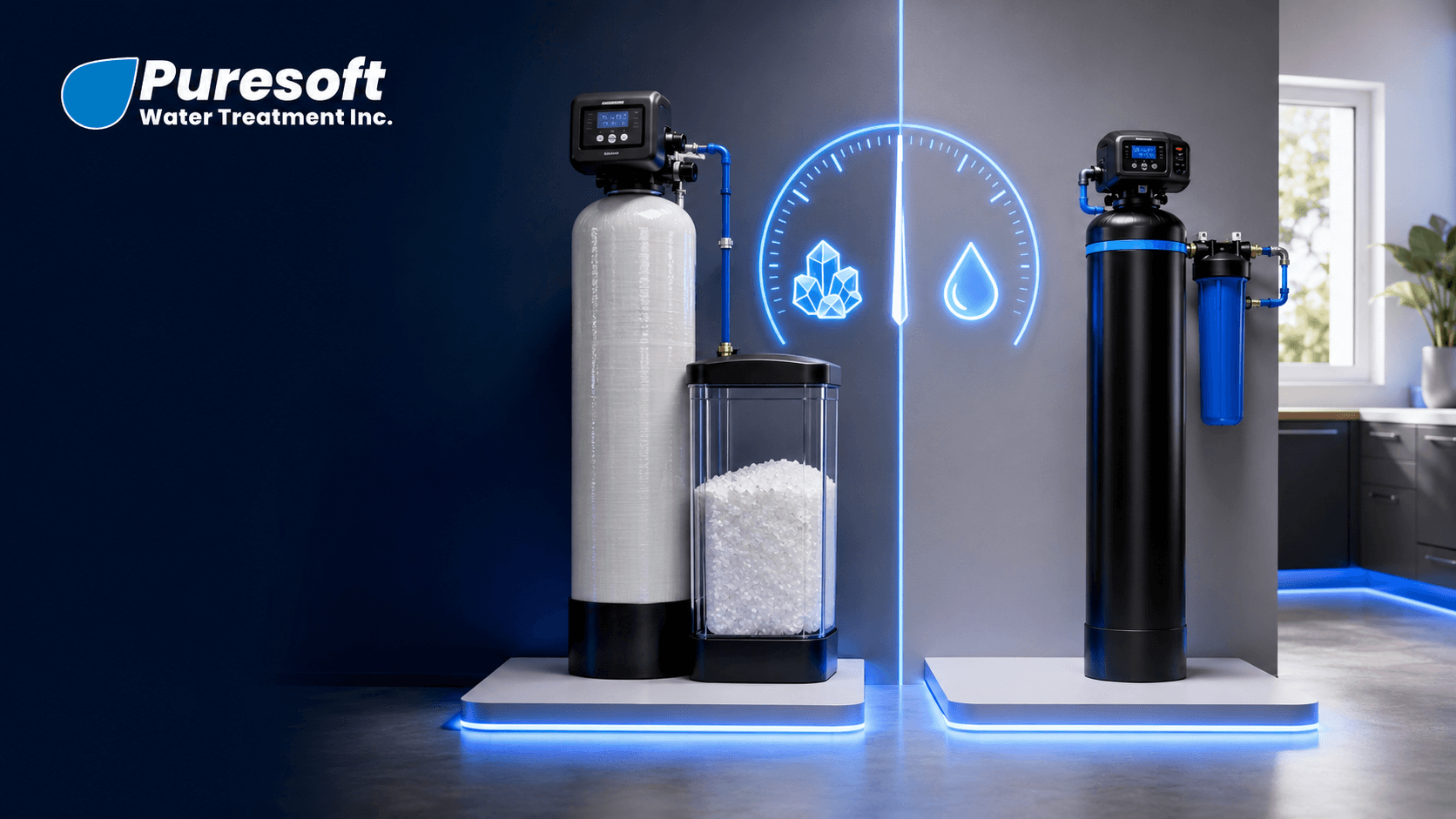
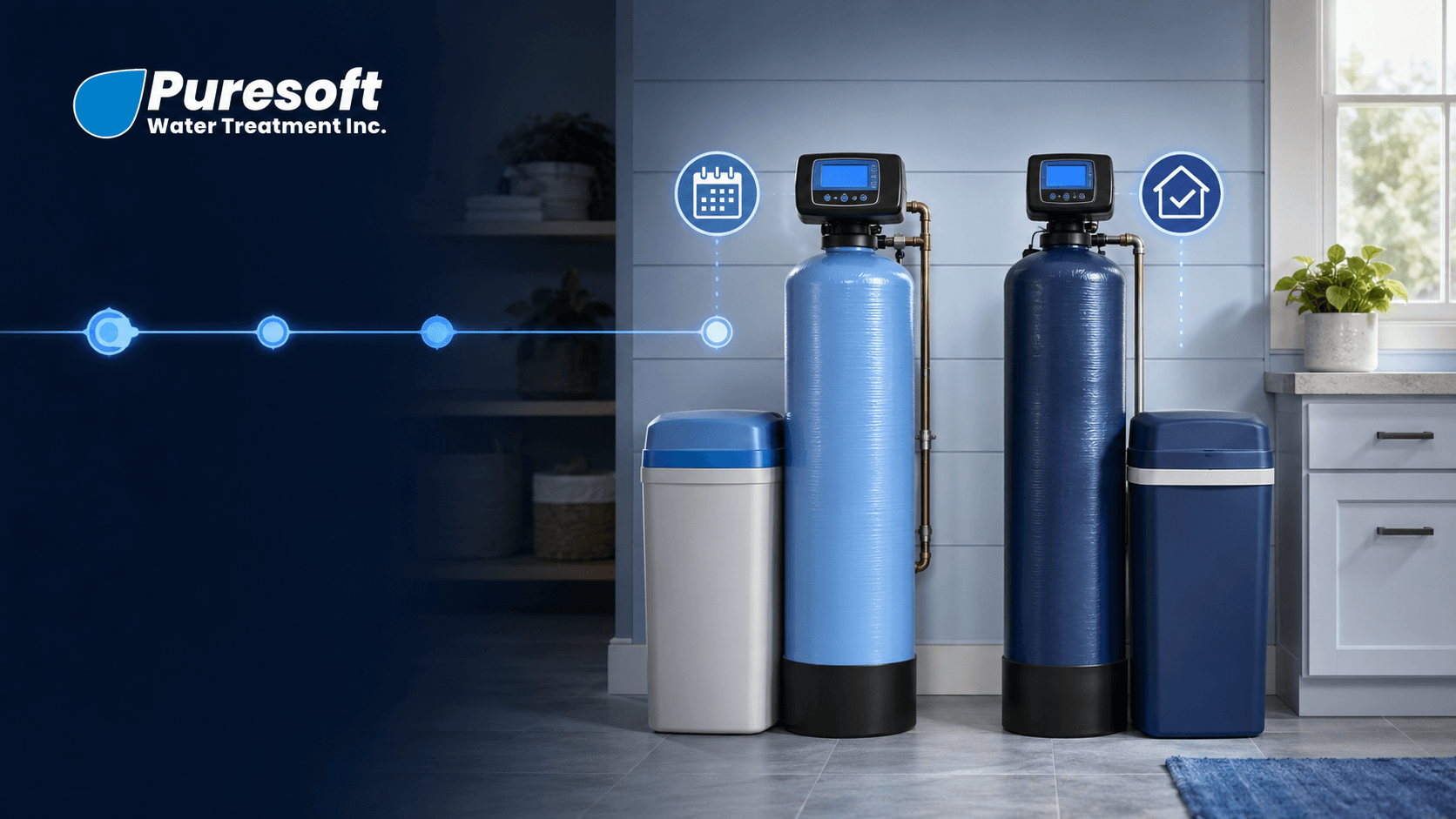
Timer-Based vs. Demand-Initiated Regeneration: Which Uses Less Salt?
The way your softener decides when to regenerate has a major effect on salt use. Here is how the two most common approaches compare:
| Feature | Timer-Based Regeneration | Demand-Initiated Regeneration |
|---|---|---|
| How it decides to regenerate | Fixed schedule set on the valve | Meter tracks actual water use |
| Salt efficiency | Lower, since it regenerates whether needed or not | Higher, since it regenerates only when capacity is used up |
| Water efficiency | Lower, with extra regeneration water sent to the drain | Higher, with fewer unnecessary cycles |
| Response to changing water use | Does not adjust automatically | Adjusts as household use changes |
| Common in | Older and basic systems | Most modern systems |
How Do You Check a Water Softener's Salt Use at Home?
You can often narrow down the cause yourself before calling for service. Follow these steps to check a softener in your Avon, Indiana home:
- Track your salt use: Note the date and how many bags you add over one to two months so you have a real number to work with.
- Check the hardness setting: Look up the hardness programmed into the control valve and compare it with a recent water test.
- Confirm the regeneration mode: Check the manual or valve display to see whether the system regenerates on a timer or based on water use.
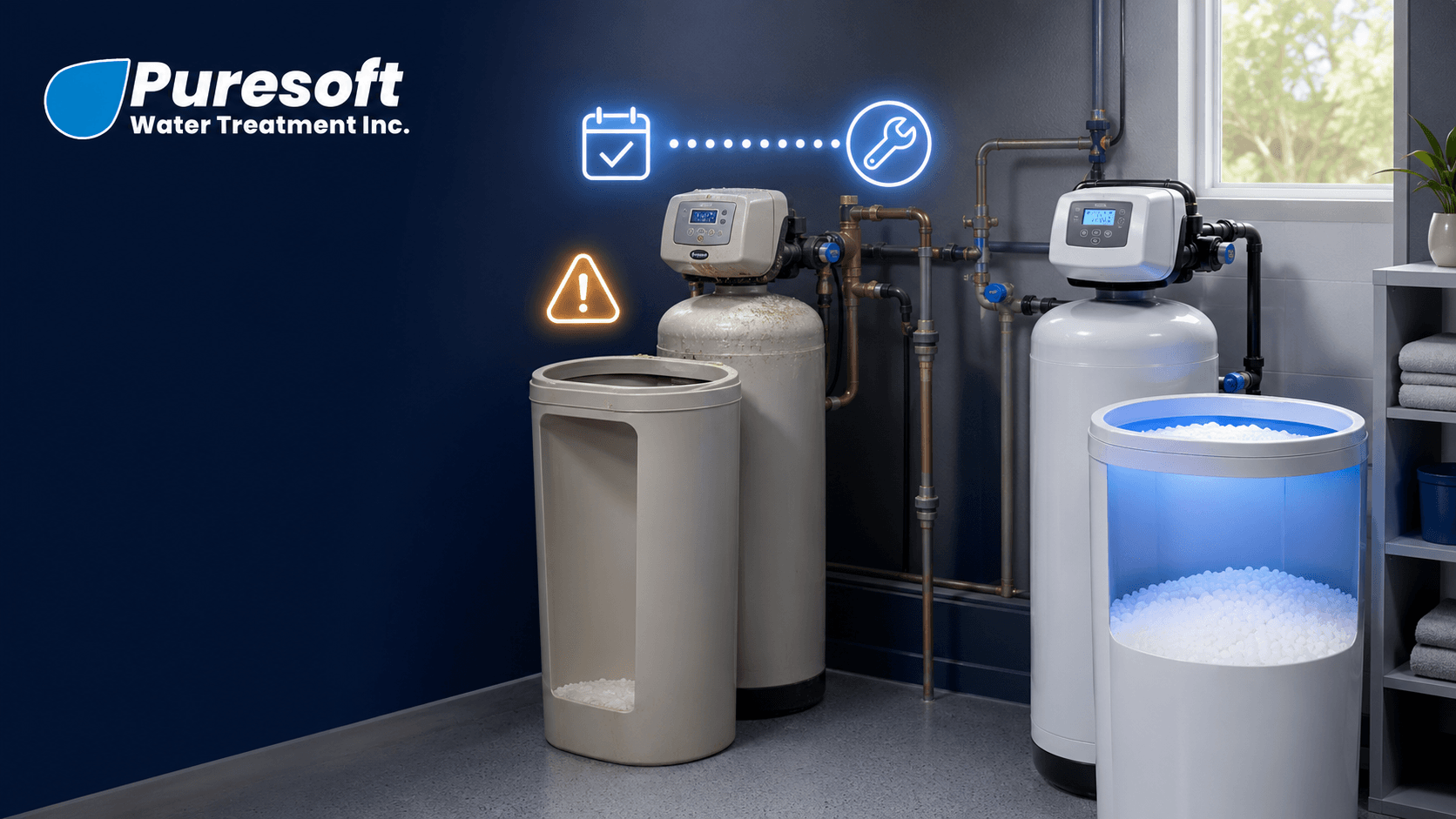
- Look inside the brine tank: Check whether the water level is higher than normal or whether the tank seems to be overfilling.
- Test for household leaks: Turn off all water fixtures, then watch your water meter or the softener's flow indicator for any movement.
- Listen for unexpected cycling: Note whether you hear water running from the softener outside its normal regeneration time.
- Call for service if the numbers do not add up: If your settings look correct and there are no leaks, a technician can inspect the valve, float, and brine components.
Why Does Salt Use Matter for Avon, Indiana Homes?
Salt is not the most expensive household supply, but for families in Avon, Indiana, overuse adds up. Extra bags every month, plus the time it takes to buy and carry them, turn into a real cost over the many years a softener runs. Excess regeneration also uses more water, which shows up on your water bill.
There is an environmental side as well. Every regeneration sends brine down the drain, and the chloride it contains ends up in wastewater systems and, eventually, rivers and streams. Keeping regeneration to what your home actually needs is a simple way to reduce that impact without giving up the benefits of soft water. For more ideas, see our guide to eco-friendly water softening.
Finally, high salt use is often an early warning. A failing valve or overfilling brine tank will not fix itself, and catching the problem early can prevent water damage or a full system failure later on.
Frequently Asked Questions About Water Softener Salt
Does the type of salt affect how much I use?
Somewhat. High-purity evaporated salt pellets dissolve cleanly and leave little residue, while rock salt contains more insoluble material that can build up in the brine tank. The type of salt does not usually change how much the system uses per regeneration, but cleaner salt helps the system run more reliably.
Can I use potassium chloride instead of sodium chloride?
Yes, in most cases. Many softeners can use potassium chloride, which some people prefer for dietary or environmental reasons. It typically costs more, and the system may need a higher setting to achieve the same softening results. Ask your installer before switching so the valve can be adjusted if needed.
What is a salt bridge?
A salt bridge is a hard crust that forms in the brine tank and creates a gap between the salt and the water below. The tank looks full, but the system cannot make brine, so water is not being softened properly. Gently breaking up the crust with a broom handle usually solves the problem.
How full should I keep the brine tank?
A good rule of thumb is to keep the tank at least one-quarter full of salt, with the salt level a few inches above the water. Filling it to the very top can encourage salt bridges, especially in humid spaces.
Should I put my softener in bypass when I go on vacation?
It is usually not necessary for systems that regenerate based on water use, since they will not regenerate when no water is being used. For a system on a fixed schedule, placing it in bypass or pausing regeneration during a long trip can save some salt.
Conclusion
A water softener uses salt to clean and recharge its resin, so how much it uses depends on regeneration settings, water hardness, and household water use. When salt use climbs without a clear reason, common culprits include incorrect hardness settings, timer-based regeneration, household leaks, an overfilling brine tank, or a stuck control valve.
If your softener seems to be going through more salt than it should, Puresoft Water Treatment can help find the cause. Our technicians service and install water softeners across Central Indiana, and we are happy to check your settings, inspect your system, and make sure it is running as efficiently as possible.
Contact Puresoft Water Treatment