Can Hard Water Raise Monthly Utility Bills?
May 31, 2026
Introduction
Some homeowners notice their utility bills creeping higher without making major changes to their daily routines. The water usage stays about the same. The thermostat settings have not changed much. Appliances still seem to be working. Yet energy and water costs continue rising month after month.
Hard water is often overlooked as a possible reason.
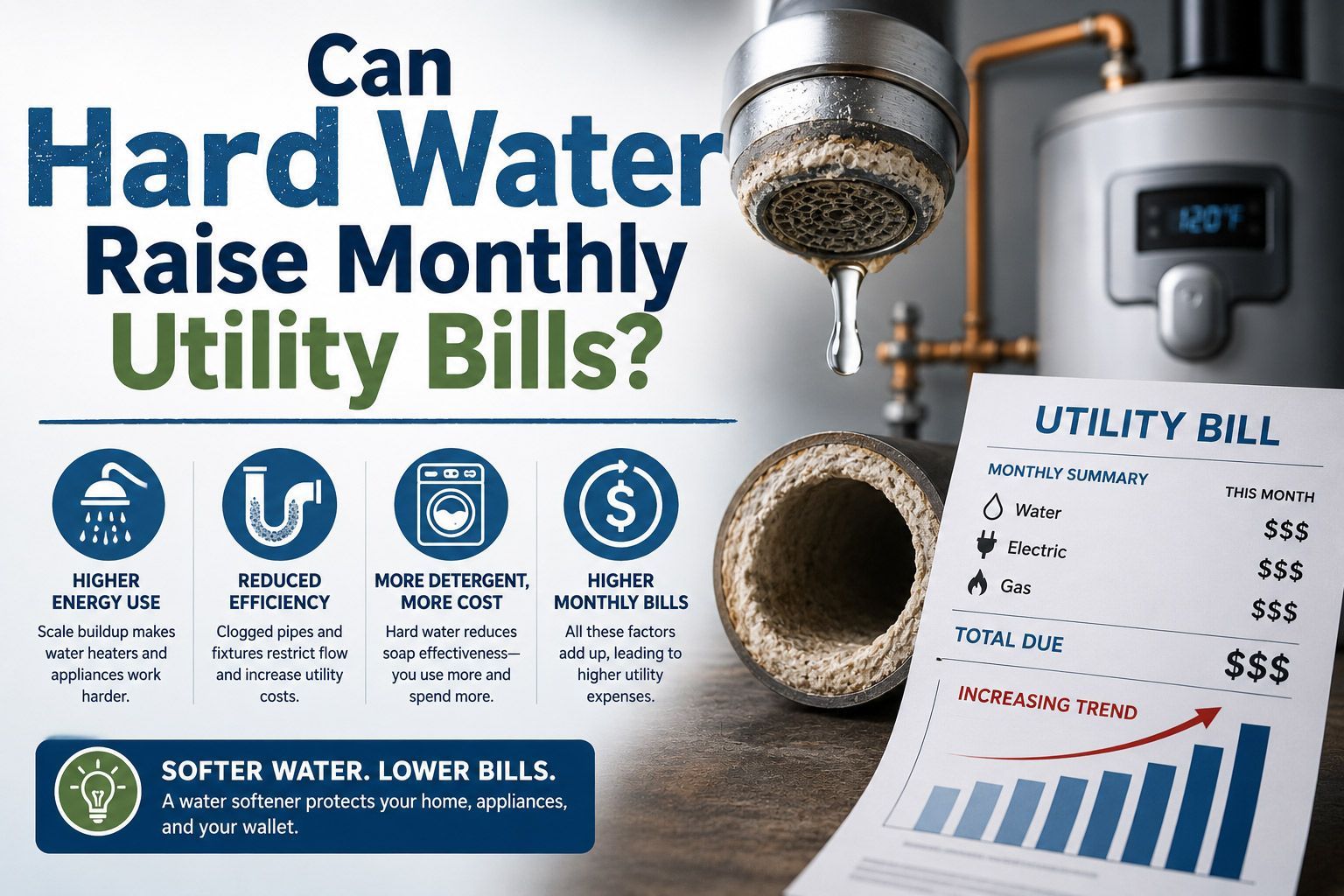
In many homes, hard water quietly affects efficiency behind the scenes. Mineral-heavy water forces appliances to work harder, reduces heating performance, increases soap usage, and creates buildup inside plumbing systems. Those problems may seem minor individually, but over time they can contribute to noticeably higher monthly household costs.
For homeowners dealing with hard water issues, the impact is not always immediate. The increases usually happen gradually through wasted energy, reduced appliance efficiency, and repeated maintenance expenses.
How Hard Water Affects Household Efficiency
Hard water contains dissolved minerals, mainly calcium and magnesium. As water moves through pipes and appliances, those minerals begin leaving deposits behind.
The buildup is commonly called scale.
Scale accumulates slowly, which is why many homeowners do not immediately connect it to rising utility costs. The effects often become noticeable only after appliances lose efficiency or maintenance issues begin appearing more frequently.
Water Heaters Have to Work Harder
One of the biggest utility cost increases usually comes from the water heater.
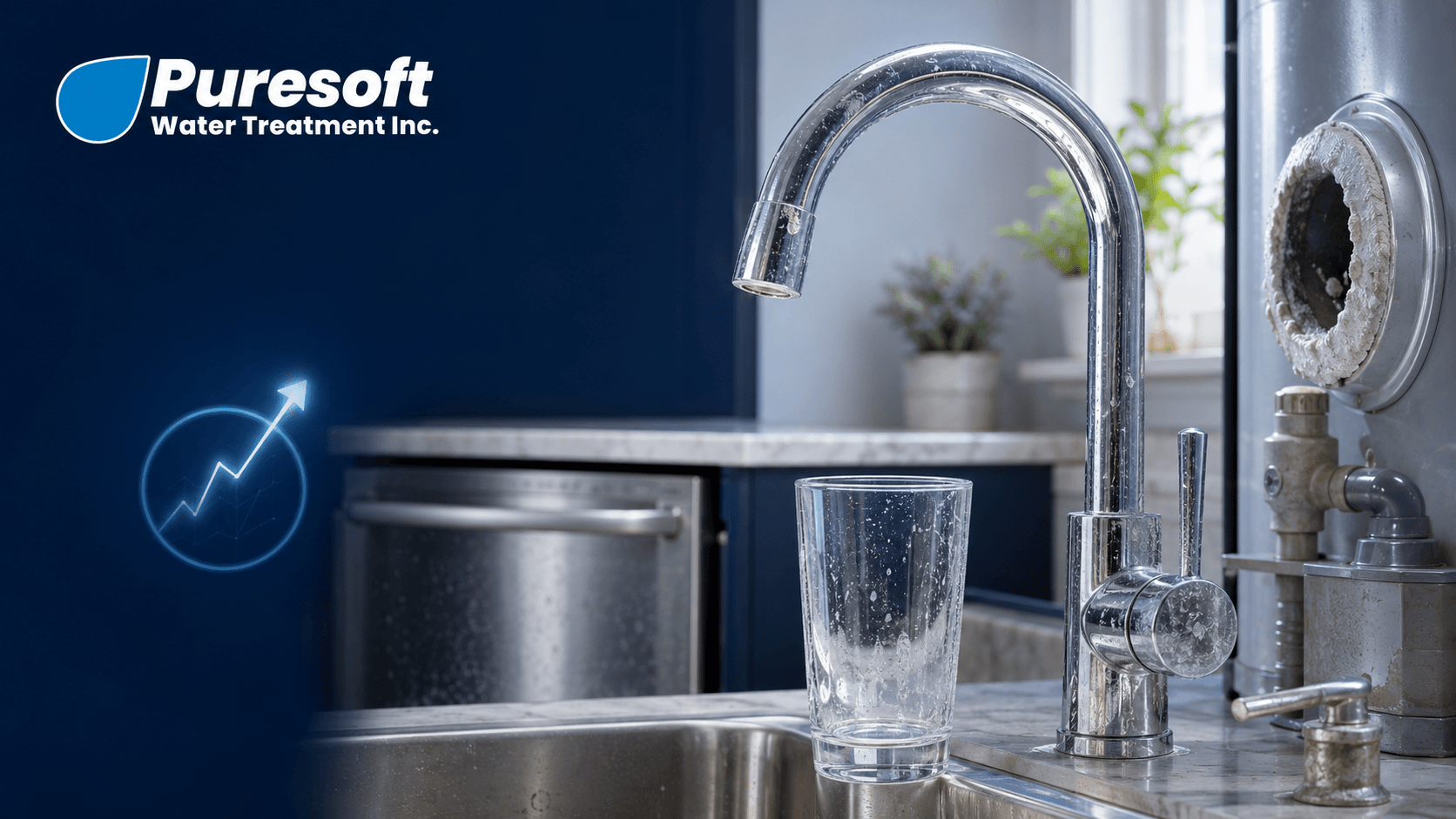
Mineral deposits collect along heating elements and tank surfaces over time. That layer of scale acts almost like insulation between the heating source and the water itself.
As buildup thickens, the system needs more energy to produce the same amount of hot water.
Common signs include:
- Hot water running out faster
- Longer heating times
- Popping or rumbling sounds from the tank
- Rising gas or electric bills
- Reduced overall efficiency
Even a relatively thin layer of scale can reduce heating efficiency noticeably over time.
Plumbing Flow Restrictions
Hard water deposits do not only stay inside appliances. Minerals also accumulate inside pipes, valves, showerheads, and faucets.
As buildup narrows water pathways, plumbing systems may lose pressure and efficiency. In severe cases, homeowners end up using more water simply because fixtures no longer operate effectively.
Low-flow appliances can also struggle when mineral scaling interferes with normal operation.
The Hidden Link Between Hard Water and Energy Costs
Hard water problems often create indirect energy waste throughout the home.
Instead of one dramatic issue, homeowners experience several smaller inefficiencies happening at the same time.
Laundry Systems Use More Energy
Hard water makes soap and detergent less effective because minerals interfere with the cleaning process.
As a result, many people compensate by:
- Running longer wash cycles
- Rewashing clothes
- Using hotter water
- Adding extra detergent
Those adjustments increase both water and electricity usage.
Mineral buildup inside washing machines can also reduce efficiency over time, forcing the appliance to work harder during cycles.
Dishwashers Lose Cleaning Efficiency
Hard water spots on dishes are one of the most visible signs of mineral-heavy water. To compensate, homeowners often increase rinse settings, use more detergent, or run extra cleaning cycles.
Inside the dishwasher itself, scale buildup can affect:
| Dishwasher Component | Potential Effect |
|---|---|
| Spray arms | Reduced water pressure |
| Heating elements | Slower drying |
| Internal pipes | Restricted flow |
| Sensors | Reduced efficiency |
| Drain systems | Increased wear |
Over time, the appliance may consume more energy while delivering worse cleaning results.
HVAC Systems Can Be Affected Too
Homes with boilers, hydronic heating systems, or whole-home humidifiers may also experience hard water-related efficiency problems.
Mineral deposits inside water-based heating systems reduce heat transfer performance and can increase overall energy consumption during colder months.
Why Soap Usage Often Increases With Hard Water
One of the less obvious monthly expenses tied to hard water is cleaning product usage.
Hard water reacts with soap minerals, making it more difficult to create a proper lather. That affects:
- Hand soap
- Shampoo
- Body wash
- Laundry detergent
- Dishwasher detergent
- Household cleaners
People naturally use more product to compensate.
The Cost Adds Up Gradually
Most households do not notice the increase immediately because it happens in small amounts across multiple products.
However, over the course of a year, extra detergent and cleaning supply purchases can become surprisingly expensive.
Some homeowners also buy specialty cleaners designed specifically to remove hard water stains and mineral buildup from showers, sinks, and fixtures.
Appliances Often Wear Out Faster
Hard water does not only increase operating costs. It can also shorten the lifespan of expensive household equipment.
Mineral Buildup Creates Internal Stress
Appliances that rely on water circulation are especially vulnerable.
This includes:
- Water heaters
- Washing machines
- Dishwashers
- Coffee makers
- Ice makers
- Humidifiers
Scale buildup forces components to work under more strain. Heating elements may overheat. Pumps may lose efficiency. Internal sensors can become less accurate.
Eventually, repair frequency often increases.
Replacement Costs Become Part of the Long-Term Expense
Homeowners sometimes focus only on monthly utility bills while overlooking premature appliance replacement costs.
Replacing a water heater years earlier than expected or repeatedly repairing clogged fixtures can significantly increase long-term household expenses tied to hard water conditions.
Signs Hard Water May Be Increasing Household Costs
Not every home experiences hard water problems at the same severity level. However, several warning signs often indicate that minerals may already be affecting efficiency.
Around the House
Look for:
- White buildup around faucets
- Soap scum in showers
- Cloudy glassware
- Dry skin after showering
- Stiff laundry
- Reduced water pressure
On Utility Bills
Potential warning signs include:
| Utility Change | Possible Cause |
|---|---|
| Rising water heating costs | Scale buildup in heater |
| Increased water usage | Appliance inefficiency |
| Higher detergent spending | Reduced soap performance |
| More plumbing repairs | Mineral accumulation |
| Frequent appliance issues | Hard water wear |
The changes are often gradual rather than sudden, which makes them easy to overlook initially.
Can Water Softening Help Reduce Utility Costs?
A water softener does not instantly eliminate every household expense, but it may help improve efficiency in several areas.
By removing hardness minerals before water moves through the plumbing system, softeners help reduce scale buildup inside appliances and pipes.
Potential Areas of Savings
Homes with softened water may experience:
- Improved water heater efficiency
- Reduced detergent usage
- Less appliance strain
- Fewer scale-related plumbing issues
- Better cleaning performance
- Lower maintenance frequency
The exact savings depend on the home's water hardness level, appliance condition, and overall water usage habits.
Older Appliances May Already Have Existing Damage
It is important to understand that water softening prevents future buildup more effectively than reversing years of heavy scale accumulation.
Older systems with severe buildup may still need servicing or replacement even after soft water treatment begins.
Questions Homeowners Often Ask About Hard Water Costs
Does hard water directly increase water bills?
Not directly through pricing, but indirectly through inefficiency. Appliances and fixtures may use more water or require repeated cycles because of mineral buildup.
Why does hard water affect energy usage?
Scale buildup reduces heat transfer efficiency, especially inside water heaters and heating systems. Appliances often need more energy to achieve the same results.
Can hard water damage plumbing?
Over time, mineral deposits can narrow pipes, reduce water flow, and contribute to fixture wear or clogging.
Is hard water worse for electric or gas water heaters?
Both can be affected. However, electric heating elements are often especially vulnerable to mineral accumulation.
How can homeowners confirm hard water issues?
Water testing provides the clearest answer. Hardness levels vary between properties, even within the same area.
Looking Beyond the Water Bill
Hard water affects more than just the appearance of sinks or shower doors. Over time, mineral buildup can quietly reduce appliance efficiency, increase energy usage, raise cleaning supply costs, and contribute to additional maintenance throughout the home.
For many homeowners, the financial impact develops gradually through multiple small inefficiencies happening at once rather than one obvious problem. Understanding how hard water interacts with plumbing systems and appliances can make it easier to identify where those rising household costs may actually be coming from. Companies like PureSoft Water Treatment Inc. often work with homeowners who are trying to better understand those long-term effects and how water quality influences everyday household performance.