What Increases Water Softener Costs in Central Indiana?
April 27, 2026
Introduction
A water softener can make a noticeable difference in a home. Dishes come out cleaner, soap lathers better, plumbing fixtures stay in better condition, and appliances that rely on water often last longer. In Central Indiana, where hard water is a common issue, many homeowners eventually start looking into water softener systems after dealing with buildup, dry skin, cloudy glassware, or scaling around faucets.
One of the first questions people ask is why water softener pricing can vary so much from one home to another. Some systems seem relatively affordable, while others cost significantly more once installation, maintenance, or upgraded equipment are included.
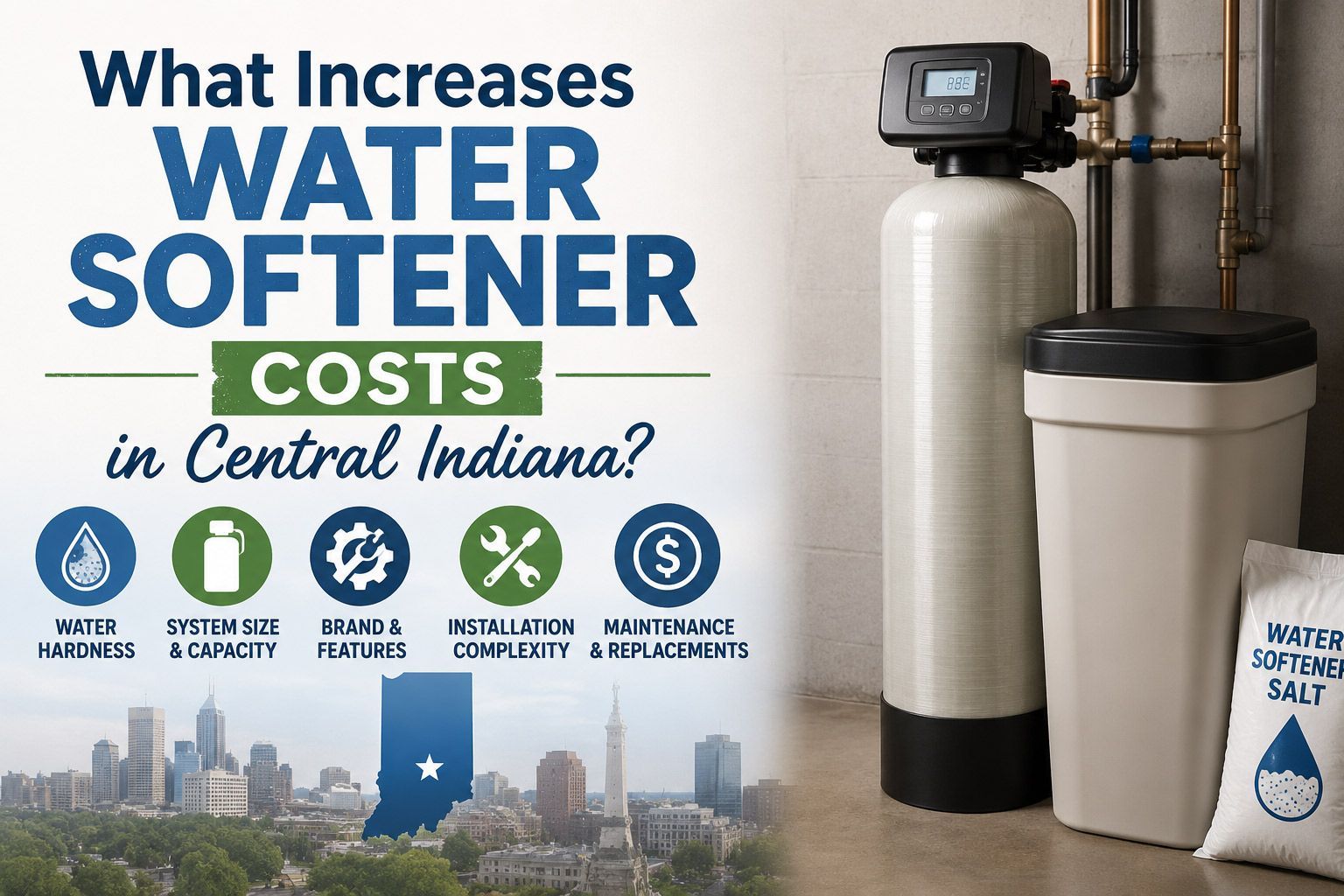
The answer usually comes down to several practical factors rather than one fixed price point. Water hardness levels, household size, plumbing layout, system capacity, and added filtration features can all influence overall cost. Understanding these differences helps homeowners make better decisions instead of comparing systems based only on upfront pricing.
Why Water Softener Costs Vary From Home to Home
Not every house in Central Indiana has the same water conditions or water usage habits. Because of that, water treatment systems are rarely one-size-fits-all.
Water Hardness Levels
One of the biggest cost factors is the actual hardness of the water entering the home. Hard water contains higher levels of dissolved minerals, primarily calcium and magnesium. The harder the water, the more work the system has to do.
Homes with extremely hard water may require:
- Larger resin tanks
- Higher-capacity systems
- More frequent regeneration cycles
- Additional filtration components
A smaller entry-level softener may work fine for moderate conditions, but homes with severe mineral buildup often need more durable equipment designed for heavier use.
Household Water Usage
Water usage directly affects the size and performance requirements of the system.
A two-person household generally has different needs than a family of six using multiple bathrooms, appliances, and laundry loads every day. Higher water demand typically increases costs because the system must handle greater daily volume without constantly regenerating.
Several usage-related factors can impact pricing:
| Household Factor | Effect on System Cost |
|---|---|
| More bathrooms | Requires larger capacity |
| Large families | Increases regeneration demand |
| High laundry use | Adds strain on system |
| Irrigation connections | May require system separation |
| Large tubs or showers | Raises peak water demand |
System sizing matters because undersized equipment can wear out faster or fail to soften water consistently.
Type of Water Softener System
Different technologies also affect overall pricing.
Traditional salt-based systems remain the most common option because they physically remove hardness minerals through ion exchange. However, there are also salt-free conditioners, dual-tank systems, and combination filtration units.
Each setup comes with different installation and equipment costs.
Standard Single-Tank Systems
These are often the most budget-friendly options for average households. They work well for many homes with moderate water usage.
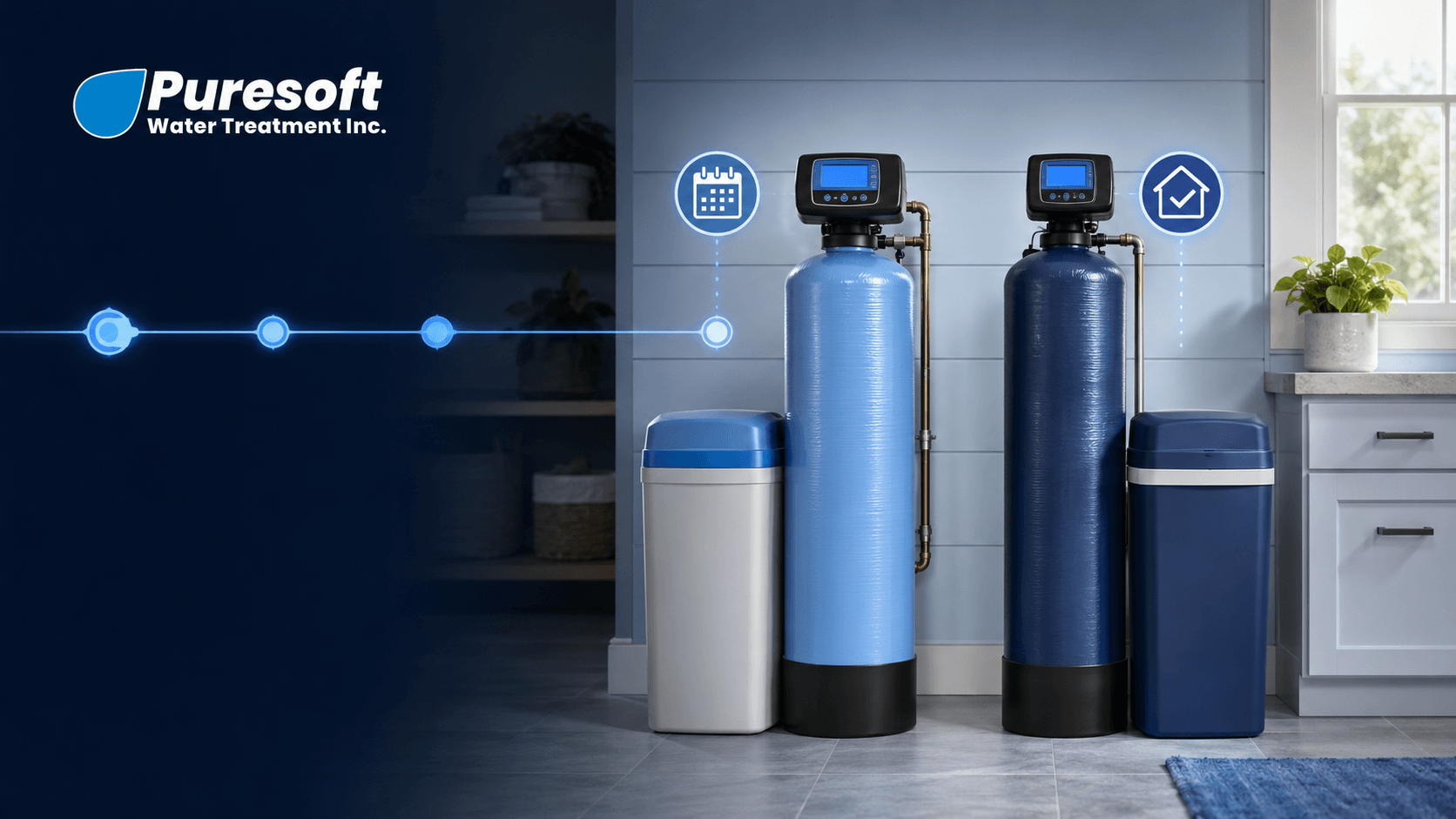
Dual-Tank Systems
Dual-tank units cost more because they provide continuous softened water, even during regeneration cycles. These systems are often installed in larger households or homes with heavier water demand.
Combination Systems
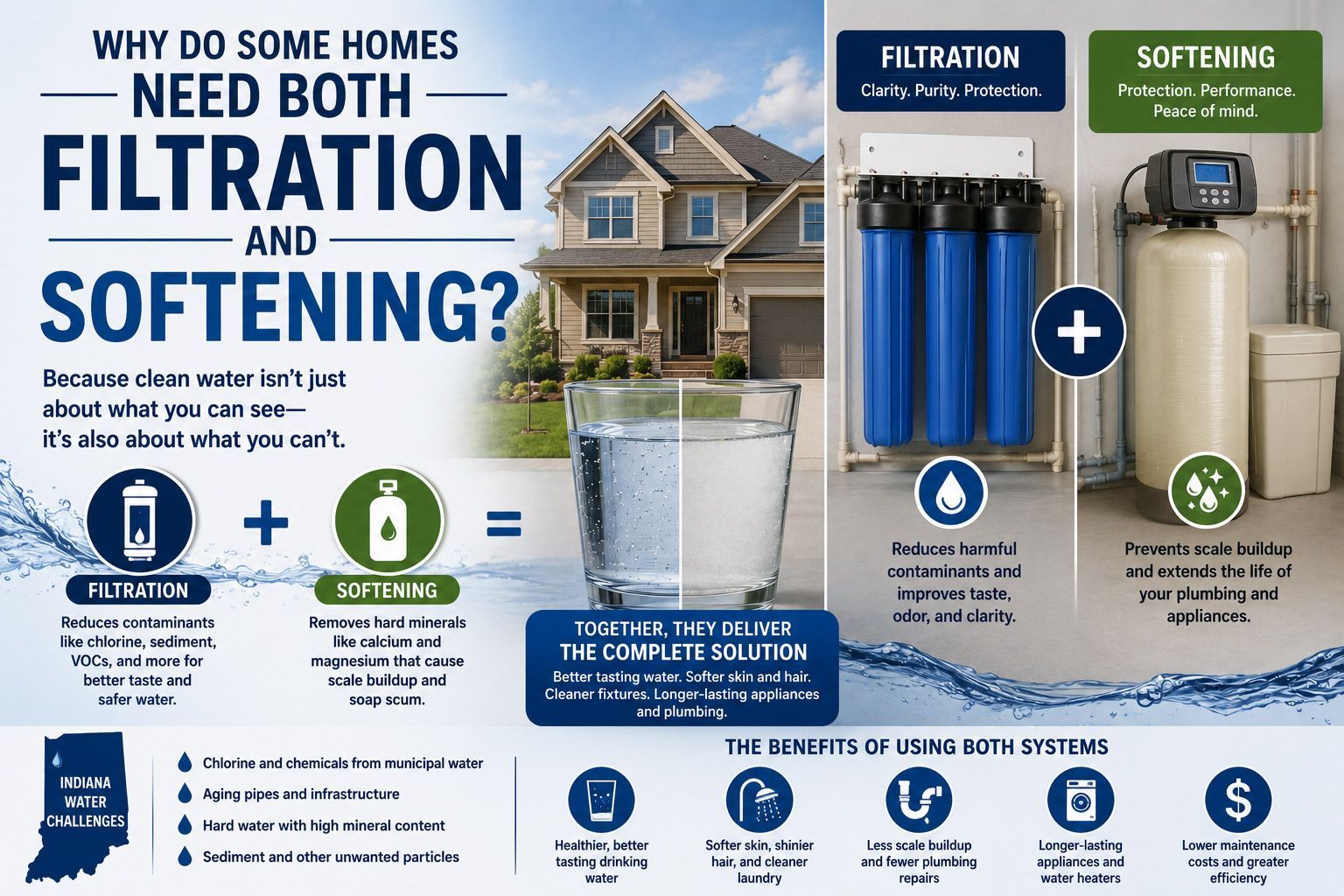
Some homes need both water softening and contaminant filtration. Systems that address chlorine, sulfur, iron, sediment, or other water quality concerns naturally cost more because they include multiple treatment stages.
Installation Conditions Can Increase Costs
Equipment is only part of the total investment. Installation complexity also affects final pricing.
Plumbing Accessibility
Homes with easy access to the main water line generally have simpler installations. Older homes or homes with difficult plumbing layouts may require additional labor and materials.
Installation costs can increase when technicians need to:
- Modify existing plumbing
- Relocate pipes
- Install bypass valves
- Add drainage connections
- Upgrade outdated plumbing components
A straightforward installation may take only a few hours, while more complicated setups can require significantly more work.
Space Limitations
Some utility rooms or basements have limited space available for equipment. Tight installation areas may require more compact systems or customized plumbing adjustments.
In some cases, outdoor installations or garage placements may need extra protection against temperature changes or environmental exposure, adding to overall cost.
Well Water vs. Municipal Water
Many Central Indiana homes rely on private wells. Well water often contains additional minerals or contaminants beyond hardness alone.
For example, iron and manganese can interfere with softener performance. Sulfur odors or sediment issues may also require pretreatment equipment before water reaches the softener.
Homes on well systems may need:
- Sediment filtration
- Iron removal systems
- Oxidation treatment
- Additional maintenance equipment
Those added components increase both installation complexity and long-term operating costs.
Features and Upgrades That Affect Pricing
Modern water softeners now include a range of optional features. While these upgrades can improve convenience or efficiency, they also increase system cost.
Smart Monitoring Technology
Some systems now include digital monitoring tools that track water usage, salt levels, and system performance. Certain models even connect to mobile apps.
These features may help homeowners monitor efficiency and maintenance needs more easily, but they usually raise equipment pricing compared to basic manual systems.
High-Efficiency Systems
Higher-efficiency units are designed to reduce water waste and salt consumption during regeneration.
Although these systems may cost more upfront, they can lower operating expenses over time by using fewer resources.
Advanced Resin Quality
The resin inside a softener plays a major role in performance and lifespan. Higher-grade resin materials generally last longer and handle heavy mineral loads more effectively.
Cheaper systems sometimes use lower-quality resin that may degrade faster, especially in areas with very hard water.
Long-Term Costs Homeowners Should Consider
The purchase price is only part of the equation. Long-term ownership costs also vary depending on the system and water conditions.
Salt and Maintenance Costs
Salt-based systems require ongoing replenishment. Homes with heavier water usage or harder water conditions typically consume more salt over time.
Routine maintenance may include:
- Resin cleaning
- Brine tank cleaning
- System inspections
- Part replacement
- Sanitization
Ignoring maintenance can reduce efficiency and shorten system lifespan.
Energy and Water Usage
Some older systems regenerate on fixed schedules whether the household actually uses water or not. Newer demand-based systems are usually more efficient because they regenerate only when needed.
More efficient systems may have higher upfront costs but can reduce utility expenses over the long term.
Appliance Protection and Plumbing Savings
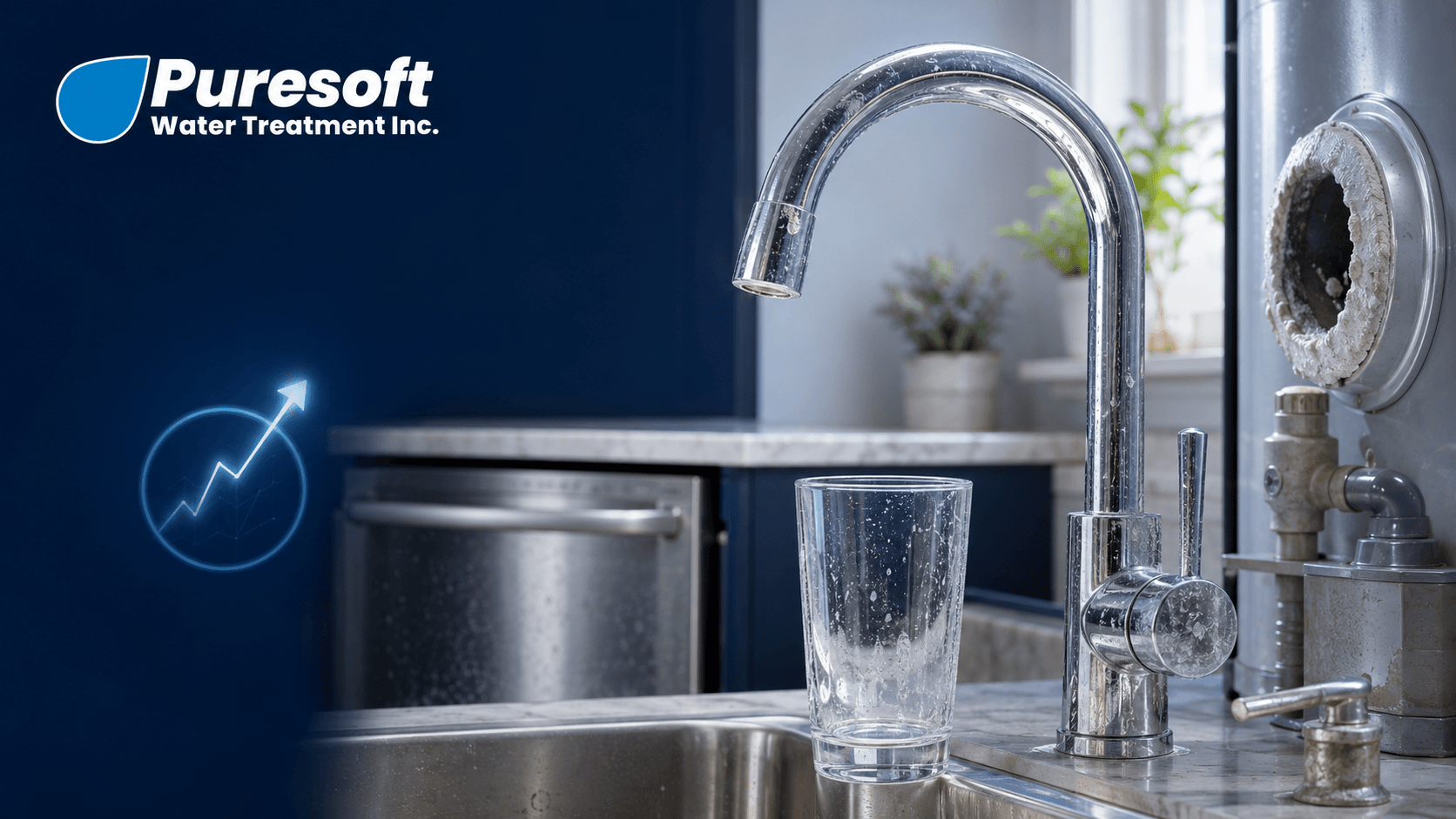
Although homeowners often focus on installation price, softened water can help reduce mineral buildup inside appliances and plumbing systems.
Hard water scaling can affect:
- Water heaters
- Dishwashers
- Washing machines
- Faucets
- Showerheads
- Pipes
Reducing scale buildup may help appliances operate more efficiently and potentially extend their lifespan.
How to Choose the Right Water Softener Without Overspending
Choosing the cheapest system available does not always save money in the long run. The goal is usually to match the system properly to the home's actual water conditions and usage patterns.
Start With Water Testing
A professional water test helps identify hardness levels and any additional contaminants affecting water quality.
Without testing, homeowners may end up:
- Buying oversized systems
- Purchasing unnecessary upgrades
- Missing underlying water issues
- Choosing equipment that performs poorly
Accurate testing provides a clearer picture of what the home actually needs.
Compare Total Value Instead of Initial Price
Lower-priced systems may not include professional installation, warranty protection, efficient regeneration settings, or long-lasting components.
When comparing options, it helps to evaluate:
| Consideration | Why It Matters |
|---|---|
| System lifespan | Affects long-term value |
| Salt efficiency | Impacts monthly operating costs |
| Warranty coverage | Reduces repair risk |
| Water usage efficiency | Helps control utility bills |
| Local service availability | Simplifies future maintenance |
A system that performs efficiently for years may ultimately cost less than replacing cheaper equipment prematurely.
Frequently Asked Questions
Does harder water mean a more expensive water softener?
Usually, yes. Extremely hard water often requires larger or higher-capacity systems that can handle heavier mineral loads efficiently.
Can a small water softener work for a large family?
A smaller system may struggle to keep up with high water demand. This can lead to more frequent regeneration cycles, reduced efficiency, and inconsistent soft water throughout the home.
Are dual-tank water softeners worth the extra cost?
For larger households or homes with continuous water usage, dual-tank systems can provide uninterrupted soft water and better long-term performance.
Why do well water homes sometimes pay more for treatment systems?
Well water often contains iron, sulfur, sediment, or other contaminants in addition to hardness minerals. Extra filtration or pretreatment equipment may be necessary.
Do water softeners help appliances last longer?
Softened water can reduce mineral scale buildup inside appliances and plumbing fixtures, which may improve efficiency and reduce wear over time.
Understanding the Real Cost of Water Softening
Water softener pricing depends on far more than the equipment itself. Water conditions, installation requirements, household demand, and long-term efficiency all influence the overall investment.
For homeowners in Central Indiana, understanding these factors can make it easier to choose a system that fits both the property and the household’s daily water usage. A properly matched system can improve water quality while helping reduce mineral-related wear throughout the home. Companies like PureSoft Water Treatment Inc. often help homeowners evaluate those conditions more carefully before selecting a solution that makes sense for their specific needs.