The Real Difference Between Water Softeners and Water Conditioners — And Which You Need
April 26, 2026

Introduction
If you’ve been researching ways to improve your home’s water quality, you’ve probably come across two popular solutions: water softeners and water conditioners. They sound similar — and both claim to reduce the effects of hard water — but they work very differently.
For Franklin, Indiana homeowners dealing with hard water, choosing the right system can mean the difference between crystal-clear fixtures and constant limescale buildup. This guide breaks down what each system does, how they work, and which one is best for your home and water supply.
Understanding Hard Water in Central Indiana
Central Indiana, including Franklin and surrounding areas, is known for its very hard water. Groundwater in this region passes through limestone-rich layers, picking up calcium and magnesium — the minerals responsible for hard water.
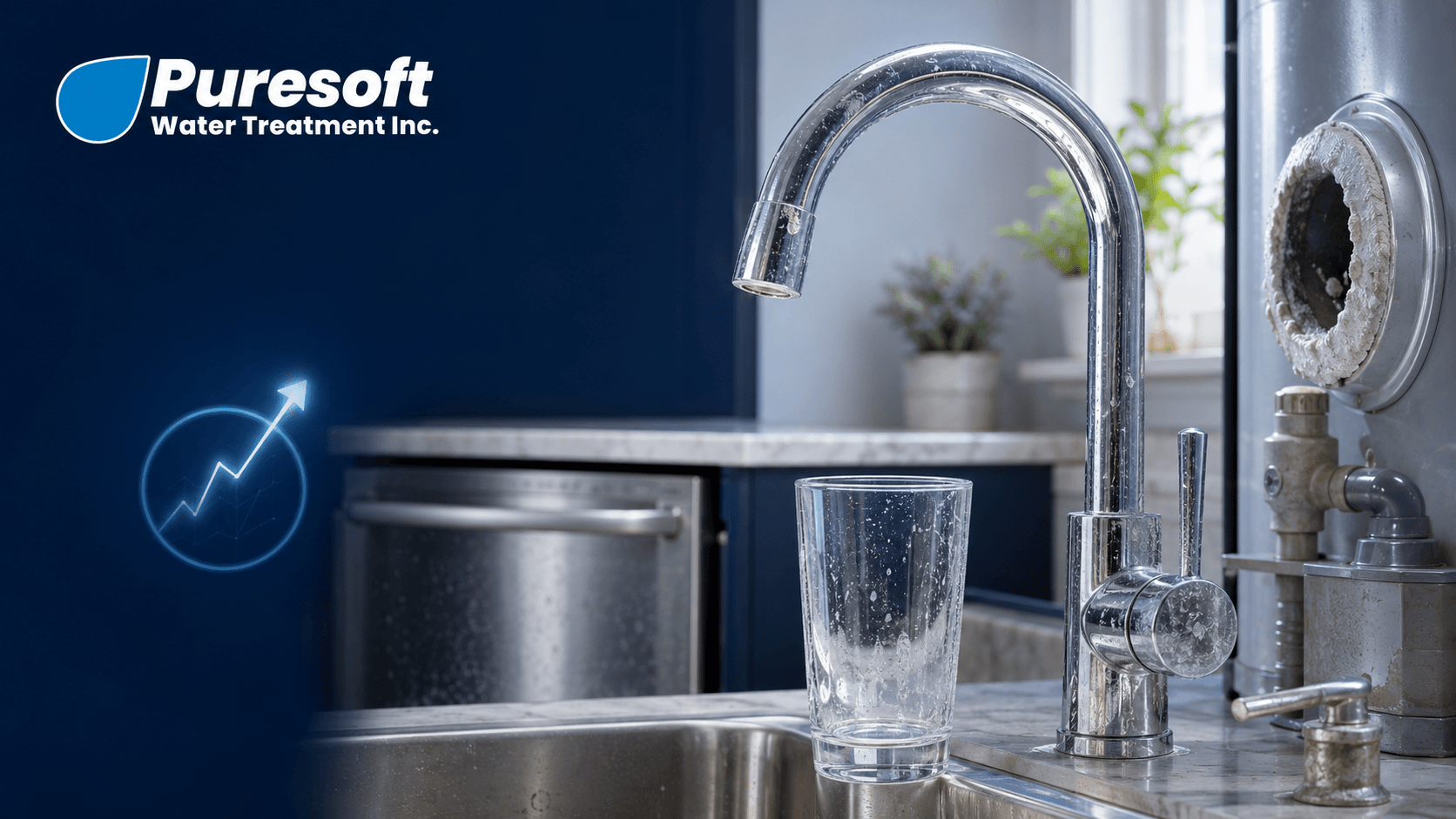
These minerals don’t harm your health, but they wreak havoc on your home:
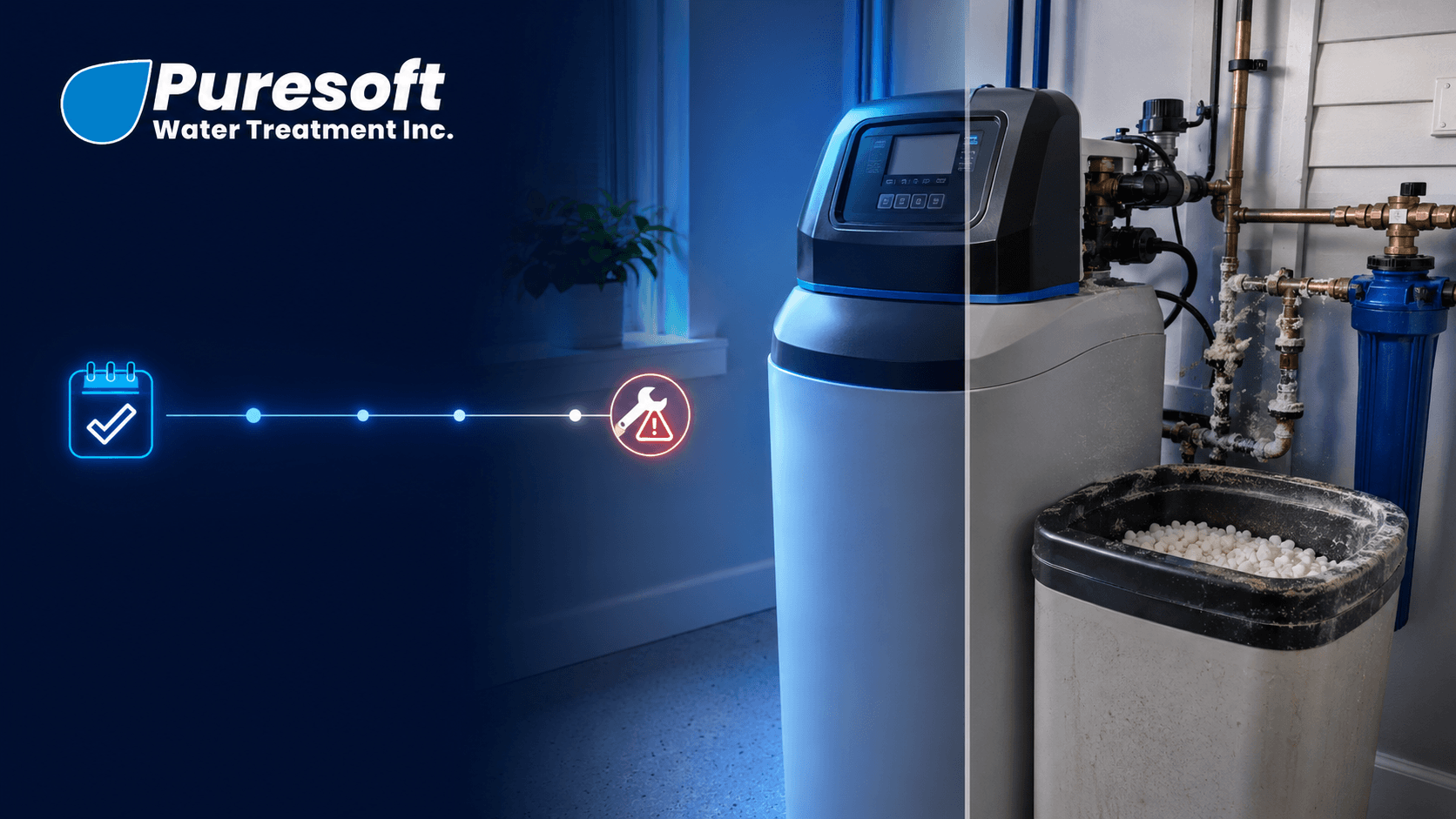
- Scale buildup in pipes and appliances
- Spotty glassware and dishes
- Soap scum in showers and sinks
- Dry skin and dull hair
- Shortened lifespan of water heaters and dishwashers
Because the hardness levels here often exceed 15–25 grains per gallon, most households need a water treatment solution that tackles these minerals head-on.
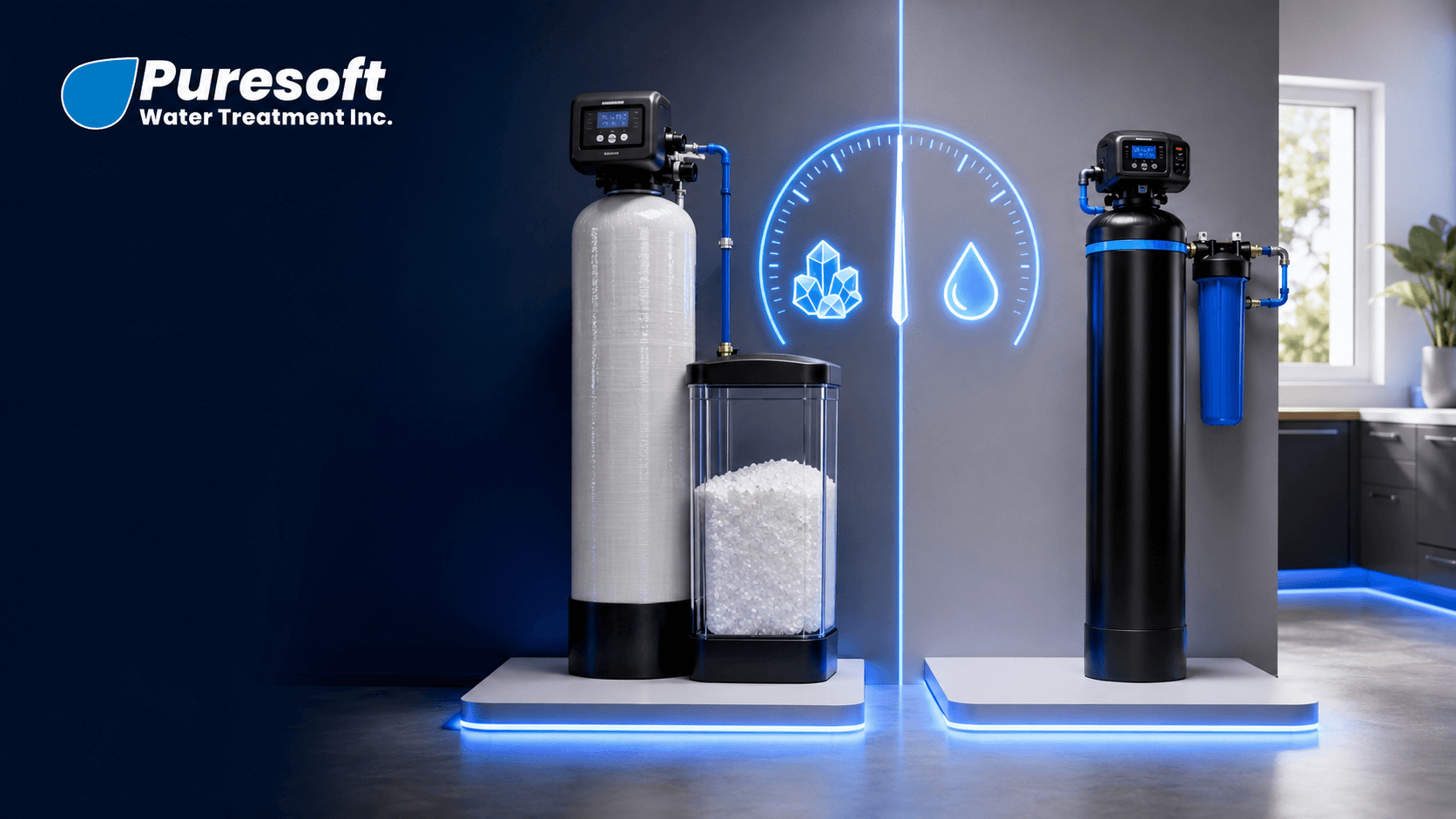
Water Softeners vs. Water Conditioners: The Core Difference
Both systems are designed to improve your home’s water, but their methods — and results — are quite different.
What Is a Water Softener?
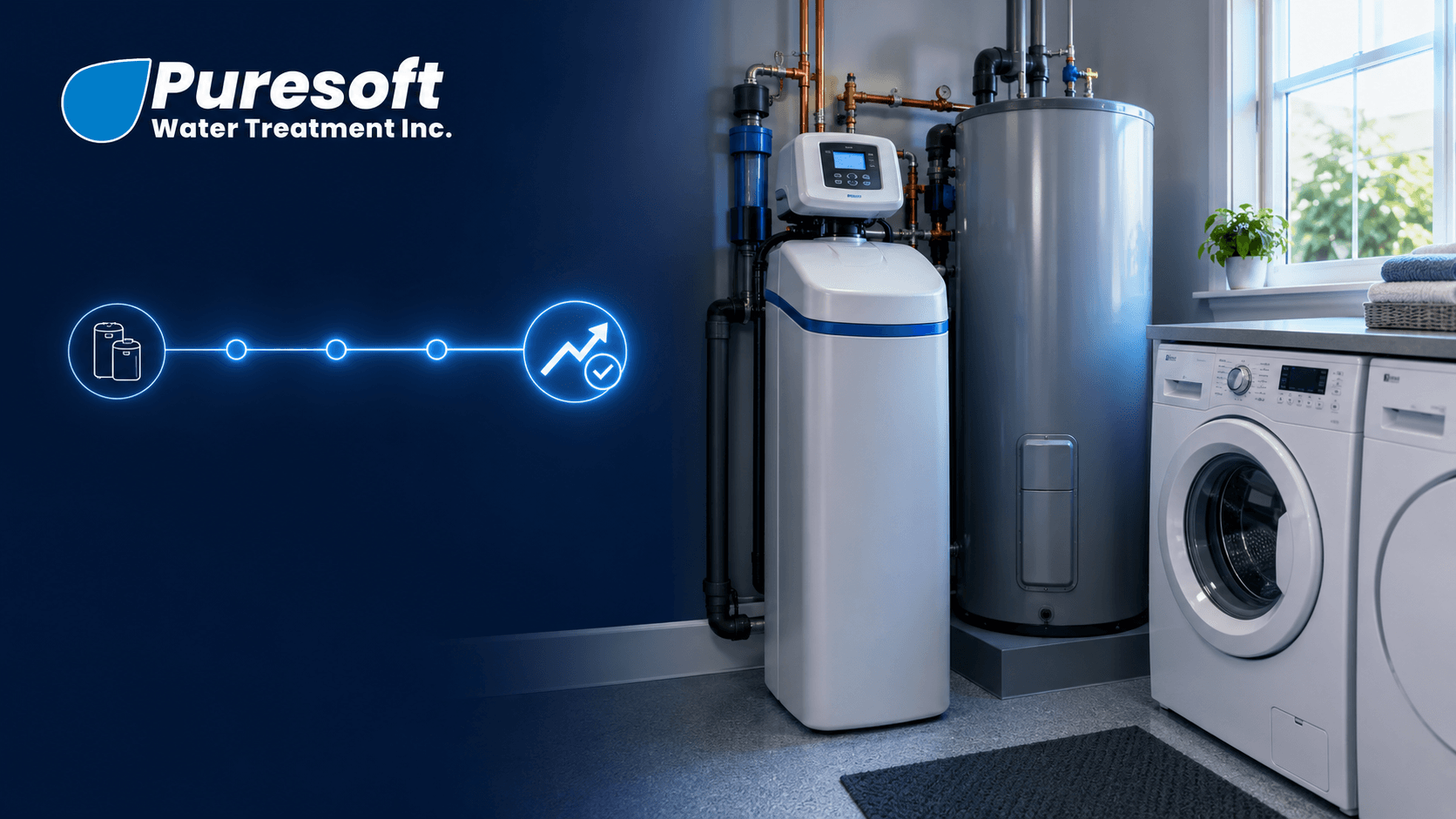
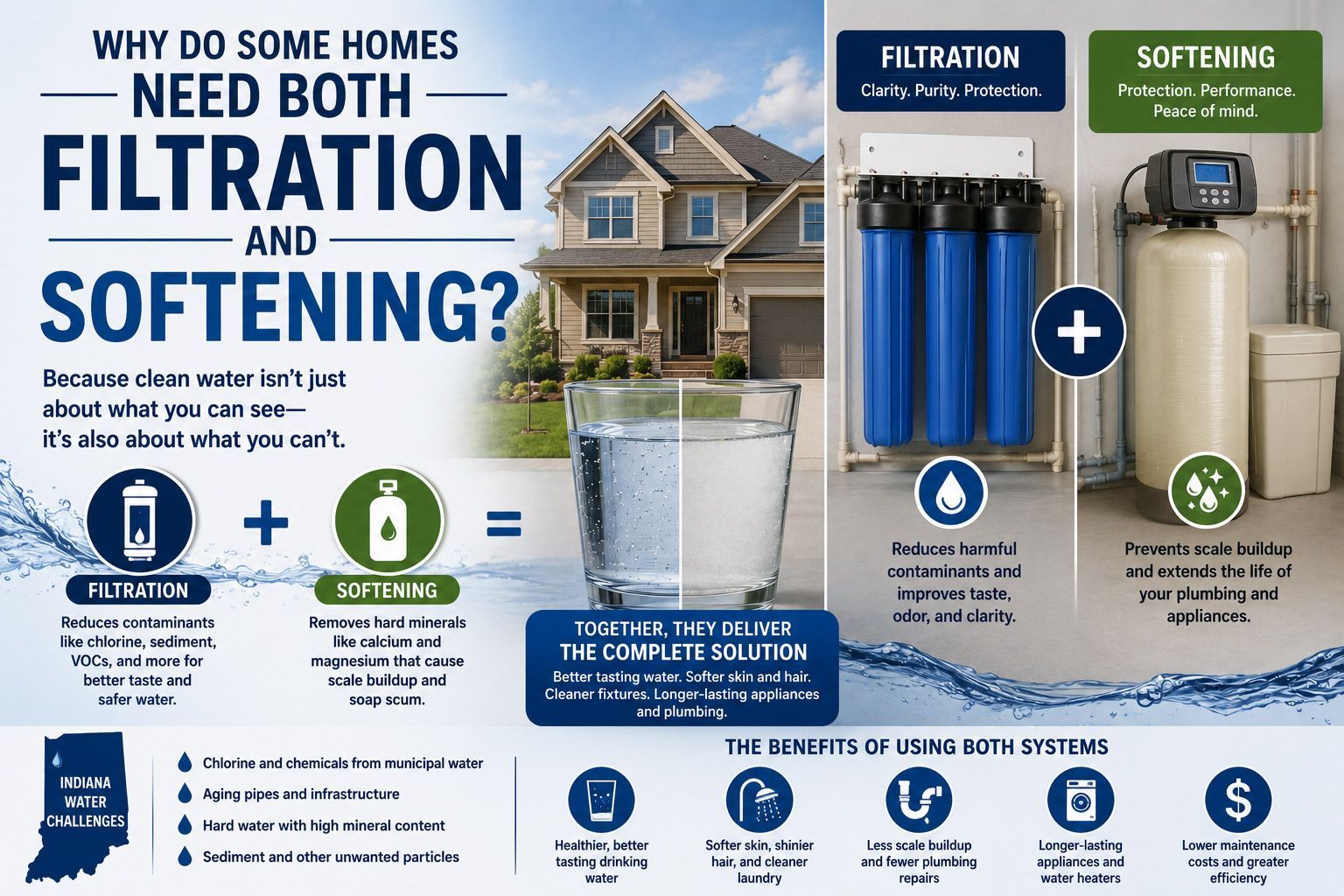
A water softener is a system that removes hardness minerals (calcium and magnesium) from your water through a process called ion exchange.
Here’s how it works:
- Water flows through a resin tank filled with small beads coated in sodium or potassium ions.
- The calcium and magnesium ions in your water are attracted to the resin and swapped for sodium or potassium.
- The softened water then flows throughout your home, free of hardness minerals.
The result:
- No scale buildup on fixtures
- Cleaner laundry and dishes
- Softer skin and hair
- Longer-lasting plumbing and appliances
What Is a Water Conditioner?
A water conditioner doesn’t remove hardness minerals — it changes their structure so they can’t stick to surfaces.
This is done through template-assisted crystallization (TAC) or similar technology, which turns hardness minerals into tiny crystals that remain suspended in the water instead of adhering to pipes or appliances.
The result:
- Reduced scaling
- Easier cleaning
- No salt or regeneration required
However, conditioned water doesn’t feel as “soft” as water treated by a traditional softener, and it doesn’t reduce soap usage in the same way.
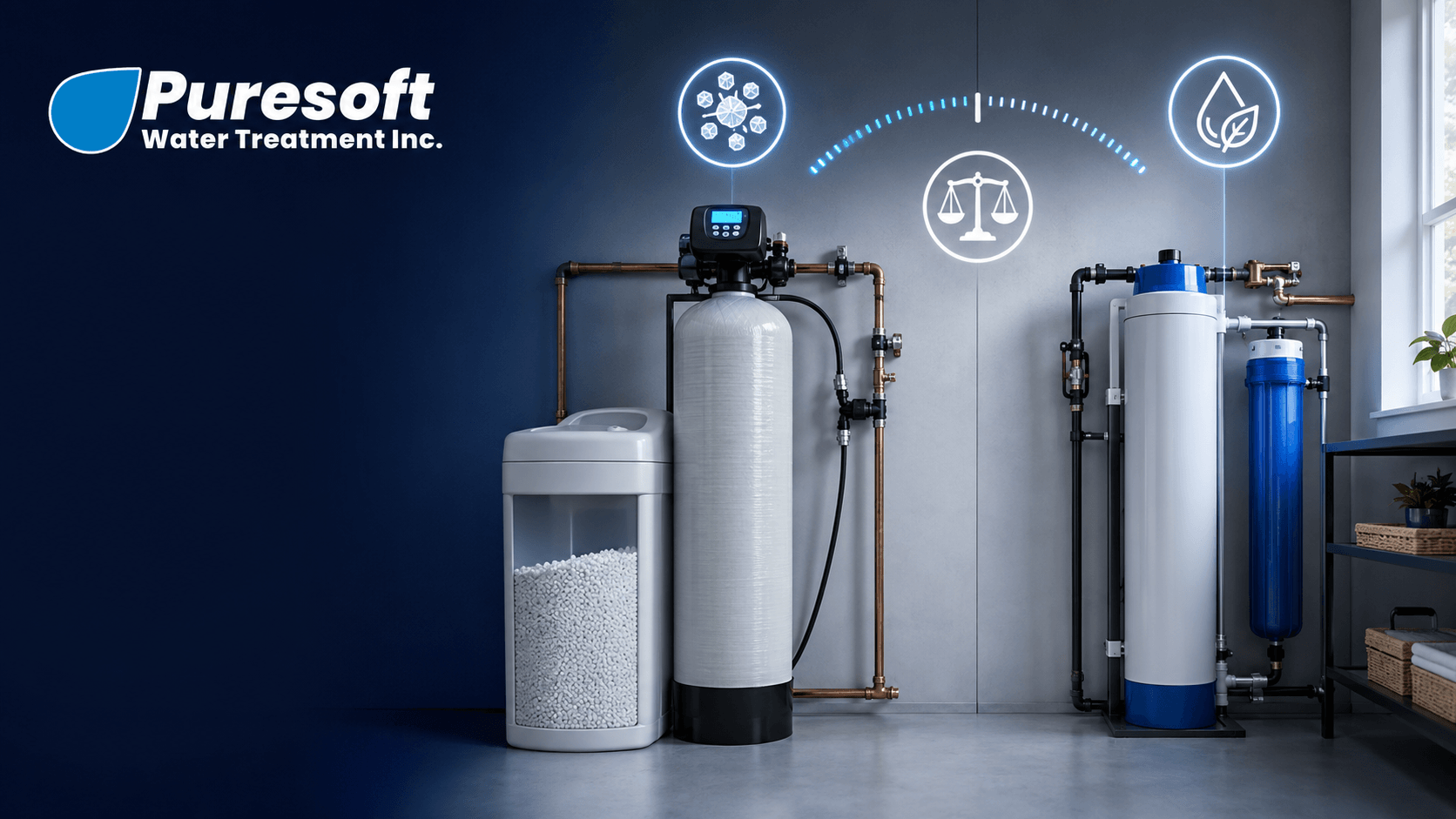
The Key Differences at a Glance
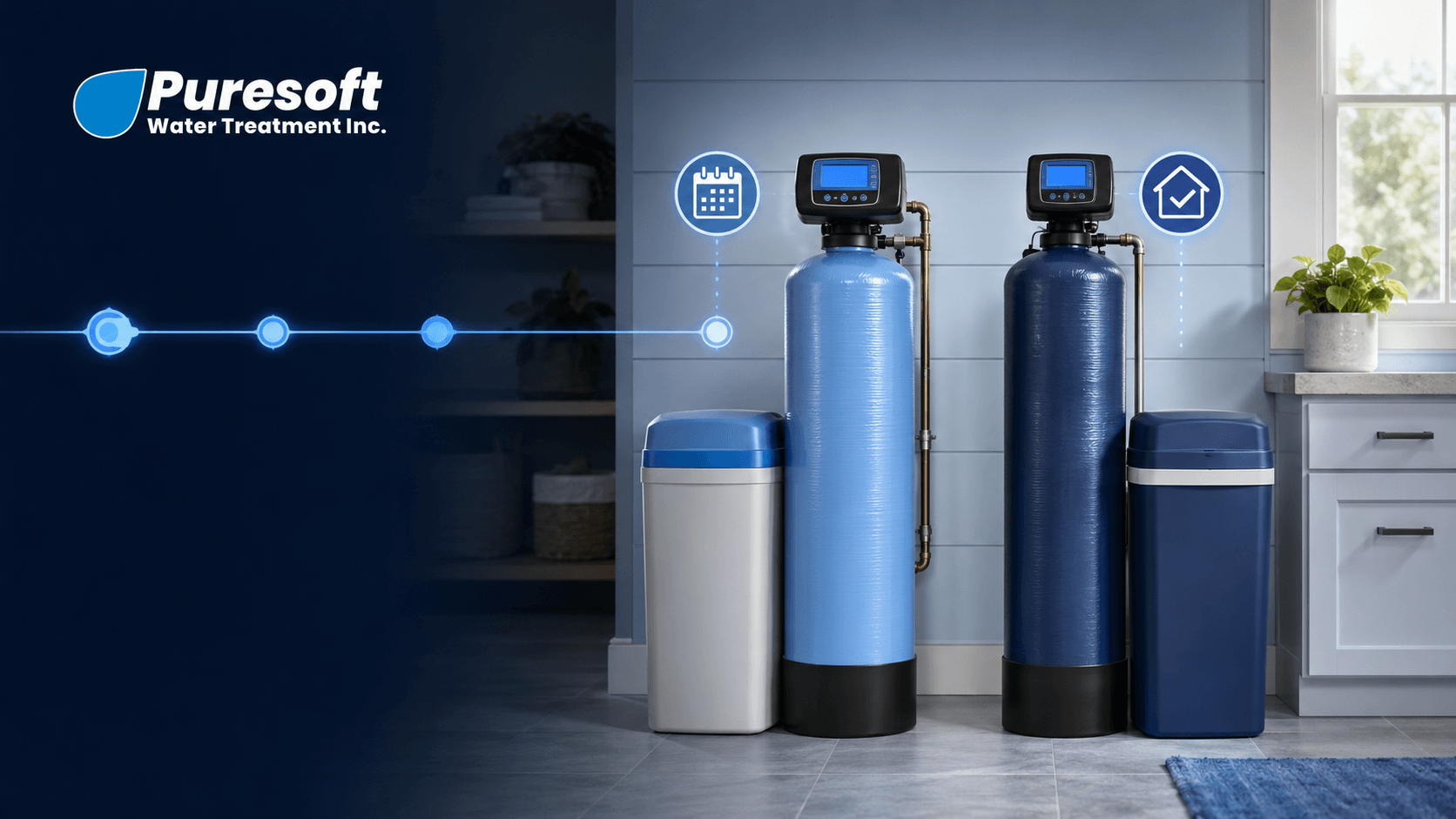
To help you decide between the two, here’s a simple breakdown of their main distinctions:
Water Softener
- Removes minerals: Yes (via ion exchange)
- Uses salt: Yes
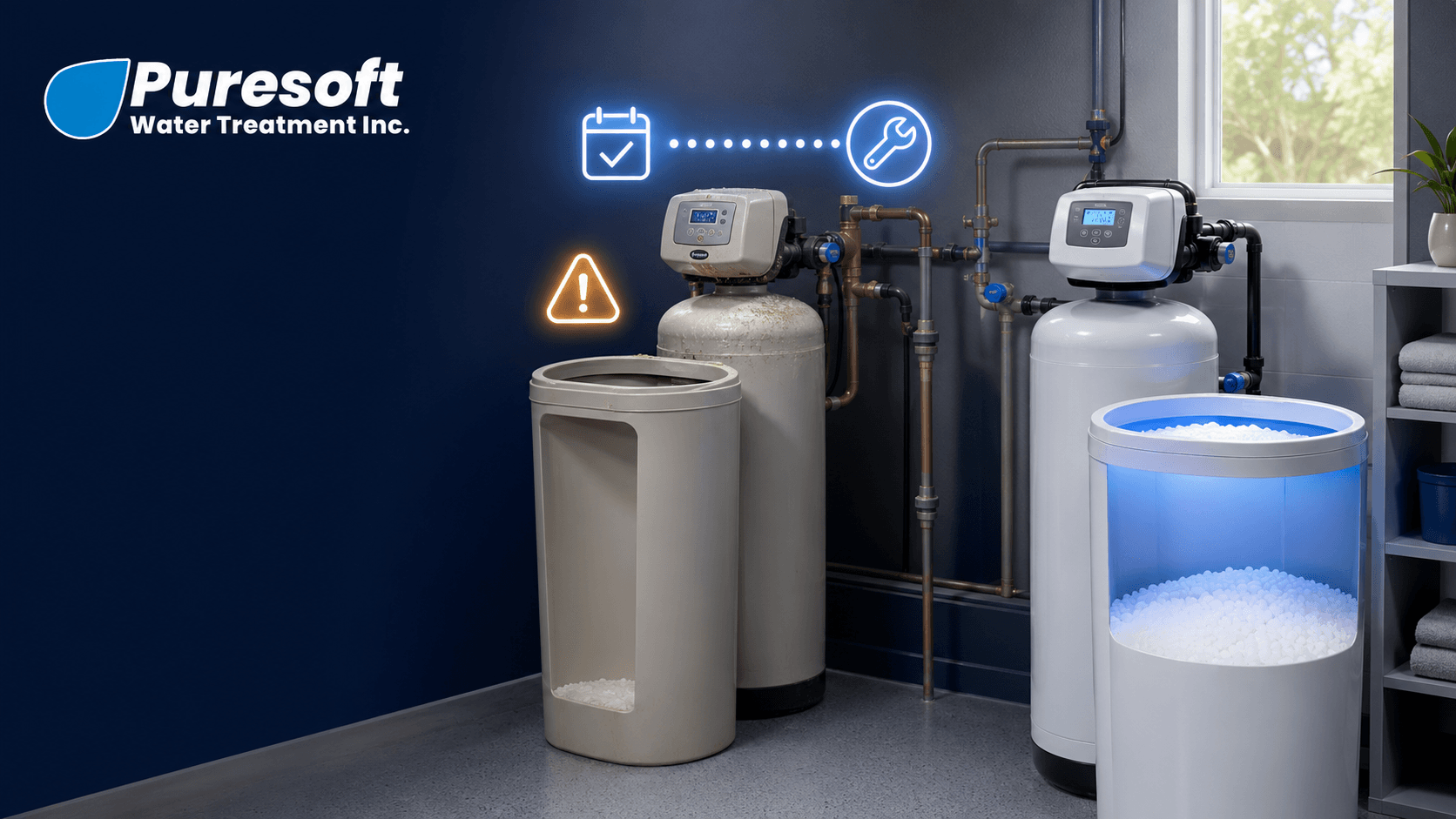
- Maintenance: Requires salt refills and periodic regeneration
- Ideal for: Homes with very hard water
- Result: Soft water that prevents scale buildup and improves cleaning efficiency
Water Conditioner
- Removes minerals: No (alters structure only)
- Uses salt: No
- Maintenance: Minimal
- Ideal for: Homes with moderate hardness or eco-conscious homeowners
- Result: Scale prevention without true softening
How to Choose Between a Softener and a Conditioner
Deciding which system to install depends on your home’s water source, hardness level, and lifestyle preferences.
Step 1: Test Your Water
Before investing in any system, start with a professional water test. In Franklin and Central Indiana, water hardness commonly measures between 18–25 grains per gallon, which typically calls for a traditional water softener.
However, if your test shows moderate hardness or if you’re on municipal water with lower mineral content, a conditioner may be enough.
Step 2: Evaluate Your Needs
Consider the following questions:
- Do you have noticeable limescale buildup on fixtures or in appliances?
- Are you concerned about sodium use in softened water?
- Do you want lower maintenance, or maximum softness?
- Do you use well water or city water?
If your goal is completely eliminating hard water minerals, choose a water softener. If you want simpler maintenance and reduced scaling without using salt, a conditioner could be the better fit.
Step 3: Think About Long-Term Costs
Water softeners require salt refills and regeneration, which involve a small ongoing expense. Conditioners cost less to maintain but don’t provide the same level of mineral removal.
Homeowners who prioritize appliance protection and water quality typically find that the cost of salt is worth the long-term savings on plumbing and maintenance.
FAQs: Water Softeners vs. Water Conditioners
Do water conditioners remove hard water minerals?
No. They only prevent minerals from forming scale by changing their structure. The minerals remain in the water.
Will a water conditioner make my water feel soft?
Not exactly. Conditioned water won’t feel as “slippery” as softened water because the minerals aren’t removed — just altered.
Is softened water safe to drink?
Yes. The added sodium from softening is minimal — typically less than what’s found in a slice of bread per glass of water.
Can I use a water softener and conditioner together?
Yes. Some systems combine both technologies to achieve full softening while reducing maintenance.
Which system is better for Franklin homes?
For most Franklin and Central Indiana homeowners with very hard water, a traditional salt-based water softener offers the best results. Conditioners are great alternatives for those with lighter hardness levels or salt restrictions.
Why It Matters in Central Indiana
Because Central Indiana’s water is among the hardest in the Midwest, homeowners here face more severe scaling and mineral damage than in many other regions. Over time, untreated water can:
- Clog pipes and reduce flow
- Shorten appliance lifespans
- Leave stubborn residue on faucets, dishes, and shower doors
Installing the right system — whether a softener or conditioner — can protect your plumbing, improve comfort, and reduce household maintenance costs.
For Franklin residents on well water or heavily mineralized municipal water, a softener provides the most complete protection. But if you’re looking for a low-maintenance, salt-free option and your water isn’t excessively hard, a conditioner may meet your needs.
Conclusion
While both systems improve your home’s water quality, they do so in very different ways.
- Water softeners remove hardness minerals entirely, delivering true soft water and maximum protection against scale.
- Water conditioners modify minerals to minimize buildup, providing a simpler, eco-friendly solution.
The best choice depends on your home’s water hardness and your preferences for maintenance and performance.
If you’re in Franklin or the Central Indiana area, the best next step is to schedule a
professional water test. PureSoft Water Treatment offers local expertise and custom recommendations to help you choose the right system for your home — ensuring clean, soft, and worry-free water every day.