What Are The Different Water Filter Types?
March 12, 2024
Ever worry about what's in your water? You're not alone. With a jungle of water filters out there, finding the right one can be tricky. But fear not! We've got your back. This guide will walk you through the different types of water filters, helping you pick the perfect match for crystal-clear, safe drinking water. Let’s get to the bottom of what makes water filters tick and find the one that fits your life.
Pitcher Filters
Ever filled a jug and wished it could magically remove all the bad stuff from your water? Enter pitcher filters. These handy devices are the intro level to water filtration. Think of them as your first step into the world of cleaner water. They're affordable, easy to use, and great for reducing chlorine taste and odor, making your water taste better almost instantly.
What's the deal? Pitcher filters use activated carbon to trap contaminants as water passes through, improving taste and removing some of the nasties like chlorine.
Pros:
- Budget-friendly
- No installation required
- Improves taste quickly
Cons:
- Limited filtration capacity
- Frequent filter changes needed
Perfect for: Anyone looking to dip their toes into water filtration without a big commitment. Ideal for improving taste and odor in your drinking water.
Faucet-Mounted Filters
Imagine turning your tap on and getting filtered water on demand. That’s exactly what faucet-mounted filters offer. They attach right to your faucet, providing filtered water without the wait. Ideal for cooking or filling up your glass, these filters are all about convenience.
How do they work? These units connect to your tap, using a combination of activated carbon and sometimes other materials to reduce contaminants. You can switch between filtered and unfiltered water, making it versatile for daily use.
Pros:
- Easy access to filtered water
- Simple installation
- Switch between filtered and unfiltered water
Cons:
- May not fit all faucet types
- Can slow down water flow
- Visible and might not match your kitchen aesthetic
Perfect for: Busy households that need filtered water quickly for drinking and cooking. Great if you're after something more permanent than a pitcher but without major installation.
Under-Sink Filters
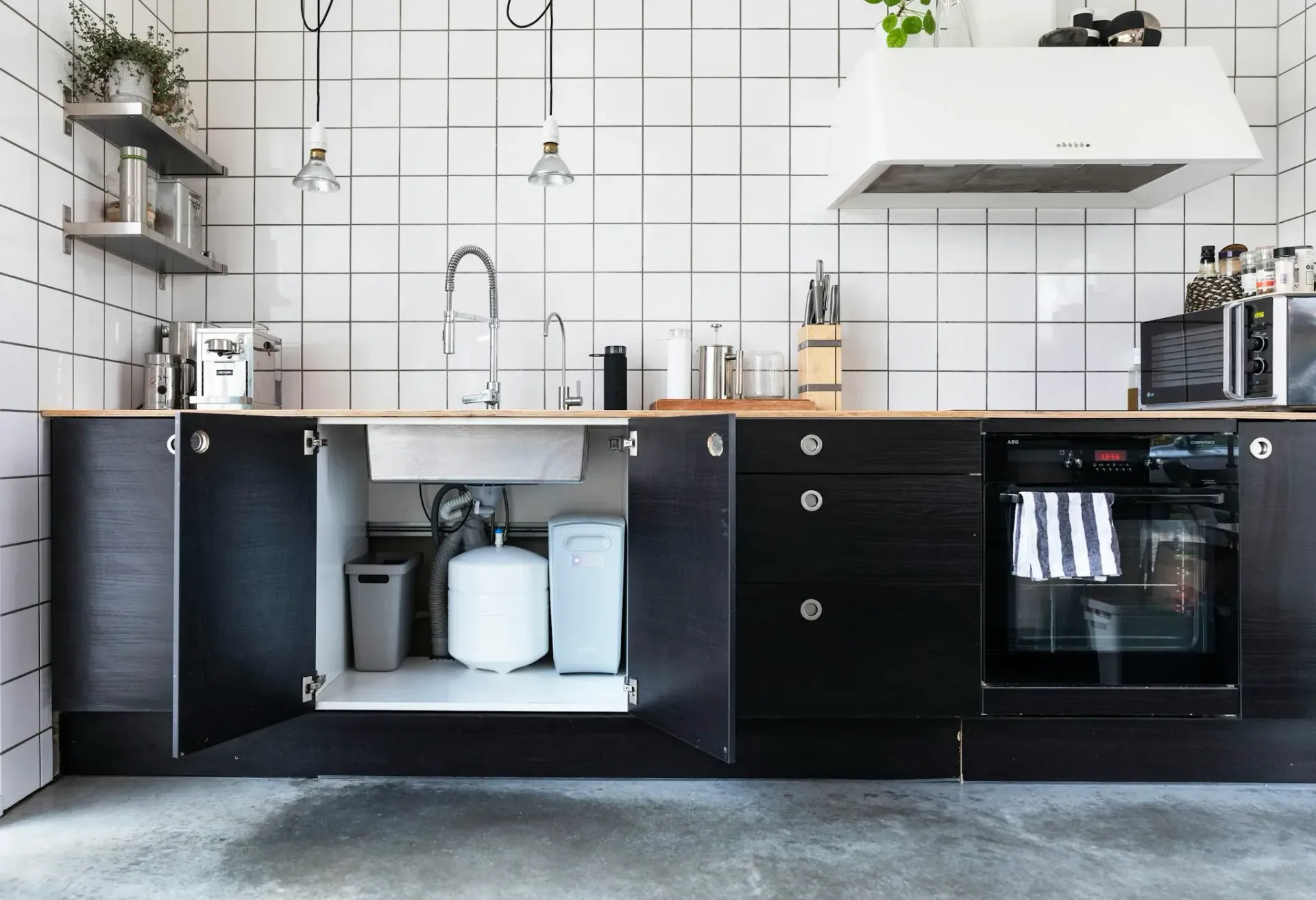
Tucked away and out of sight, under-sink filters do their heavy lifting quietly but effectively. They're the hidden heroes of water filtration, offering a higher level of purification without taking up valuable counter space.
How they work: These systems are installed directly into the water line beneath your sink. Water flows through multiple stages of filtration, including activated carbon and possibly reverse osmosis, to remove a wide range of contaminants.
Pros:
- Powerful filtration capabilities
- Hidden from view
- Filters large volumes of water
Cons:
- More complex installation required
- Higher upfront costs
- May require professional maintenance
Perfect for: Anyone looking for a more comprehensive filtration system that can tackle a wide array of contaminants. Ideal for families concerned about water quality and willing to invest in a more permanent solution.
Countertop Water Filters
Countertop water filters offer the perfect blend of convenience and performance. Sitting neatly on your counter, these units purify your water without the need for plumbing changes, making them a favorite for renters or those who frequently move.
How they work: Connected to your faucet via a simple hose or sitting independently, these filters use a combination of carbon filtration, and sometimes more advanced technologies like reverse osmosis, to reduce contaminants. They're effective, easy to set up, and can handle a significant amount of water.
Pros:
- No installation required
- Portable and easy to move
- Effective at reducing many types of contaminants
Cons:
- Takes up counter space
- May require frequent filter changes depending on usage
- Some models can be pricey
Perfect for: Those who prioritize flexibility and effective filtration without the hassle of installation. Ideal for renters, students, or anyone who prefers a simple, yet efficient, water purification solution.
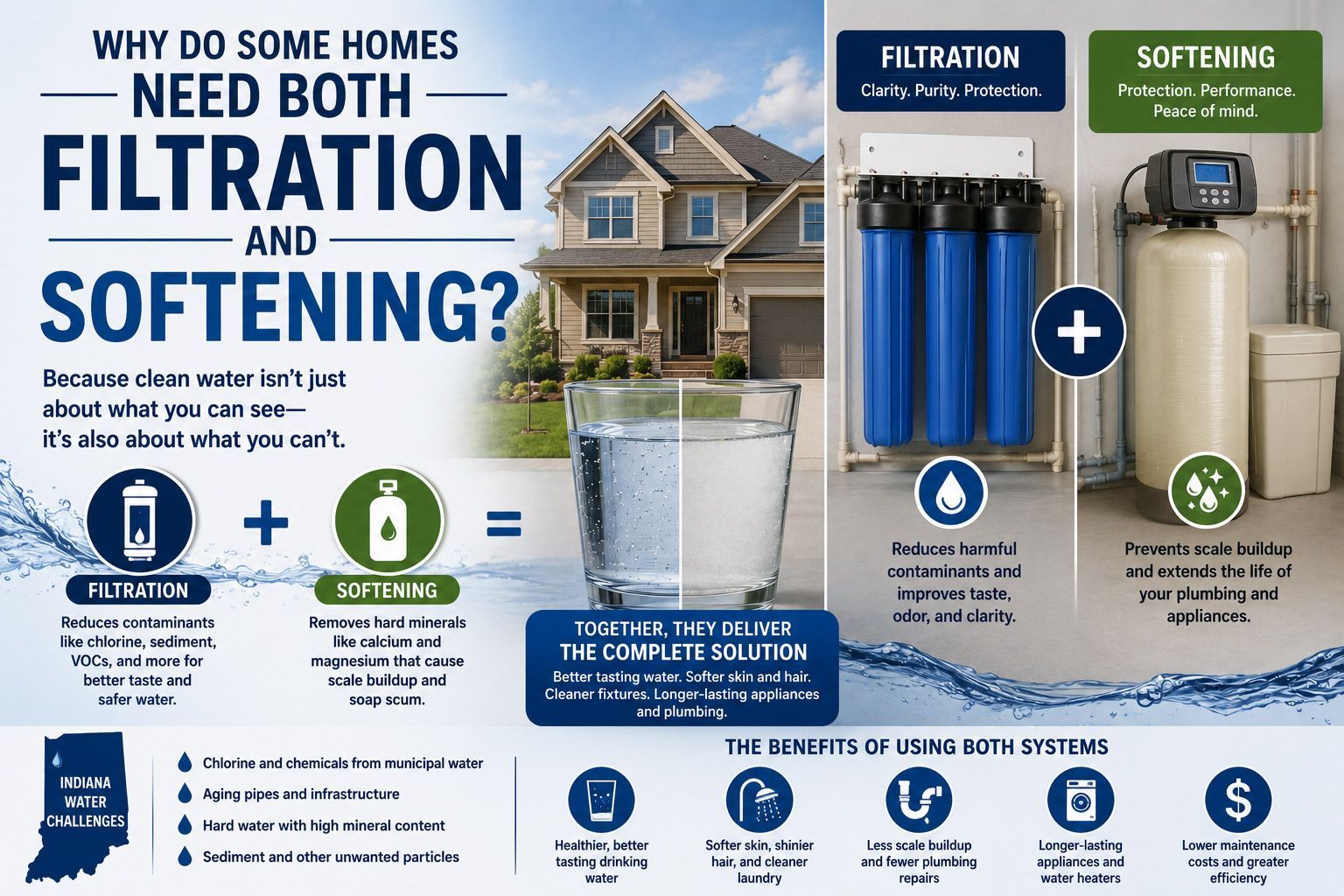
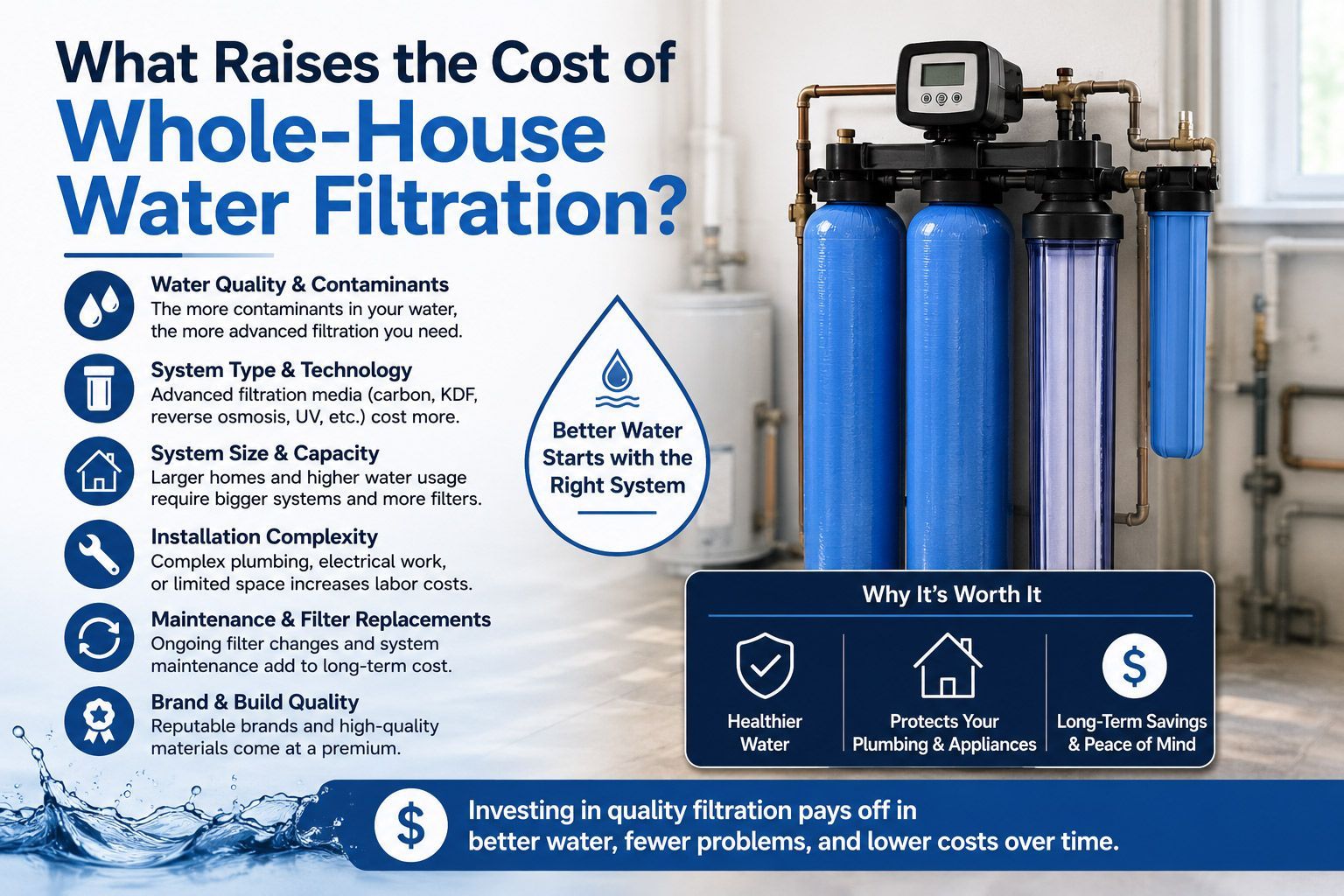
Whole House Water Filtration Systems
Whole house water filtration systems are the ultimate safeguard for your home’s water supply. They filter water at the point of entry, ensuring every tap delivers clean, safe water. From showers to kitchen sinks, these systems provide uniform quality throughout your home.
How they work: Installed at the main water line, these systems remove contaminants before the water reaches any faucet or appliance. Using a variety of filtration media, they can tackle everything from sediment to heavy metals, improving water quality across the board.
Pros:
- Uniform water quality in the entire home
- Long-lasting filters with less frequent changes
- Protects appliances from scale and buildup
Cons:
- High initial investment
- Professional installation required
- Periodic maintenance needed to ensure efficiency
Perfect for: Families or individuals seeking a one-stop solution for all their water needs. Especially beneficial for those concerned about contaminants affecting not just drinking water but also bathing and appliance water quality.
Reverse Osmosis Systems
Reverse osmosis (RO) systems offer a high level of purification, removing contaminants that other filters can't. These systems push water through a semi-permeable membrane, leaving impurities behind and delivering pure water to your tap.
How they work: RO systems use pressure to force water through a membrane that captures a wide range of contaminants, including dissolved solids, heavy metals, and some bacteria and viruses. This process is often coupled with other filtration stages, such as carbon filters, to ensure comprehensive water purification.
Pros:
- Removes a broad spectrum of contaminants
- Provides excellent water taste and quality
- Can be installed under the sink or as a countertop unit
Cons:
- Requires more water to operate, producing wastewater
- Slower filtration process
- More expensive than simpler filtration methods
Perfect for: Health-conscious individuals or families concerned about the highest level of water purity. Ideal for areas with known water contamination issues or for anyone demanding the best in water quality.
UV Water Purifiers
UV water purifiers use ultraviolet light to neutralize bacteria, viruses, and other microorganisms, ensuring your water is free from harmful life forms. This method is quick, effective, and does not introduce chemicals into your water.
How they work: Water passes through a chamber that exposes it to UV light. This exposure damages the DNA of microorganisms, rendering them harmless and unable to reproduce. It’s a powerful addition to physical filtration methods, ensuring comprehensive water safety.
Pros:
- Effective against a wide range of pathogens
- Chemical-free purification
- Low maintenance and energy efficient
Cons:
- Does not remove non-biological contaminants
- Requires pre-filtration for best results
- Initial setup costs
Perfect for: Households concerned about microbial contamination in their water supply. It’s an excellent choice for ensuring water is safe from pathogens, especially in areas prone to such water quality issues.
Conclusion
Navigating the world of water filters can seem daunting, but armed with the right information, finding the perfect fit for your home becomes much simpler. Whether you’re drawn to the ease of pitcher filters, the on-demand purification of faucet-mounted systems, the stealthy power of under-sink models, the flexibility of countertop units, the comprehensive approach of whole house systems, the superior purity of reverse osmosis, or the microbial defense of UV purifiers, there’s a solution out there for your specific needs and concerns.
Remember, the goal is to ensure your drinking water is clean, safe, and tastes great. Consider your household water usage, the specific contaminants you need to target, and your budget. Sometimes, a combination of systems offers the best protection. And don’t forget, regular maintenance and timely filter changes are crucial for keeping any water filtration system running effectively.
Water is life, and ensuring its quality not only supports your health but also enhances your daily living experience. So take the plunge, choose the water filter that best aligns with your lifestyle, and enjoy the peace of mind that comes from knowing you’re providing the best for yourself and your loved ones.