What’s the Difference Between Water Softeners and Water Filters?
April 23, 2024
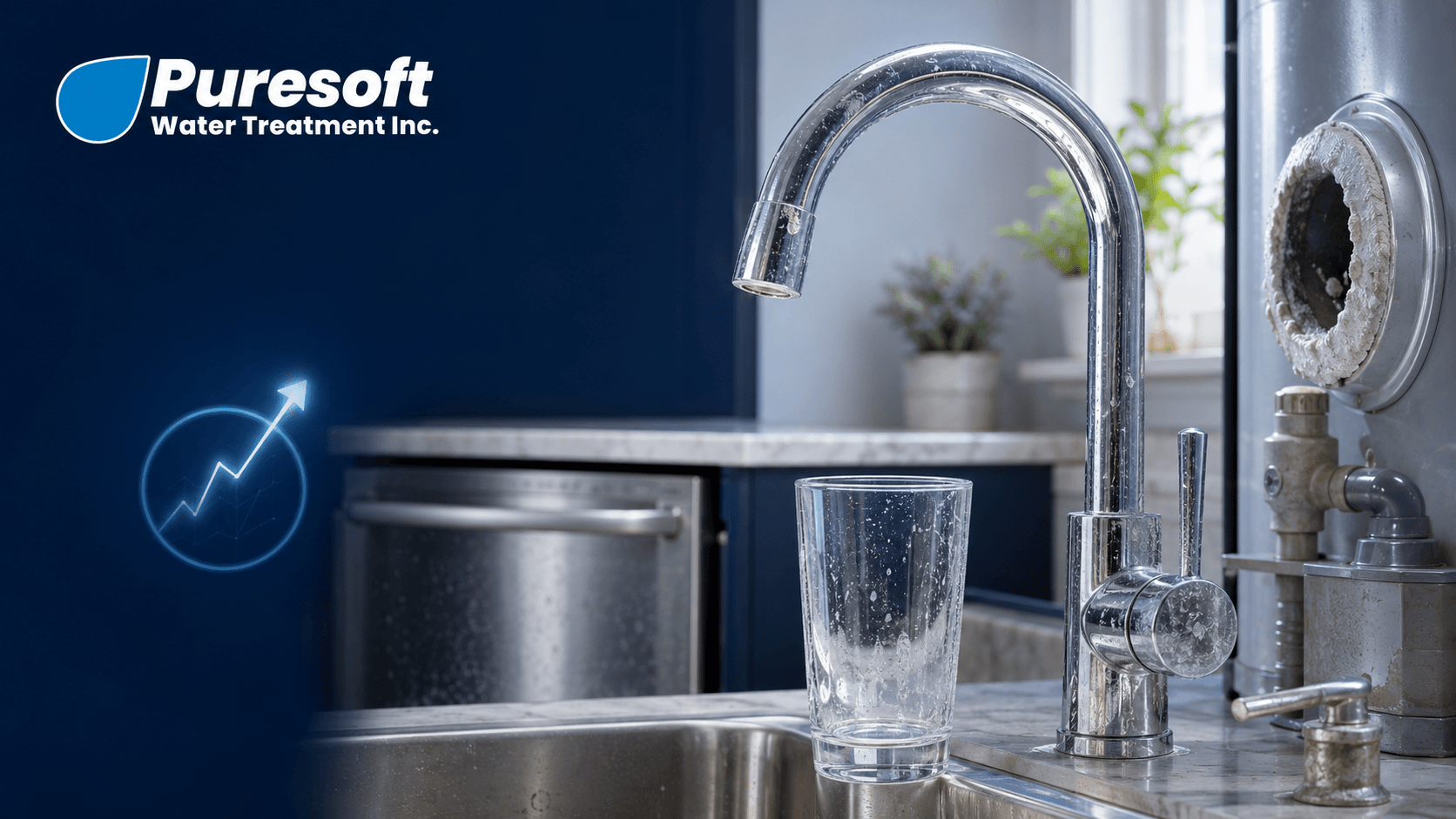
If you’ve noticed cloudy spots on your glasses, white buildup on faucets, or strange tastes and odors in your tap water, you might be wondering what kind of system your home actually needs — a water softener or a water filter.
It’s a common question among Indiana homeowners. Both systems improve water quality, but they solve very different problems. Understanding how each works will help you choose the right option for your home’s needs, comfort, and safety.
Understanding Water Softeners
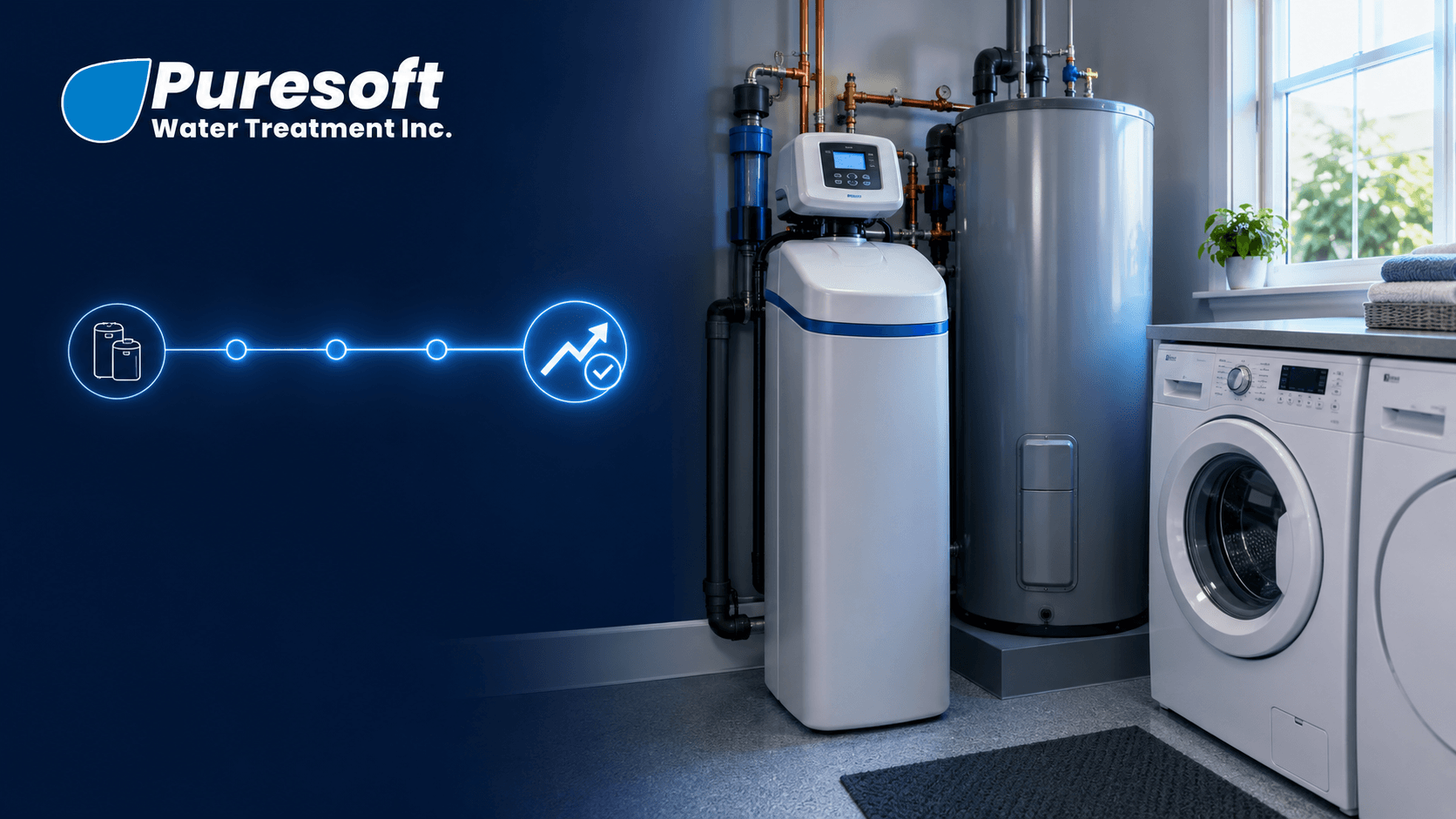
A water softener is designed to remove hardness minerals — mainly calcium and magnesium — from your water. These minerals aren’t dangerous to drink, but they cause a long list of household frustrations, from scale buildup to dull hair and stiff laundry.
How Water Softeners Work
Water softeners use a process called ion exchange. Inside the softener tank, small resin beads are charged with sodium or potassium. As hard water passes through the tank, the resin captures the calcium and magnesium and replaces them with sodium or potassium ions.
The result is softened water that flows smoothly through your pipes without leaving mineral deposits behind.
Benefits of Water Softeners
Before deciding if you need one, it helps to know how a softener improves your home and daily life.
- Prevents scale buildup in pipes, water heaters, and appliances
- Extends the lifespan of plumbing and fixtures
- Helps soap and detergents lather more effectively
- Leaves skin feeling softer and hair smoother
- Reduces the white residue and cloudy film on dishes and shower doors
Limitations of Water Softeners
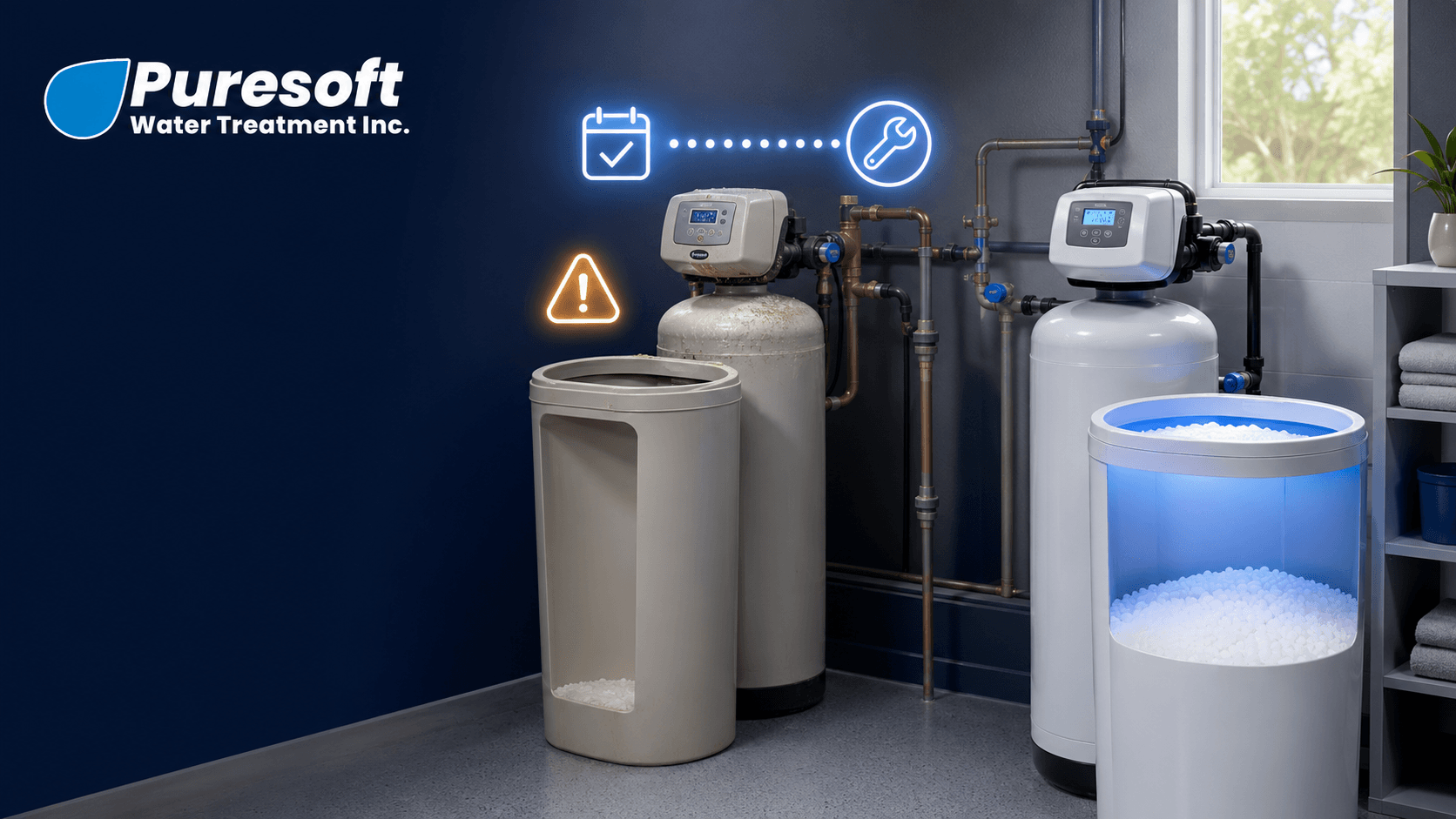
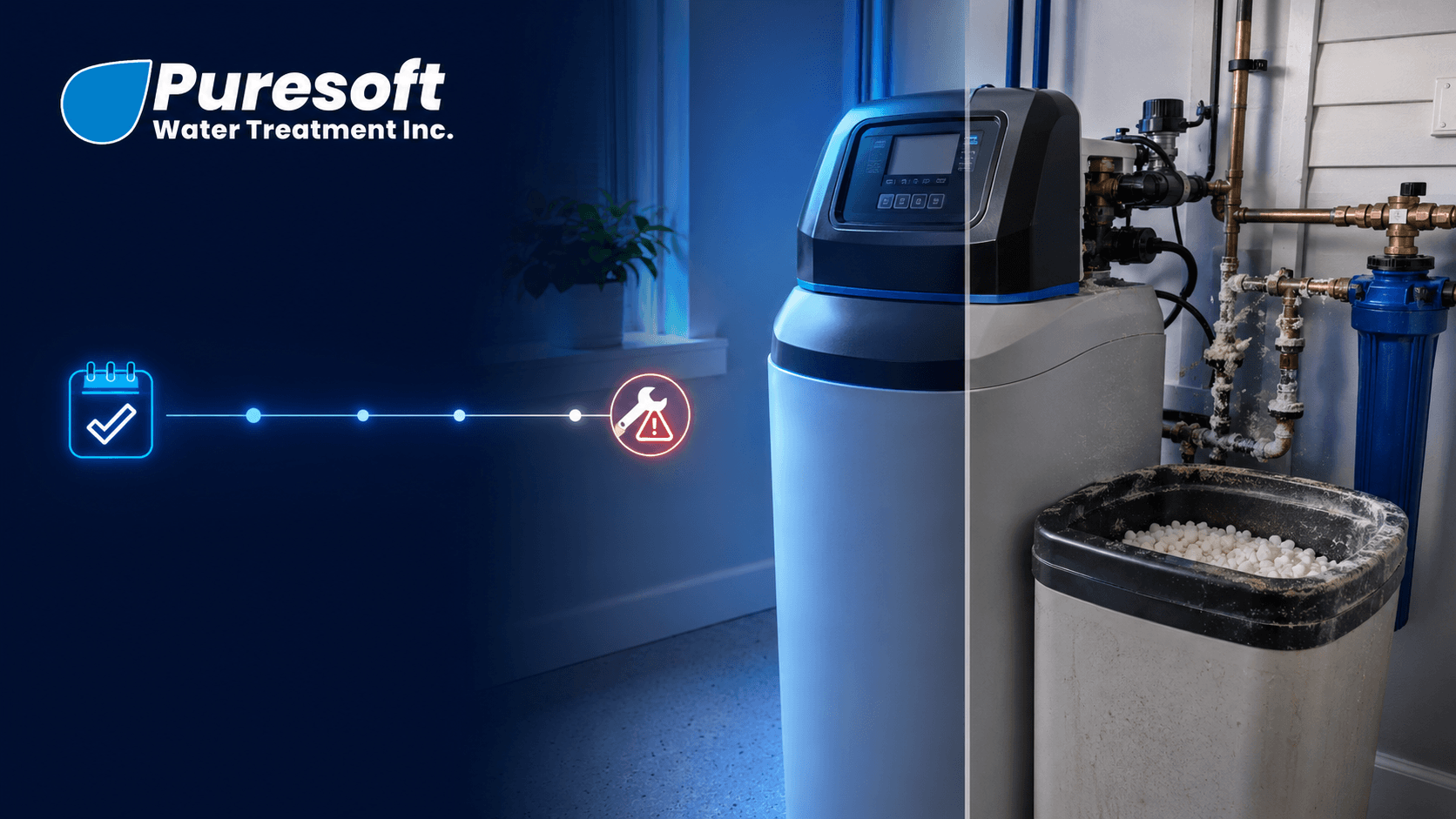
Softening focuses on minerals, not contaminants. A water softener won’t remove chemicals, bacteria, or heavy metals from your water. It’s also important to maintain the system by adding salt and scheduling occasional servicing to keep it efficient.
Understanding Water Filtration Systems
A water filtration system removes contaminants, odors, and impurities from your water — things that affect its safety, clarity, and taste. While softeners handle minerals, filters tackle everything else.
How Water Filtration Works
Different systems use different technologies:
- Activated carbon filters absorb chlorine, organic chemicals, and unpleasant tastes or odors.
- Reverse osmosis systems push water through a semi-permeable membrane to remove dissolved solids, heavy metals, and other impurities.
- UV filtration systems use ultraviolet light to destroy bacteria and viruses.
Each filtration method targets specific issues, so the right one depends on your water quality and what you’re trying to fix.
Benefits of Water Filtration
A filtration system improves more than just taste — it can make your home’s water safer and healthier overall.
- Removes chlorine, sediment, and other chemical contaminants
- Improves the flavor, clarity, and smell of tap water
- Reduces exposure to harmful elements like lead or pesticides
- Provides cleaner water for drinking, cooking, and bathing
Limitations of Water Filtration
Filters do not address hard water minerals like calcium and magnesium. This means you can still have limescale, cloudy dishes, or reduced appliance lifespan even with a filtration system in place.
How Water Softeners and Water Filters Differ
While both systems improve water quality, they work in very different ways.
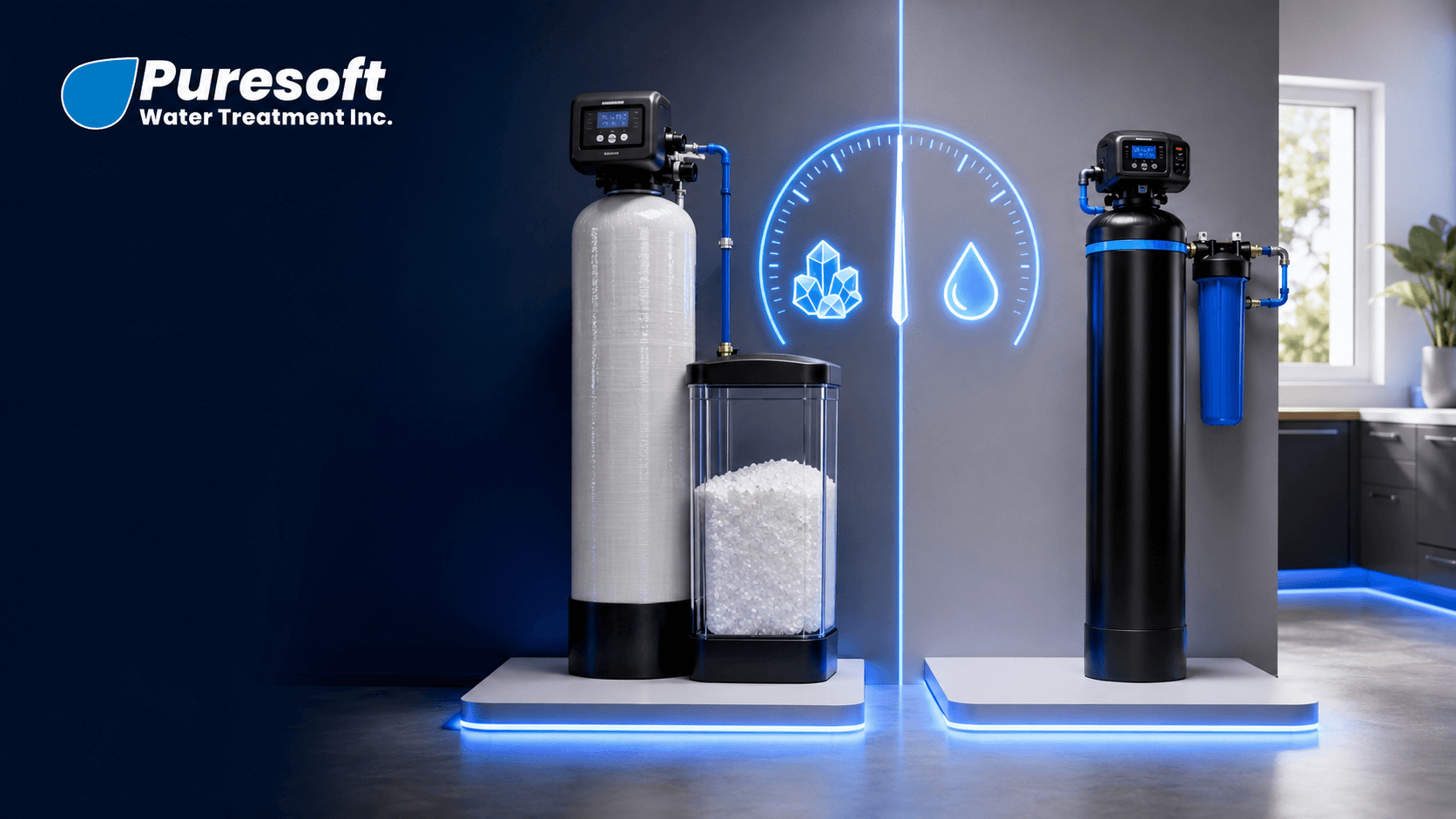
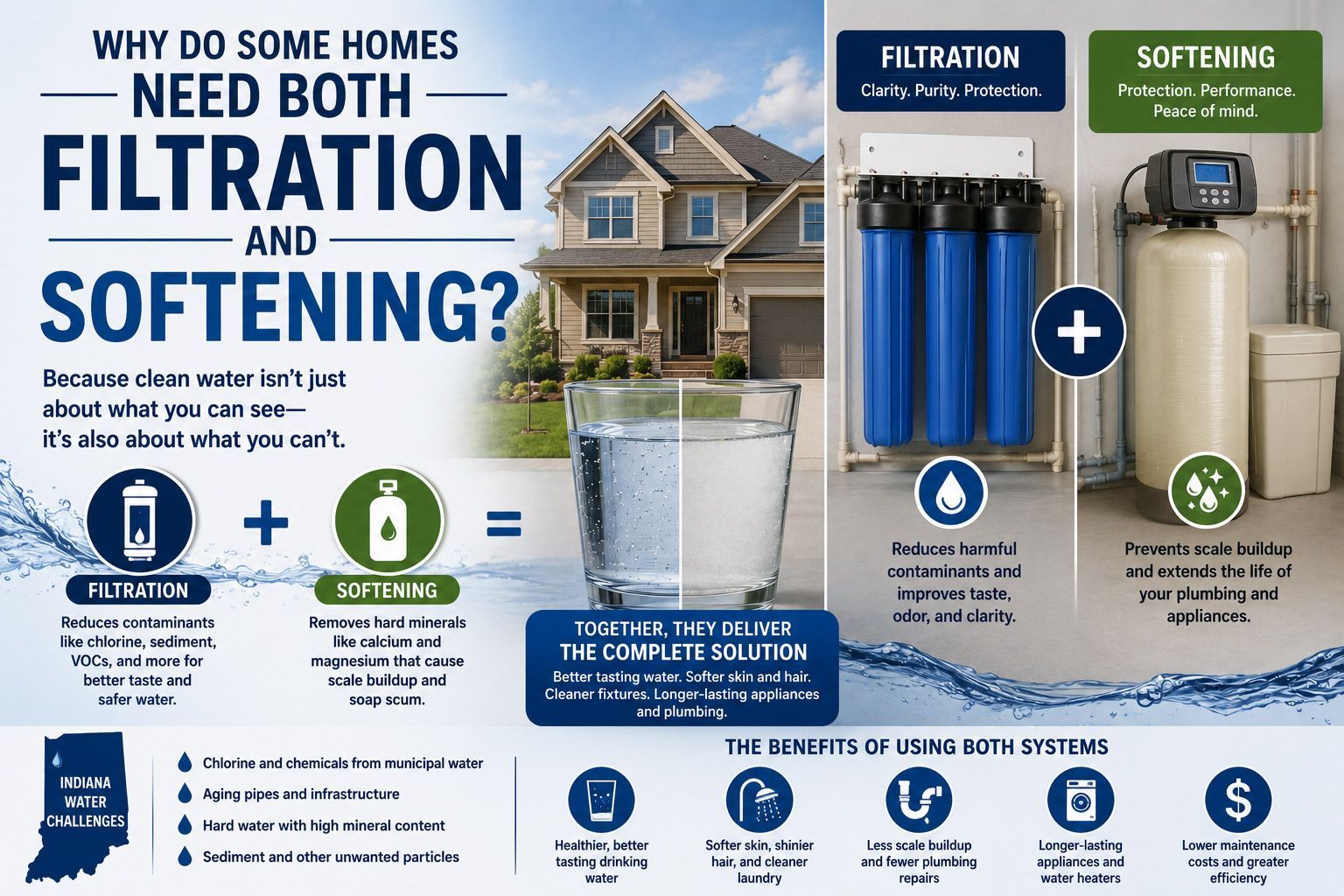
- Water softeners treat hardness — the minerals that cause buildup and soap inefficiency.
- Water filters treat impurities — chemicals, odors, and contaminants that affect safety and taste.
- Softeners use ion exchange; filters use carbon, membranes, or UV light.
- Softening helps your plumbing and appliances; filtration helps your drinking water and overall health.
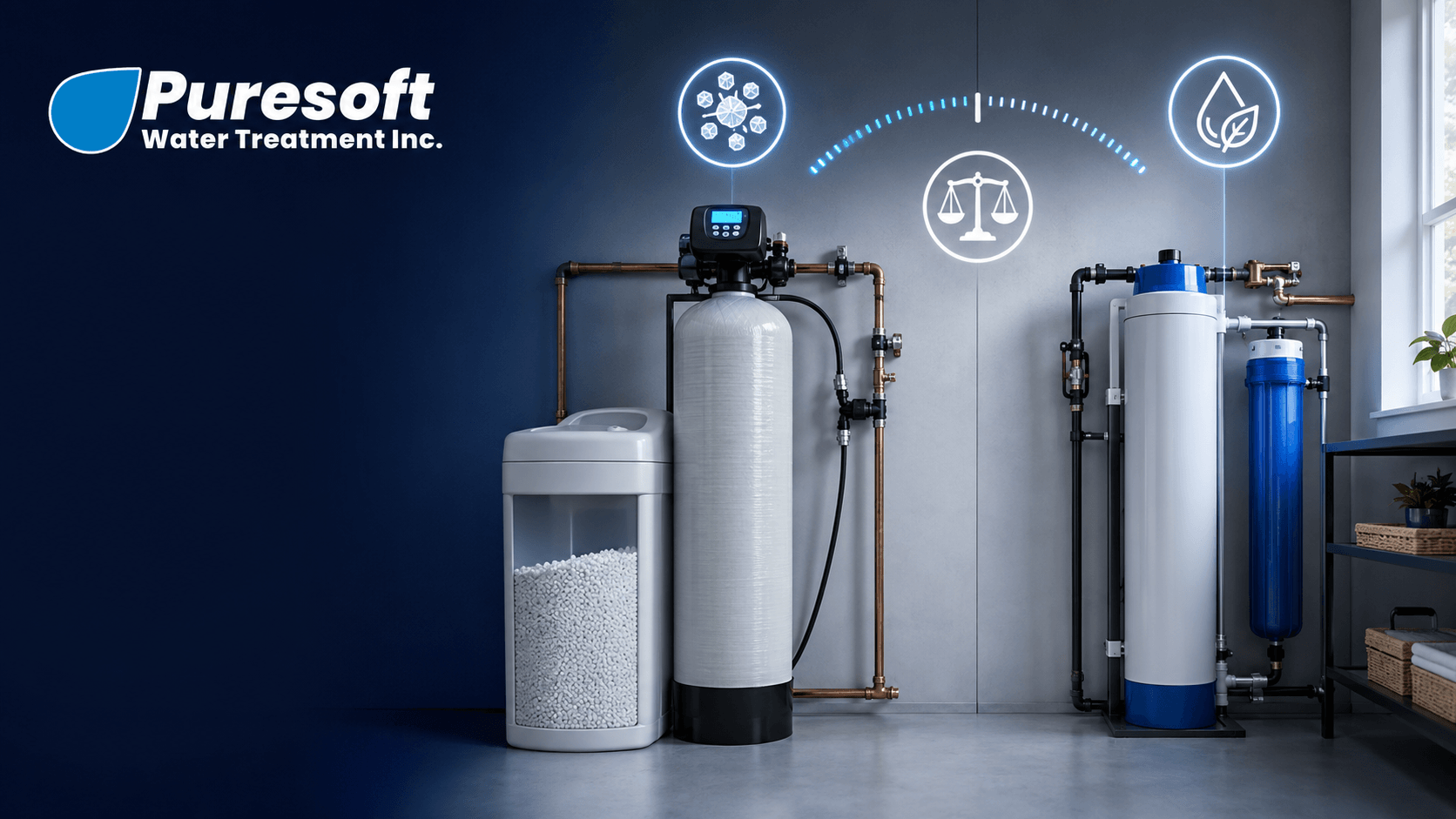
In many homes, both systems are used together for complete water treatment.
When to Choose a Water Softener
If you notice these issues around your home, a softener is likely the right solution:
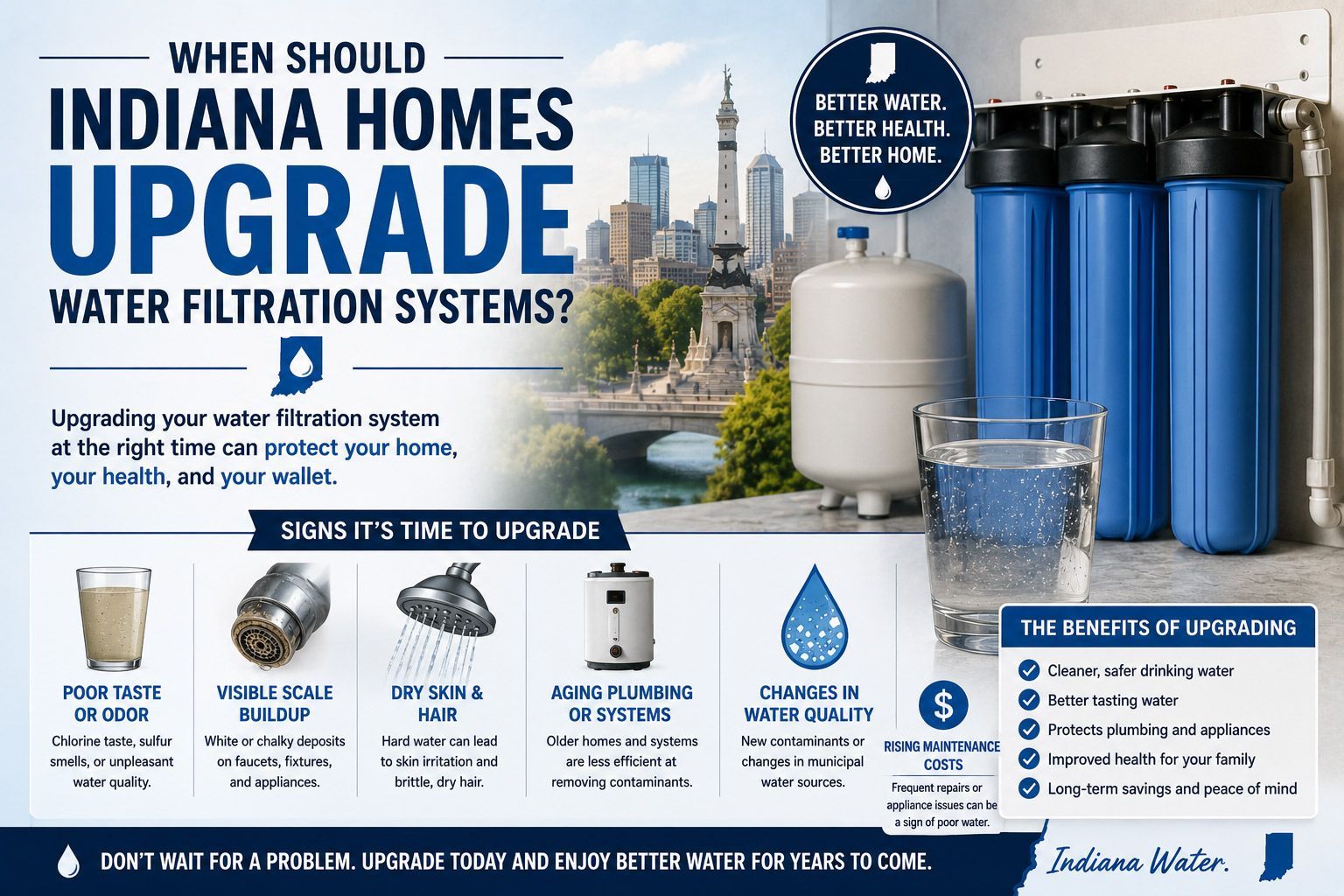
- White, chalky buildup on faucets and fixtures
- Cloudy film or spots on dishes and glassware
- Soap that doesn’t lather easily
- Dry, itchy skin and dull hair
- Appliances wearing out faster than expected
Softening will protect your plumbing, improve cleaning results, and make your water feel smoother and gentler on skin.
When to Choose a Water Filter
If your main concern is the safety or taste of your water, then filtration is what you need. Look for these signs:
- Bad taste, odor, or discoloration in your tap water
- Known contaminants or sediment from well water or municipal sources
- Cloudy water or visible particles
- Concerns about chlorine, chemicals, or bacteria
Filtration systems improve drinking water, reduce chemical exposure, and give you peace of mind every time you turn on the tap.
Can You Use Both Systems Together?
Yes — and many homeowners in Indiana do. A combined setup offers the best of both worlds:
- The water softener removes hardness minerals, preventing limescale and buildup.
- The filtration system removes contaminants and improves taste, clarity, and safety.
This dual approach ensures your entire home benefits from softer, cleaner water — from your kitchen tap to your shower and laundry room.
Frequently Asked Questions
- Do I need both a water softener and a filter?
It depends on your water quality. If you have hard water and contaminants, both systems can work together for complete protection and comfort. - Will a water softener make my water safe to drink?
Not necessarily. It removes hardness minerals but not contaminants like chlorine or bacteria. For safe drinking water, pair it with a filtration system. - Can I install a water softener myself?
While DIY installation is possible, professional setup ensures proper sizing, plumbing, and performance for your home’s specific needs. - Does a water softener make water taste salty?
You may notice a slight difference in taste because of the sodium added during softening, but most homeowners find it mild and clean-tasting. - How often do filters and softeners need maintenance?
Water softeners typically need salt refills monthly and professional service checks annually. Filters vary — some cartridges last six months, while others can go a year or more.
Conclusion
Water softeners and water filters serve different purposes, but both play important roles in improving your home’s water quality. If your biggest concern is limescale, residue, or appliance damage, choose a softener. If you want better-tasting and safer drinking water, a filtration system is the right choice.
For many Indiana homeowners, using both provides the ultimate balance — softer water for comfort and cleaner water for health. Understanding what your water needs is the first step to better living every day.