How Hard Water Impacts Your Skin and Hair — and What Central Indiana Homeowners Can Dov
February 1, 2026
Introduction
Have you ever stepped out of the shower only to feel your skin tight, itchy, or dry — no matter how much lotion you use? Or noticed that your hair feels dull, rough, or weighed down despite using quality products?
If so, you’re not alone. These are classic symptoms of hard water, a common issue in Central Indiana homes. While it might seem like a minor nuisance, hard water can take a major toll on your skin, hair, and even household appliances.
In this post, we’ll explain how hard water affects your body, why it’s so prevalent in Indiana, and — most importantly — what homeowners can do to protect themselves and restore healthy water throughout the home.
Understanding Hard Water
What Hard Water Is
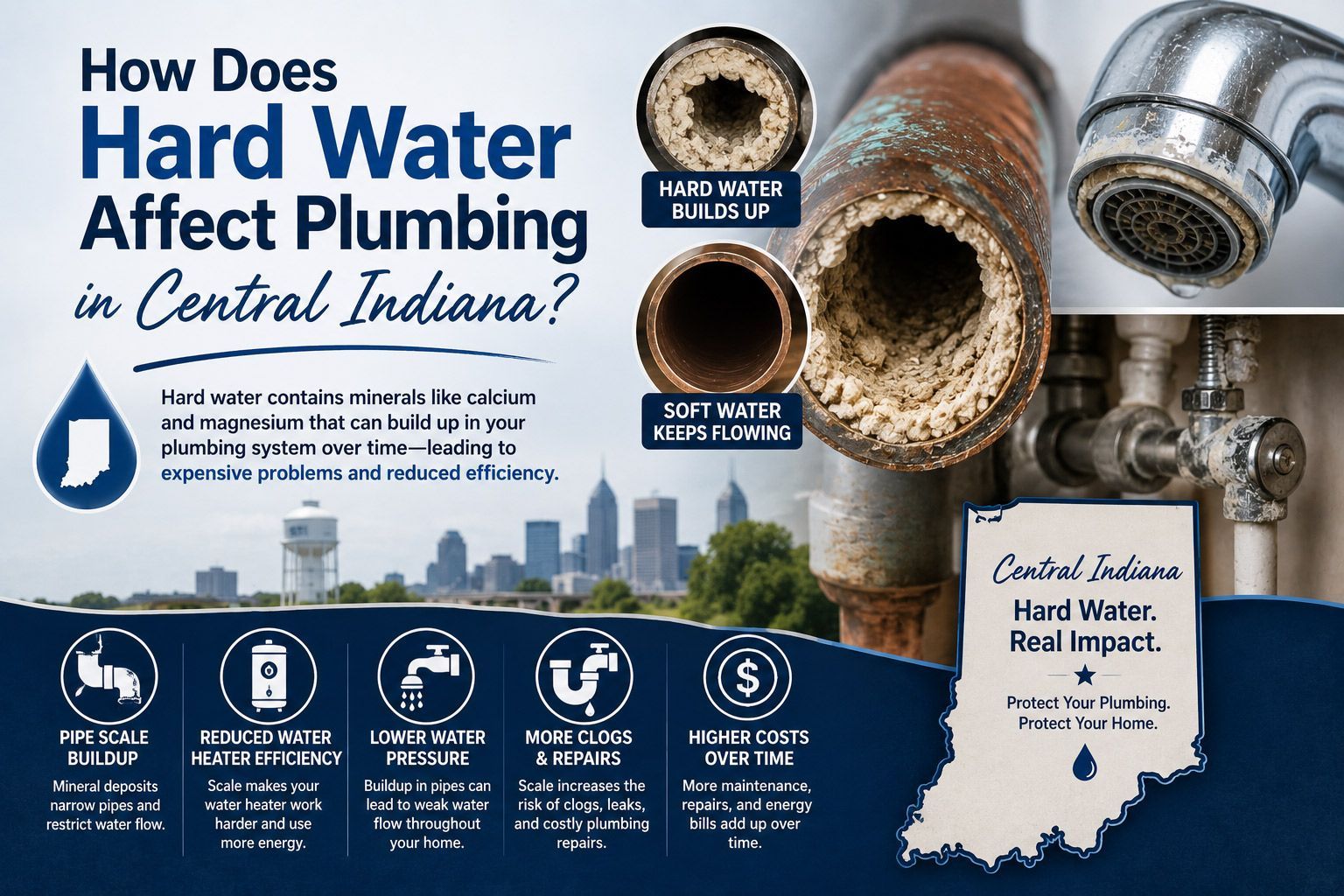
Hard water is simply water that contains high levels of dissolved minerals, primarily calcium and magnesium. These minerals aren’t harmful to drink, but they can cause significant problems in your home and for your skin and hair.
The hardness of water is measured in grains per gallon (gpg). Anything over 7 gpg is considered hard — and much of Central Indiana, including areas like Greenwood, Franklin, and Mooresville, measures above 10 gpg.
How Hard Water Forms
As rainwater seeps into the ground, it passes through layers of limestone and chalk. These rocks naturally contain calcium and magnesium, which dissolve into the water supply. Over time, that mineral-rich groundwater becomes the source of your home’s water — especially if you use a private well.
The Everyday Impact
Because these minerals remain in your tap water, they react with soap and shampoo to form soap scum, clog pores, and coat your hair and skin. This buildup leads to dryness, irritation, and a film that makes rinsing difficult.
How Hard Water Affects Your Skin
Dryness and Irritation
Hard water doesn’t rinse cleanly. When soap mixes with minerals like calcium, it leaves behind a residue that stays on your skin. This film can block pores, leading to dryness, flakiness, or irritation.
Over time, it can worsen conditions like eczema, psoriasis, and dermatitis. Even if you use moisturizing products, they have trouble penetrating through the film left by hard water.
Itchy or Tight Feeling After Showering
That squeaky-clean feeling after a shower? It’s actually your skin crying for moisture. The minerals in hard water strip away natural oils, leaving your skin tight and dehydrated.
Premature Aging Effects
Long-term exposure to hard water can accelerate skin aging. The constant dryness and disruption of your skin’s natural barrier cause it to lose elasticity, leading to fine lines and dull texture.
Acne and Breakouts
Mineral residue can clog pores and interact with the skin’s natural pH balance, causing inflammation and breakouts — even in people who don’t typically struggle with acne.
How Hard Water Affects Your Hair
Dullness and Lack of Shine
When calcium and magnesium build up on your hair, they coat each strand in a thin layer of minerals. This prevents moisture from getting in, leaving your hair looking flat and lifeless.
Tangling and Breakage
Hard water weakens hair strands by raising the cuticle layer — the outermost shield that keeps hair smooth. The result is frizz, tangles, and increased breakage.
Faded Color and Poor Product Performance
If you color your hair, hard water can strip and fade dye faster. It also interferes with the effectiveness of shampoos and conditioners, meaning your products don’t lather or rinse as well as they should.
Scalp Issues
Hard water can leave behind deposits that irritate the scalp, causing flaking or buildup. Over time, this can mimic dandruff or cause itchiness.
In short, even the best haircare routine struggles to overcome the harsh effects of mineral-laden water.
Why It’s Such a Common Problem in Central Indiana
Central Indiana’s geology is rich in limestone — a natural source of calcium carbonate. This makes the area one of the hard water hotspots in the Midwest.
Whether your home is connected to municipal water or a private well, chances are your water contains a high concentration of minerals. Cities like Mooresville, Plainfield, and Franklin regularly record hardness levels between 10 and 20 grains per gallon — far above the national average.
Unfortunately, hard water doesn’t just affect your body. It also leaves scale on faucets, shortens the lifespan of appliances, and increases energy costs due to mineral buildup inside water heaters.
For most homeowners, the issue isn’t whether they have hard water — it’s how severe it is and what they can do to fix it.
How to Protect Your Skin and Hair from Hard Water
You can’t change the geology of Indiana, but you can absolutely change the quality of your water at home. Here’s how to restore comfort and confidence to your daily routine.
Step 1: Test Your Water
The first step is knowing exactly what’s in your water. A professional water quality test measures hardness, pH, iron, and other minerals. With this data, you can choose the right treatment system for your needs.
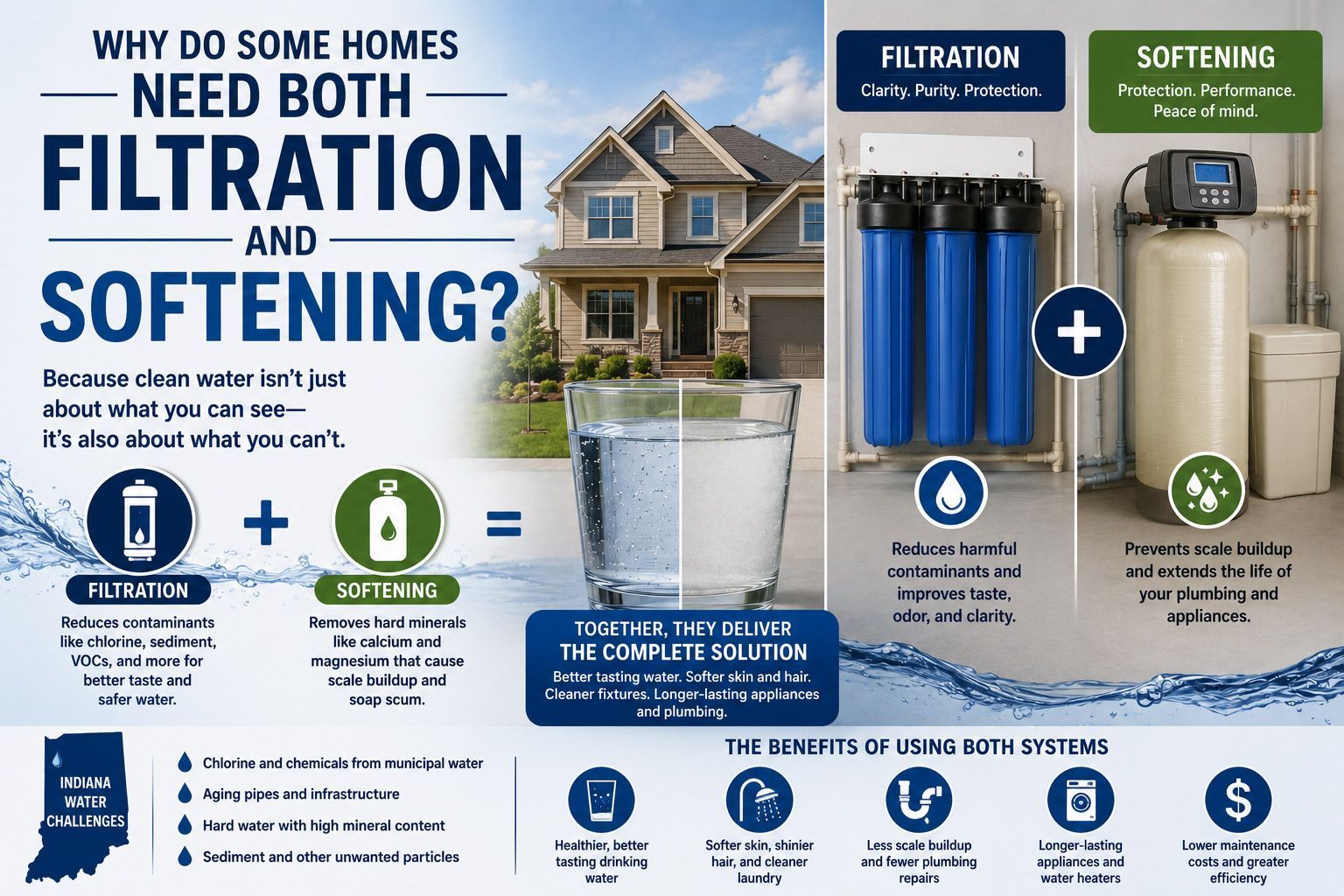
Step 2: Install a Water Softener
A water softener is the most effective solution for hard water. It works through ion exchange — replacing hardness minerals (calcium and magnesium) with sodium or potassium ions. The result is soft water that’s gentler on skin, hair, and plumbing.
Salt-based systems are ideal for homes with very hard water, which covers most of Central Indiana. For those who prefer low-maintenance options, salt-free conditioners can help reduce scaling effects, though they don’t remove minerals entirely.
Step 3: Use a Shower Filter
If a full softener system isn’t an option yet, a shower filter can provide temporary relief. It helps reduce chlorine and some mineral content, improving how water feels on your skin and hair.
Step 4: Adjust Your Routine
Even with hard water, small changes can help:
- Use sulfate-free shampoos that are gentler on hair.
- Apply leave-in conditioners to lock in moisture.
- Moisturize immediately after showering to trap hydration.
- Rinse hair with a clarifying product occasionally to remove buildup.
Step 5: Maintain Regular Service
Once your water treatment system is installed, schedule periodic maintenance. Replacing filters, refilling salt, and testing water annually ensures consistent protection and performance.
The Benefits of Soft Water for Skin and Hair
Once you switch to soft water, you’ll notice a difference almost immediately.
Here’s what homeowners typically experience:
- Softer, smoother skin that retains natural moisture.
- Healthier, shinier hair that’s easier to manage.
- Brighter laundry and spotless fixtures since soap rinses cleanly.
- Reduced need for lotion and conditioner, as water no longer strips natural oils.
- Longer appliance life and improved water heater efficiency.
Soft water doesn’t just feel better — it improves your home’s overall comfort and efficiency.
Frequently Asked Questions
Can hard water cause hair loss?
Indirectly, yes. Hard water weakens hair strands and increases breakage, which can make hair appear thinner over time.
Does soft water feel slippery?
Yes — that silky feeling after rinsing with soft water means soap residue is gone and your natural oils remain intact.
Can I use bottled water for washing my hair?
Technically, yes, but it’s impractical for regular use. A home softener provides long-term results without the waste or expense.
Do salt-free systems protect skin and hair as well as salt-based ones?
They help reduce buildup but don’t remove hardness minerals entirely. For maximum skin and hair benefits, a traditional salt-based system is more effective.
How often should I test my water?
Once a year is ideal — or sooner if you notice changes in water quality, taste, or skin sensitivity.
Conclusion
Hard water is a fact of life for most Central Indiana homeowners — but the discomfort it causes doesn’t have to be. From dryness and dull hair to clogged pipes and appliance wear, the effects can add up quickly.
By understanding your water and investing in the right solution, you can enjoy softer skin, shinier hair, and cleaner water throughout your home.
A professional water test is the perfect place to start. Once you know your water’s composition, a tailored treatment plan ensures every shower feels better — and every day starts with cleaner, healthier water.